
A good moving into an apartment checklist starts four weeks out: book your movers, get the building’s move-in rules in writing, then lock in the elevator, parking, utilities and your change of address before the week of the move. On move-in day, inspect and photograph the empty unit before a single box comes through the door, and keep a first night bag with you.
Apartment moves in our area come with a few extra wrinkles: steep streets, permit parking, walk-up stairs and older buildings with narrow doors. If you’re planning local moving in Pittsburgh, this checklist walks you through every step in order, from the first call to your property manager to the first night in your new place.
Short answer: Four weeks out, book movers and request move-in rules. Three weeks out, reserve the elevator. Two weeks out, apply for parking and schedule utilities. One week out, forward your mail and confirm details. On move-in day, inspect, photograph, then unload.
Your Moving Into an Apartment Checklist, Week by Week
A single missed call to the building or the utility company can throw off an apartment move. A timeline keeps the small jobs from piling up in the last few days. Print this table, tape it inside a kitchen cabinet, and cross things off as you go.
| When | What to do |
|---|---|
| 4 weeks out | Book movers, request the building’s move-in rules in writing, start decluttering |
| 3 weeks out | Reserve the elevator or loading dock, ask what insurance paperwork the building needs from your mover |
| 2 weeks out | Apply for a street parking permit if needed, schedule electric, gas and internet, buy renters insurance |
| 1 week out | Forward your mail, measure big furniture, confirm the arrival window and both addresses with your movers |
| 2 to 3 days out | Post any No Parking signs, pack a first night bag, defrost the fridge |
| Move-in day | Walk through and photograph the unit, direct the crew, set up the bed first |
If your move date is tight, our guide on how far in advance you need to book movers explains how lead time changes around the end of the month and in summer.
Four Weeks Out: Book Movers and Get the Building Rules
Call or email your new property manager and ask for the move-in policy in writing. Every building has its own rules, and some only allow moves on certain days or during set hours. Ask the same questions of the building you’re leaving.
Questions worth asking both buildings:
- Which days and hours are moves allowed?
- How do you reserve the elevator or loading dock?
- Is there a move-in deposit or fee?
- Do floors, walls or doorways need protection?
- Where can a moving truck park or unload?
- Does the building need a certificate of insurance from the moving company?
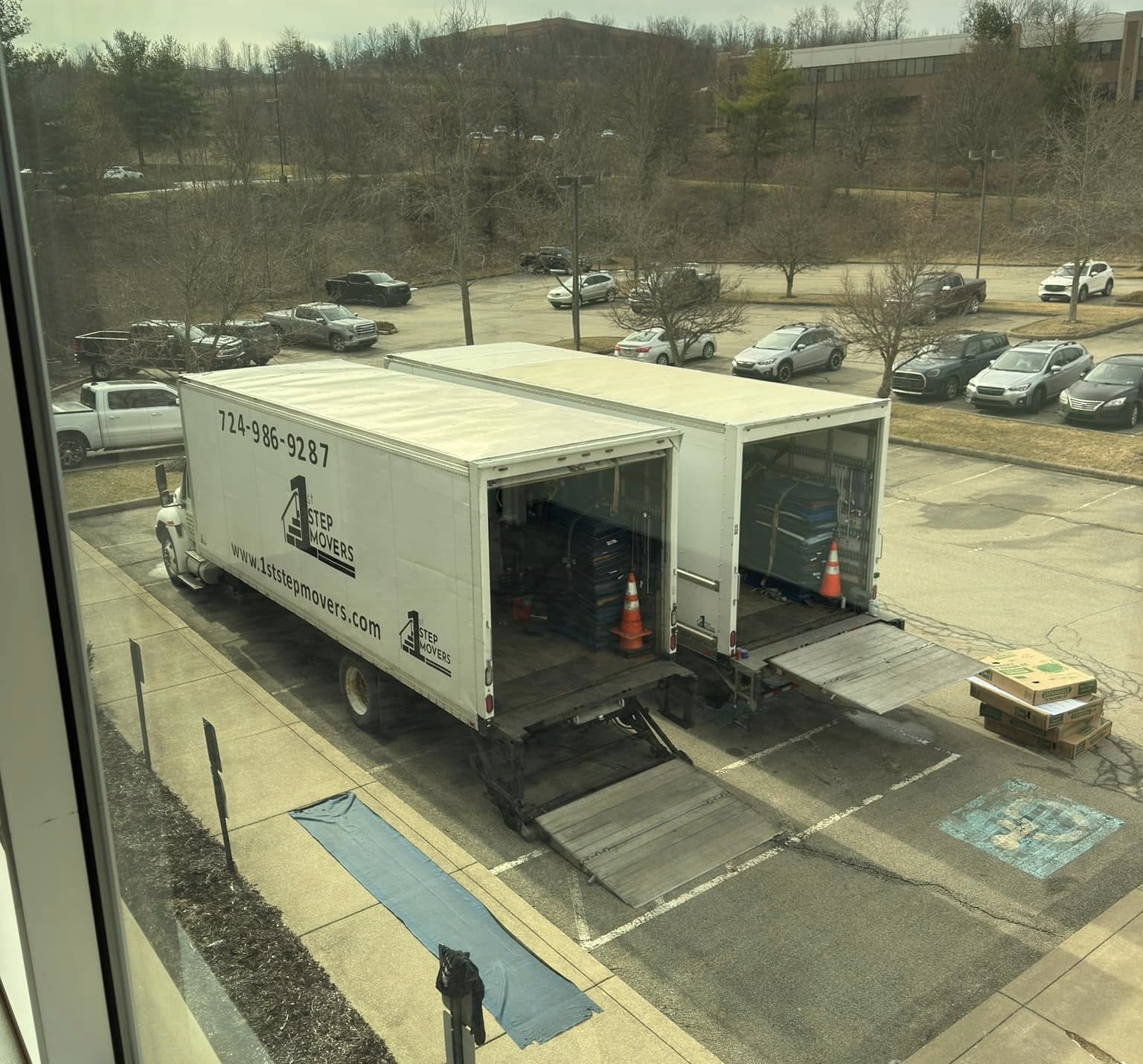
Two 1st Step trucks backed up to a loading area, seen from an upper floor window.
Book your movers in the same week. When you call for a quote, mention stairs, elevators, long hallways and anything oversized at both addresses. The more the crew knows up front, the better the plan for the day.
This is also the time to declutter. Every item you don’t move is one less thing to carry up a flight of stairs. Our decluttering guide for movers covers what to toss, donate or sell first.
Three Weeks Out: Reserve the Elevator and Sort Out Insurance Paperwork
In larger buildings, elevator slots fill quickly at the end and start of the month, when leases turn over. Book the earliest window you can. Morning moves usually run smoother than afternoon ones, because nothing earlier in the day has had a chance to run late.
If the building has no elevator, tell your movers right away. A third or fourth floor walk-up takes more time and more hands than a ground floor unit, and the crew can only plan for it if they know.
Certificate of insurance
Some managed apartment buildings won’t let a moving crew in without a certificate of insurance, often with the building or management company named on it. Get the building’s exact wording and send it to your mover early. A missing certificate can stop a move at the front door.
Two Weeks Out: Parking, Utilities and Internet
Parking is where city apartment moves are won or lost. Narrow streets and residential permit parking are common in older neighborhoods, and a truck parked a block away means a lot more carrying, often uphill.
Inside the City of Pittsburgh, a moving permit lets you reserve curb space for a truck. According to the city’s moving permit information sheet, a truck permit is good for two days, and any No Parking signs issued with it must go up at least 48 hours before the permit starts.
A move between two city addresses needs a permit for each one. The city asks you to allow about a week for review, so apply early.
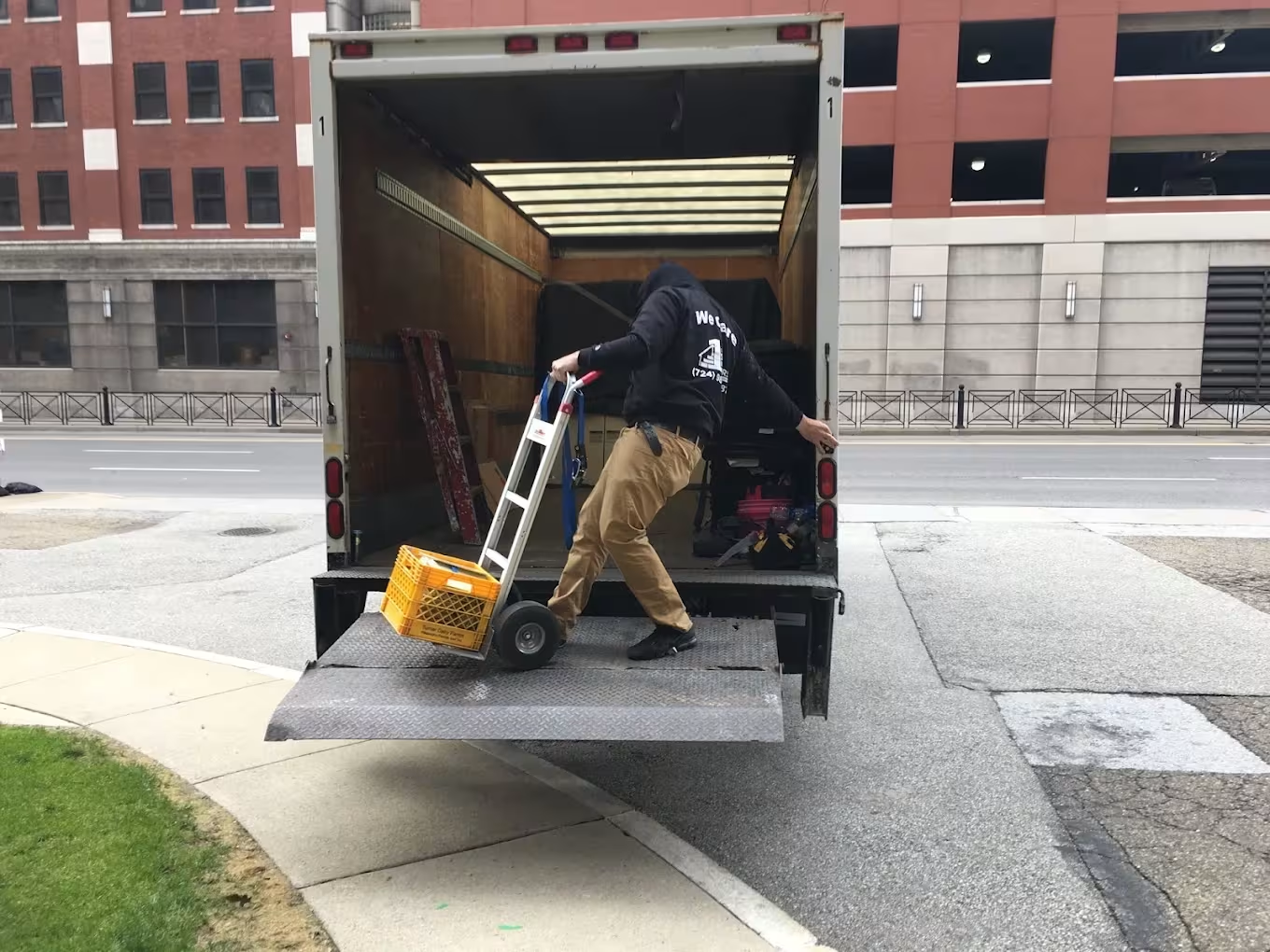
Mover using a hand truck to roll items up the lift gate into a 1st Step truck on a city street.
Utilities and internet
Check your lease to see which utilities are yours. Some leases include water, sewage or trash, while others put every account in the tenant’s name. Schedule service to start the day before you move in so you aren’t unpacking in the dark.
Internet installation appointments can fill up, especially around the start of the school year, so book yours as soon as you have a move-in date. If you work from home, ask the building which providers are already wired in.
Renters insurance
Many leases require renters insurance, and some landlords want proof before handing over keys. Buy the policy now so it’s active on move-in day.
One Week Out: Mail, Measurements and Confirming Details
Submit a change of address through the USPS mail forwarding page, then update your bank, employer, insurance, car registration and subscriptions. It takes a few minutes and saves weeks of chasing missing mail.
Next, measure your largest furniture and compare it to the new apartment’s doorways, stair turns and elevator. Older buildings often have narrow doors and tight landings. A sofa that won’t make the corner is easier to solve on paper than on the stairs, either by removing legs or feet, taking a bed frame apart, or deciding to leave a piece behind. Our furniture moving crews can take pieces apart and put them back together at the new place.
A few days before the move, confirm these details with your moving company:
- Arrival window and both full addresses
- Elevator reservation times at each building
- Where the truck can park
- Stairs, long hallways or tight turns
- Oversized, fragile or high value items
Finish packing everything except the first night bag. If packing is behind schedule, our packing services can take it off your plate.
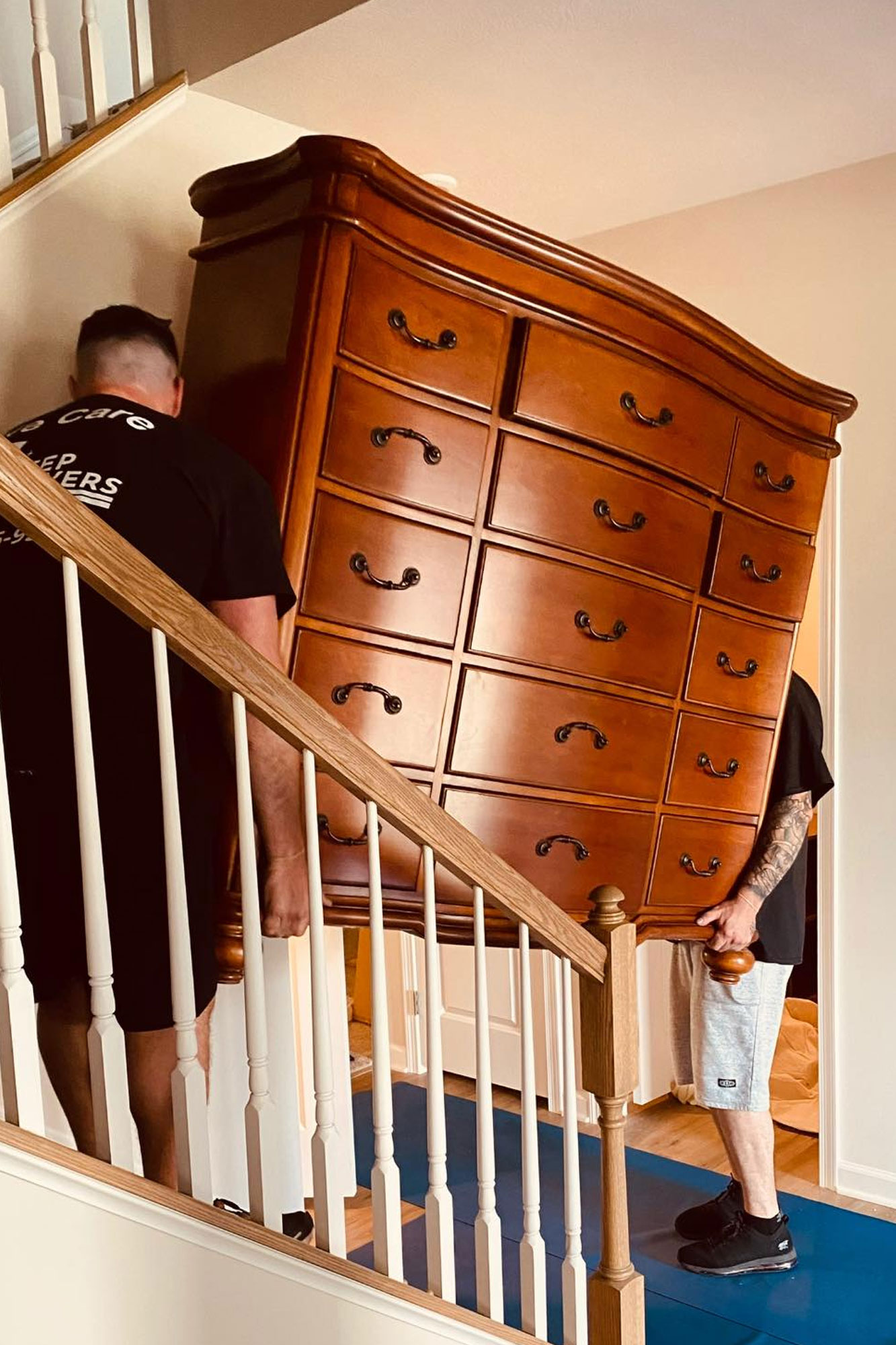
Two movers carrying a wooden dresser up a staircase.
Two or Three Days Out: Pack a First Night Bag
Some things should never end up at the bottom of a box on the truck. Pack a bag or clear tote you’ll carry yourself:
- Lease, keys, ID and any building paperwork
- Medications, toiletries and a change of clothes
- Phone chargers and a power strip
- Toilet paper, hand soap, a bath towel and a shower curtain with rings
- Sheets, a pillow and a blanket
- Paper towels, trash bags, a box cutter and a basic tool kit
- Snacks and water for you and the crew
If you’re leaving an apartment too, defrost and dry the fridge a day ahead and set aside cleaning supplies for a final wipe down.
Move-In Day: Inspect Before You Unload
Before the first box comes in, walk through the empty apartment. Take photos and video of every room, including floors, walls, windows, appliances and the inside of cabinets. Note any damage on the landlord’s move-in form, or email it to your property manager the same day.
What to check in an apartment before moving in
- Smoke and carbon monoxide detectors work
- Locks, windows and doors open, close and latch
- Faucets run hot and cold, toilets flush, drains don’t back up
- Stove, oven, fridge and dishwasher all work
- No signs of leaks, mold or pests
- Outlets and light switches work in every room
That record protects your security deposit when you eventually move out.
Then let the crew work. Stand where you can direct traffic, tell the movers which room each piece goes in, and have them set up the bed first so you have somewhere to sleep no matter how the unpacking goes.
Keep the elevator reservation and building rules handy in case a staff member asks. If you only need help with the heavy lifting, our labor only movers can load or unload a truck you’ve rented.
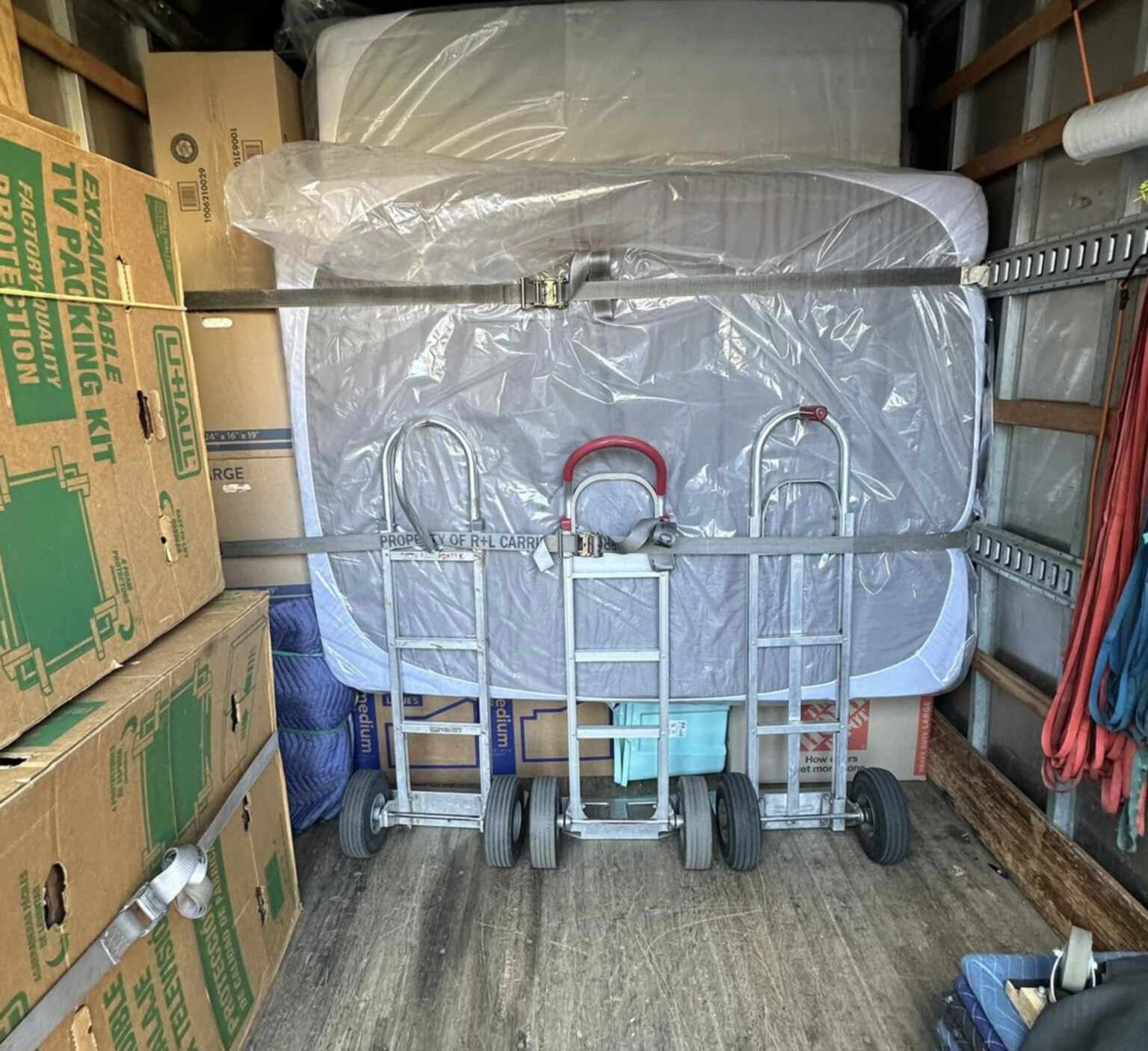
Packed 1st Step truck with a wrapped mattress and hand trucks strapped in place.
Pittsburgh Apartment Moves: Local Things to Plan For
A few details are more common here than in flat suburban towns:
- Hills and steps. Many homes and apartments sit above the street with long outdoor stairs. Tell your mover how many steps there are from the curb to the door.
- Row houses and converted homes. Many apartments are carved out of older houses with narrow, turning staircases.
- Winter weather. Snow and ice slow everything down. Have walkways cleared and salted before the crew arrives.
- End of month crunch. Leases in student neighborhoods often turn over on the same few days, so elevators, parking and movers all book up fast.
Under our PA PUC tariff, moves of 40 miles or less within Pennsylvania are billed by the hour with a 3 hour minimum, travel time included. Clear parking, a reserved elevator and a ready apartment keep those hours down.
Frequently Asked Questions
What are the first things you need when you move into an apartment?
Start with what makes the first night livable: toilet paper, soap, a towel and shower curtain, sheets and a pillow, phone chargers, medications and some food and water. Then add basic cleaning supplies, trash bags, a box cutter and a small tool kit. Furniture and kitchen extras can come over the following weeks once you see how the space actually works.
What should you check in an apartment before moving in?
Test the safety and plumbing basics first: smoke and carbon monoxide detectors, locks, hot water and drains. If you find a problem, put it in writing to your property manager, ask when it will be repaired, and keep a copy with your dated photos. A written record made before your furniture arrives is much harder to dispute than a memory at move-out.
How far ahead should I book movers for an apartment move?
About four weeks is a good target, and earlier for summer or the last and first days of the month, when leases turn over and demand peaks. Booking early also gives you time to line up the elevator reservation and parking permit around your confirmed moving date instead of the other way around.
Do I need a parking permit for a moving truck in Pittsburgh?
Inside city limits, a moving permit is the way to hold curb space for a truck, and a portable storage container needs its own permit, which runs up to two weeks. Even with a permit, the truck must still follow posted parking and street cleaning restrictions. Outside the city, rules vary, so call your borough or township office before moving day.
How do you move furniture into an apartment with narrow stairs?
Measure the furniture and the tightest point on the route, usually a stair turn or doorway, before moving day. Remove legs, take bed frames apart and empty dressers to make pieces lighter and smaller. Tell your movers about the stairs when you book so they bring the right equipment and enough people for the job.
Moving into a new apartment soon? Request a free quote and tell us about your stairs, elevator and parking so we can plan your move day.