A good moving day checklist covers three stretches: the week before the truck arrives, the hours the crew is loading and driving, and your first night in the new home. Get parking, utilities, an essentials box and a clear path for the movers handled ahead of time, and the day itself mostly runs on its own.
This guide pulls together the things people most often forget, the last minute problems that slow a move down, what to do before movers arrive and what to unpack first. It’s written for Pittsburgh and Washington County homes, where hills, tight streets and old staircases add a few extra steps. If you’re planning local moving in Pittsburgh, you can use it as your plan from start to finish.
Short answer: On the day itself, walk the crew lead through the house, stay reachable, do a final sweep of every closet and cabinet, then set up the bathroom, beds and one corner of the kitchen at the new place.
The Week Before Moving Day
Use the last seven days to close every open item so the morning of the move is about loading, not scrambling.
Confirm your movers and share the details
Call your moving company a few days ahead to confirm the arrival window, both addresses and how to reach you. Mention anything the crew should plan for: a third floor walkup, a steep driveway, a narrow alley, a piano or gun safe, or a street that’s under construction.
Lock in utilities at both addresses
Schedule service to start at the new home a day before you arrive and stop at the old one a day after you leave. That way you’re never stuck with the power off at both places. Around Pittsburgh that usually means calling the electric company (Duquesne Light covers much of Allegheny County), your gas utility, the water authority for your city or borough, and your internet provider. Internet installs can book out, so call early and write down every confirmation number.
File your change of address
Submit a mail forwarding request through the USPS change of address page, then update your bank, employer, insurance, doctors, schools and subscriptions.
Reserve parking for the truck
This is the step people forget most in Pittsburgh. Many city streets are narrow, steep or packed with parked cars, and a box truck needs real curb space close to your door.
Inside the city, moving and temporary no parking permits go through the Department of Mobility and Infrastructure. The City of Pittsburgh permit guidance explains how to apply, and metered blocks need a separate call to the Parking Authority. In a borough or township, call the municipal office, since rules differ from town to town.
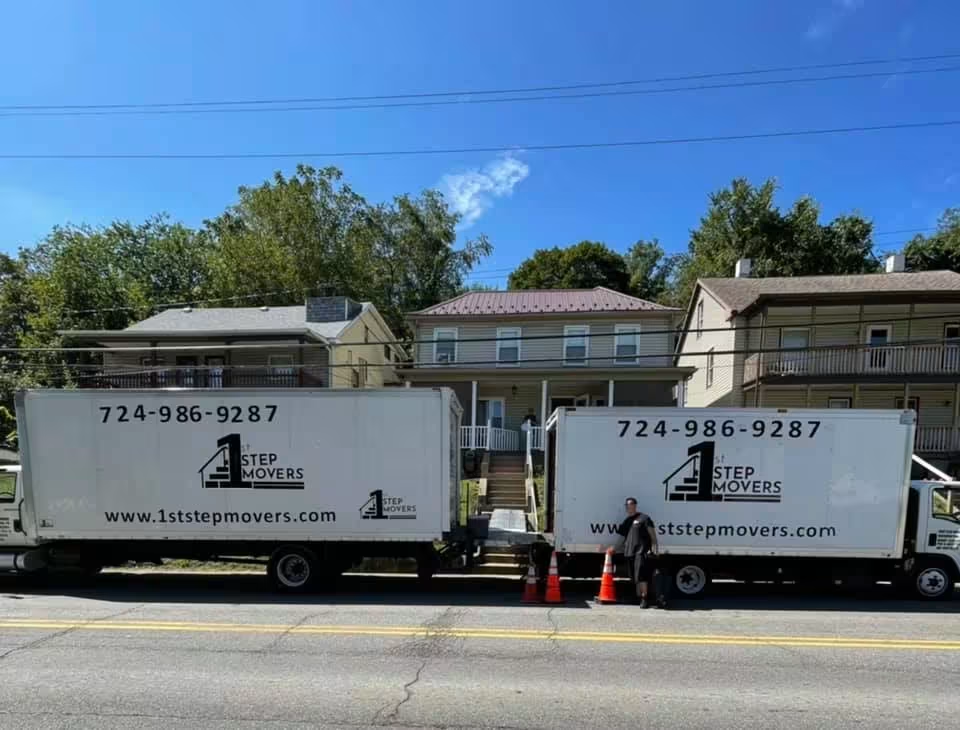
Two 1st Step Movers box trucks parked on a residential street in front of houses.
Measure the big pieces
Measure your sofa, mattress, dressers and any oversized furniture, then measure the doorways, hallways and stair turns at both homes. Older Pittsburgh houses often have tight landings and low ceilings on the stairs, so check height and diagonal depth, not just width. If something won’t make the turn, plan to take it apart or find another way in before the crew is standing there with it. Taking apart bed frames and tables and putting them back together is part of how we approach moving furniture safely.
Moving Day Checklist: Two or Three Days Out
These are the last minute jobs that cause the most trouble when they’re left for the final night.
- Empty, defrost and dry the fridge and freezer at least 24 hours ahead, and keep a towel under it.
- Take apart what you can. Bed frames, table legs and modular shelving come apart faster when you’re not rushed. Put screws and bolts in a labeled bag and tape it to the piece.
- Finish the kitchen. It’s the slowest room to pack, so start it early and leave out only what you need for the last couple of days. Our guide to the hardest room to pack when moving walks through it.
- Set aside what movers can’t take. Propane tanks, gasoline, paint, aerosols, cleaning chemicals and ammunition generally can’t ride on a moving truck. See what household items movers won’t transport in Pittsburgh before you pack them.
- Get rid of what you’re not keeping. Every item you donate or haul away is one less thing to carry up a set of Pittsburgh steps.
- Plan for kids and pets. A sitter or a quiet room with the door shut keeps everyone safe while doors are propped open.
What to Do Before Movers Arrive
The night before and the morning of, focus on three jobs: pack your essentials, protect what matters most and clear the route out to the truck.
Pack an open first box
Fill one bag or box with everything you’ll need for the first 24 hours: medications, phone chargers, toiletries, toilet paper, a change of clothes for each person, snacks, water, a box cutter, a basic tool kit, paper towels and trash bags. Add the kids’ and pets’ essentials too.
Keep it in your car, not on the truck. When you arrive late and tired, you won’t have to open a dozen boxes to find a toothbrush.
Set up a do not pack zone
Pick one room, closet or corner for things you’re carrying yourself: laptops, jewelry, important papers, keys and the open first box. Tell the crew it’s off limits so nothing gets loaded by accident.
Clear the path
Walk the route from each room to the truck. Pick up rugs, shoes, toys and cords, prop or remove screen doors, and make sure stairs and porches are clear.
Stairs are where big pieces get tricky, so take down loose pictures along the stairwell and leave the railing area open for the crew. In winter, shovel and salt walkways and the driveway early, since snow and ice on Pittsburgh steps slow everything down and make carrying heavy pieces less safe.
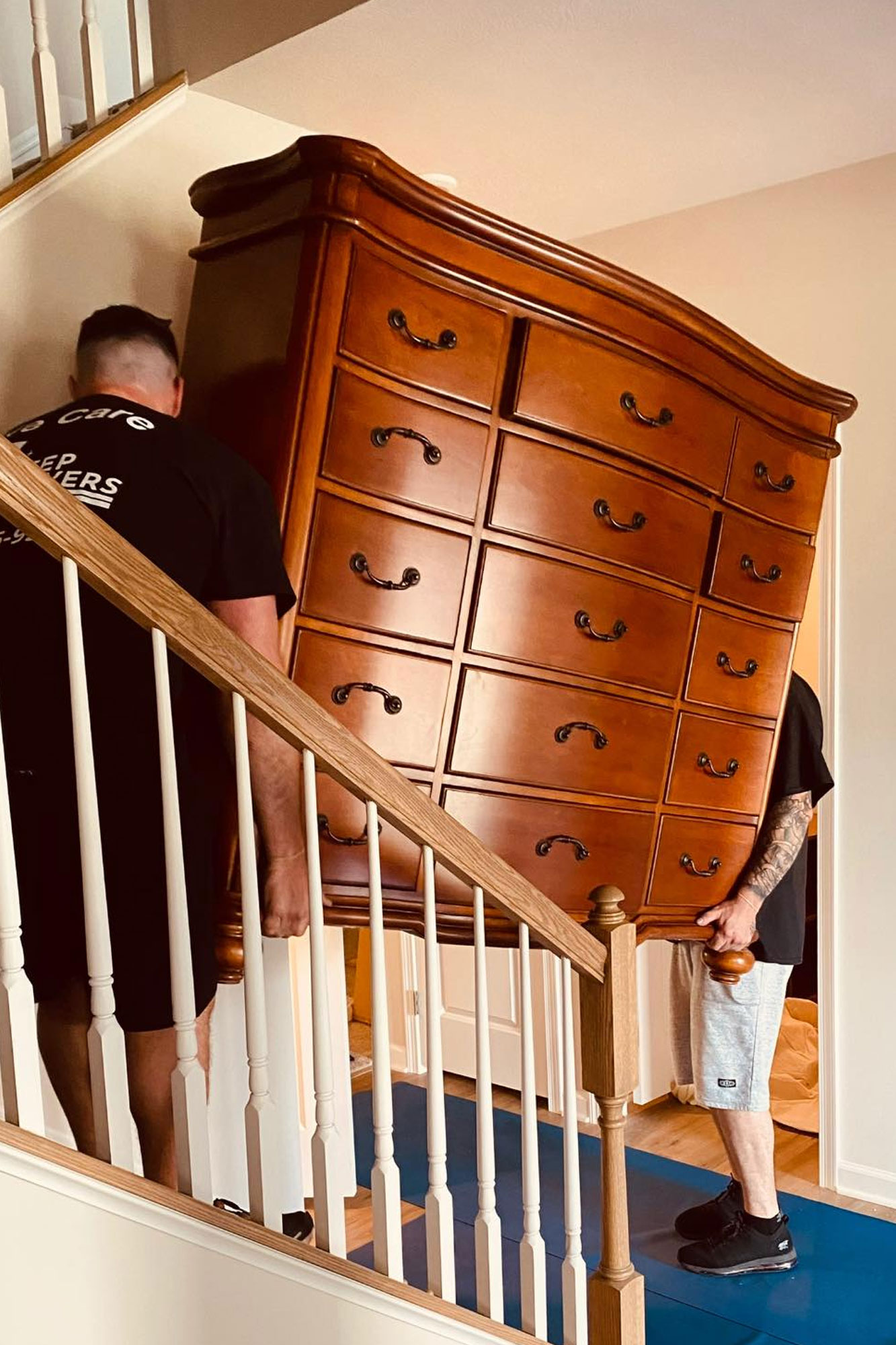
Two movers carrying a wooden dresser up a staircase.
During the Move
- Do a quick walkthrough with the crew lead. Point out fragile pieces, heavy items and anything that isn’t going.
- Stay reachable. Keep your phone charged and stay nearby so questions get answered fast.
- Label rooms at the new place. A sign on each door that matches your box labels lets the crew drop boxes in the right room the first time.
- Keep water handy. Moving is hard work for everyone, especially in summer heat or on a long set of stairs.
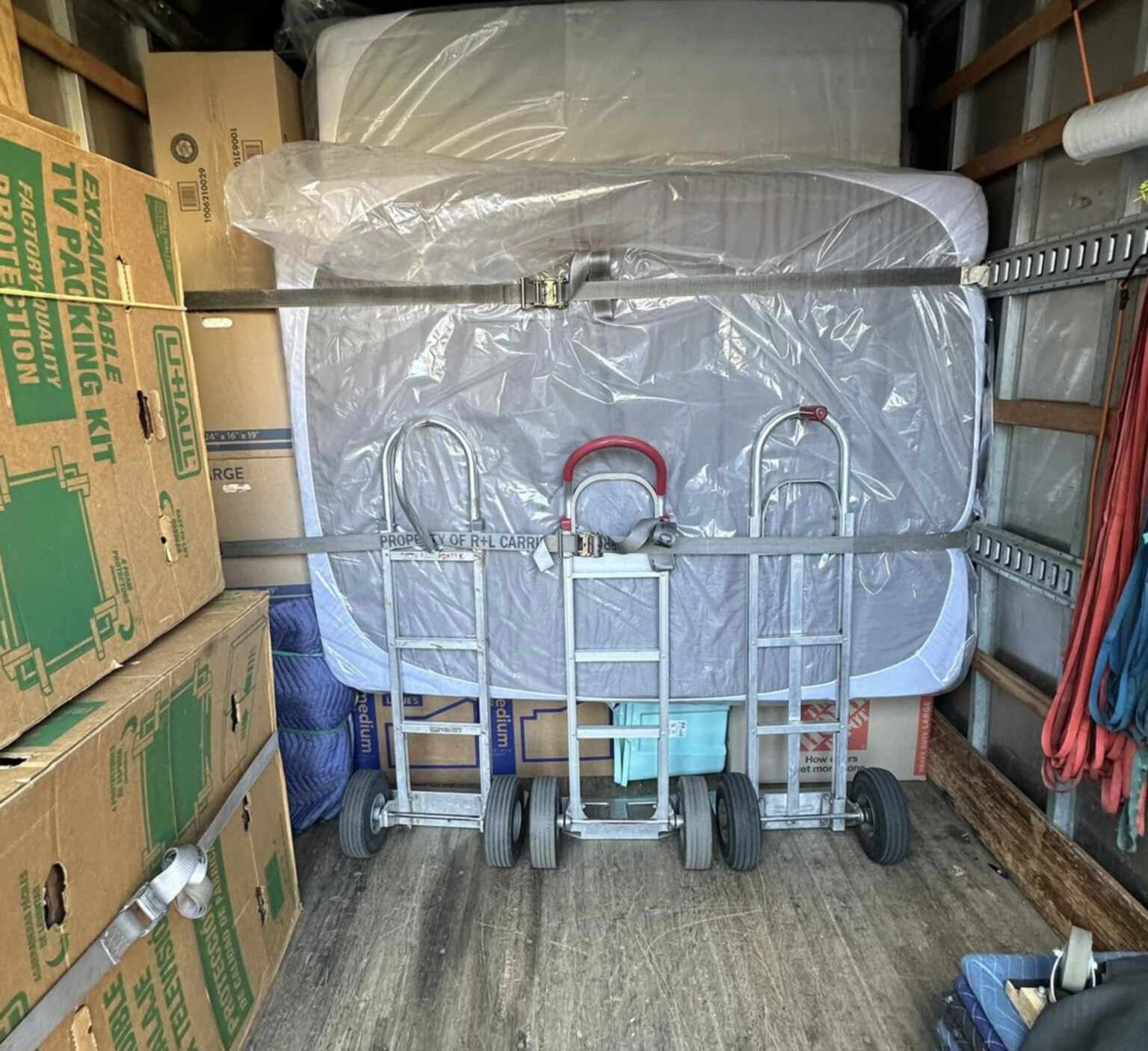
Large furniture and appliances usually go on the truck first, followed by boxes for the rooms you’ll unpack last. Boxes for the bathroom and bedrooms should go on near the end so they’re the first ones off at the new house.
Before the truck pulls away, check closets, cabinets, drawers, the attic, basement and garage. Look inside the oven, dishwasher, washer and dryer. Snap a photo of the meters, lock the windows and doors, and leave keys where the next owner or landlord expects them.
A packed 1st Step truck with a wrapped mattress and hand trucks strapped in place.
Things People Forget When Moving in Pittsburgh
Use this table as a final check for the local quirks national checklists miss.
| Easy to forget | Why it matters |
|---|---|
| Parking permit or a reserved spot | A truck that can’t park close means longer carries and a longer day. |
| Stair and doorway measurements | Old staircases and tight landings stop big furniture cold. |
| Utility start dates | Arriving to no heat or lights is the worst way to start. |
| Hazardous items | Crews can’t load them, so they need another plan. |
| Open first box in your car | Keeps medications and basics within reach. |
| Weather plan | Rain, snow and ice change how fast a crew can load safely. |
Plan for the weather
Western Pennsylvania weather can change in an afternoon. In winter, lay down old towels or runners by each door at both homes to keep slush off your floors. In rain, keep boxes covered on the porch and have towels ready at both ends.
Hills matter too. A steep driveway or a street with no level spot to park can change where the truck sets up, so mention it when you confirm the move. If you can, pick your date with the season in mind: our post on the best seasons and days to move in Pittsburgh covers the tradeoffs.
A mover walking a cleared path through snow toward a house.

What to Unpack First After Moving
Unpack the bathroom first, then set up the beds, then open one working corner of the kitchen. Those three cover hygiene, sleep and food, the only things you truly need on night one.
- Bathroom: shower curtain, towels, toilet paper, soap, toothbrushes and medications.
- Bedrooms: frames assembled, mattresses on, sheets made and a lamp plugged in.
- Kitchen basics: coffee setup, a few plates, cups, utensils and a trash can.
- Living room: seating in place and a light or TV working.
- Closets, office and decor: over the next one to two weeks.
Pets and young kids move up the list. A child’s bed and a familiar box of toys, and a pet’s bowls, bed and litter box, belong in the first wave. Before you get too deep into boxes, find the main water shutoff and the breaker panel, test the smoke detectors and consider changing the locks.
How 1st Step Movers Handles Moving Day
We’re a locally owned mover based in Washington County, serving the Greater Pittsburgh area. We’re licensed by the Pennsylvania Public Utility Commission for household moves within the state and registered with FMCSA for interstate household goods moves. Local moves of 40 miles or less within Pennsylvania are billed by the hour, with a minimum of 3 hours, travel time included, under our PA PUC tariff.
If you’d rather hand off part of the work, we also offer professional packing services for the rooms you don’t want to tackle yourself.
Frequently Asked Questions
What should you do before you move out?
Beyond packing, leave the old place ready to hand over. Clean as you empty each room, photograph walls and floors for your deposit or the buyer, and note the final meter readings. Return or leave every key and garage remote, cancel services tied to the address, and give your landlord or agent your new mailing address so final paperwork reaches you.
What items will movers not pack or move?
Anything flammable, corrosive or pressurized stays off the truck, along with perishable food, open liquids and live plants. Personal items such as cash, jewelry, medications, passports and hard drives should travel with you even though a crew could carry them, since you will want them close. Ask us for our list when you book so you can plan another way to move or dispose of those items.
What are the essential things to bring when moving out?
Besides your open first box, keep a folder with IDs, your lease or closing papers, the moving paperwork and utility confirmation numbers. Bring cleaning supplies for the new place, a flashlight, light bulbs, a first aid kit and a car charger. A small cooler with drinks and lunch keeps everyone going if the move runs past midday.
How do you unpack faster after a move?
Work one room at a time and finish it before opening boxes for the next. Put things where they will actually live instead of in temporary piles, flatten empty boxes as you go and keep one spot for recycling. Setting a small daily goal, such as a few boxes each evening, keeps the house from staying half unpacked for weeks.
Do you need a parking permit for a moving truck in Pittsburgh?
On many city streets it is a good idea, because a truck parked down the block means longer carries. Apply through the city’s Department of Mobility and Infrastructure 3 to 4 weeks ahead, and call the Pittsburgh Parking Authority if your block has meters. Outside the city, ask your borough or township office, since each one sets its own rules.
Ready to check moving day off your list? Request your free quote from 1st Step Movers and tell us about your stairs, parking and big pieces so we can plan your move.