What will movers not move? Professional movers won’t load anything hazardous (fuels, propane, paint, pool chemicals, ammunition), perishable food, plants or pets, and they ask you to keep cash, documents, medication and other irreplaceable valuables with you. Firearms have their own rules, so they need a conversation before moving day.
Those limits exist for safety and legal reasons, not to make your move harder. This guide covers the full list, what packers will and won’t pack, the gray area items people ask about most, and how to handle each one around Pittsburgh and Washington County. If you’re booking packing services, knowing the list ahead of time keeps packing day smooth, because the crew can work straight through instead of stopping to set things aside.
Short answer: If it can burn, explode, leak, rot or die in a closed truck, it stays off the truck. If it can’t be replaced, it rides with you.
Why Movers Refuse Certain Items
A moving truck is a closed box with no climate control. In a Pittsburgh summer the inside gets very hot, and in January it can sit well below freezing. Loads also shift and settle on the way, especially on the steep hills and tight turns common around the city.
Put those conditions together and the reasons are easy to see:
- Fire and explosion risk. Fuel vapors, pressurized cans and ammunition react badly to heat and impact.
- Leaks and contamination. One cracked jug of bleach or motor oil can ruin a sofa, a mattress and every box around it.
- Spoilage and pests. Food and plants break down or carry insects into your new home.
- The law. Hazardous materials, firearms and some interstate shipments are regulated. For moves to another state, the federal FMCSA Protect Your Move resources explain your rights and responsibilities as a shipper.
What Will Movers Not Move? The Full List
Here’s a typical non allowable list, grouped so you can sort a house room by room.
| Category | Common examples | What to do instead |
|---|---|---|
| Fuels and flammables | Gasoline, kerosene, lighter fluid, charcoal starter, lamp oil, matches | Use up, give away or take to a household hazardous waste collection |
| Pressurized containers | Propane tanks, aerosol cans, scuba and oxygen tanks, helium tanks | Exchange or return propane tanks; use up aerosols |
| Paints and solvents | Oil based paint, stain, varnish, thinner, nail polish remover | Finish the job, give away or drop off at a collection event |
| Corrosives and chemicals | Bleach, ammonia, drain cleaner, pool chlorine, pesticides, weed killer | Use up or dispose of safely; never pour down a drain |
| Automotive items | Car batteries, motor oil, antifreeze | Auto parts store recycling or a collection event |
| Explosives | Ammunition, fireworks, flares, gunpowder | Carry legally yourself or ask local police about disposal |
| Perishable food | Fresh produce, dairy, meat, frozen food, opened pantry items | Eat it down, donate sealed food, toss the rest |
| Living things | Pets, fish, houseplants | Move them in your own vehicle |
| Irreplaceable valuables | Cash, jewelry, passports, deeds, wills, medication, keys | Keep them on you the whole day |
The EPA explains what counts as household hazardous waste and why it needs separate handling. Allegheny County and Washington County residents can check with their county or municipality for upcoming household chemical collection events. Some events ask you to register ahead of time, so check the details before you load the car.
What Packers Won’t Pack
Packing crews follow the same list. If an item can’t ride on the truck, a packer won’t box it. A few extra rules apply to packing specifically.
Open liquids. Even safe liquids like cooking oil, shampoo or vanilla extract leak when a box tips. Opened bottles are best handled by you, so tape them shut and pack them yourself in a sealed bin, or use them up.
Items you’ll need right away. Medication, chargers, a change of clothes and important papers should go in a bag you carry. Once something goes into a packed truck, it’s hard to reach until unloading.
Boxes you packed yourself. Movers can’t see inside a sealed box, so be honest about what’s in it. A hidden can of spray paint puts the whole load at risk.
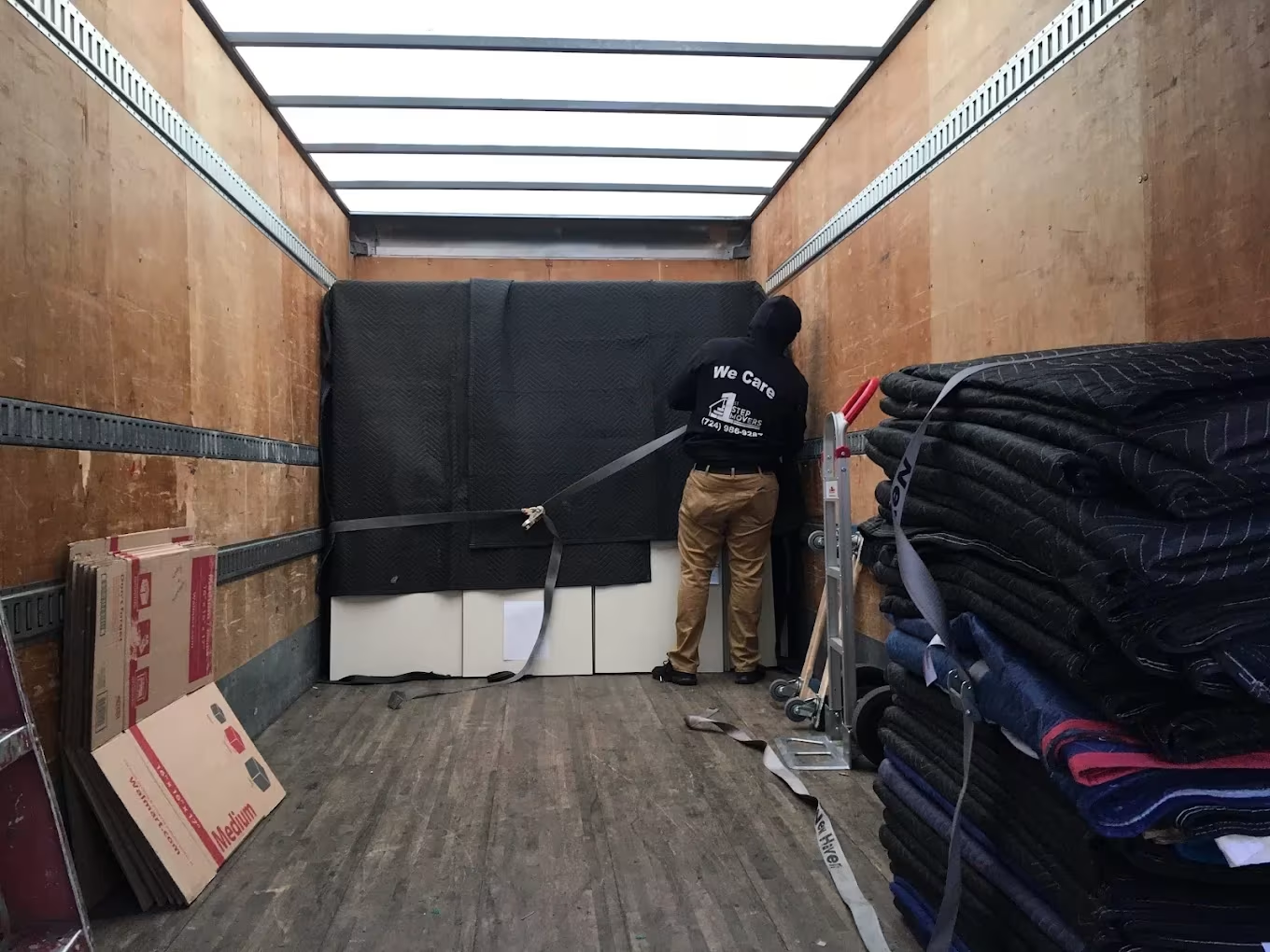
A 1st Step mover in a company shirt strapping blanket wrapped furniture against the wall inside a truck, with stacked moving blankets beside him.
A simple sort before packing day
- Walk the house with three labels: truck, car and gone.
- Check under every sink, the garage shelves, the shed and the basement. Older homes in the area can have years of paint cans and garden chemicals tucked away.
- Empty and clean the refrigerator, and plan meals so the freezer is nearly empty a few days before the move.
If the gone pile is big, our guide on what to throw out before a move helps you decide what’s worth keeping.
Plants, Pets and Perishable Food
Anything alive or edible stays off the truck. A closed trailer has no fresh air, and the temperature swings during a day of loading, driving and unloading can be extreme.
Pets never ride in a moving truck, whether it’s a dog, a cat, a bird or a fish tank. Move them in your own car, or arrange for a friend to keep them for the day so doors can stay open safely. Our post on moving with pets in Pittsburgh covers how to keep them calm.
Aquariums can be moved once they’re drained and empty. The fish, water and live plants go with you.
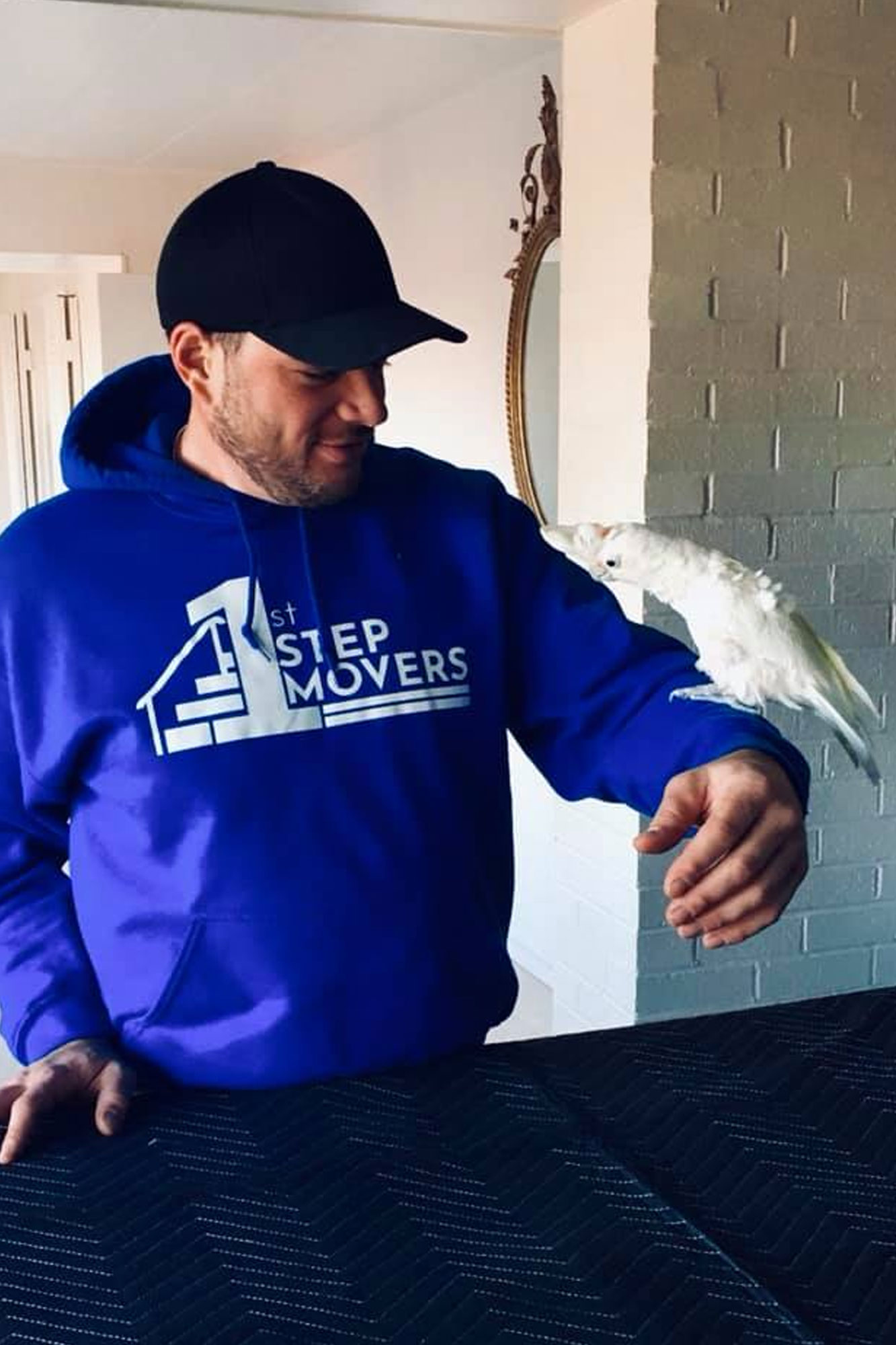
A 1st Step mover in a blue company hoodie standing beside blanket covered furniture, with a white pet bird perched on his arm.
Houseplants can wilt, freeze or crush in a truck, and soil can carry pests. For a local move, a car trip is the easy answer. For a move to another state, some states restrict plants and soil, so check the rules for your destination first. Our guide to whether moving companies can move plants goes into detail.
Food splits into two groups. Sealed canned goods and unopened dry goods are usually fine to pack. Fresh, refrigerated, frozen and opened food is not.
Firearms, Ammunition and Gun Safes
Firearms are the item people ask about most, and the honest answer is that rules vary by mover and by trip. Ammunition is the clearer case: it’s an explosive hazard, so plan to keep it off the truck.
Before moving day, unload every firearm, lock each one in a case, and store ammunition separately. Carrying firearms in your own vehicle keeps them in your control the whole time. Tell us ahead of time if you have firearms in the home so the plan is clear before the crew arrives.
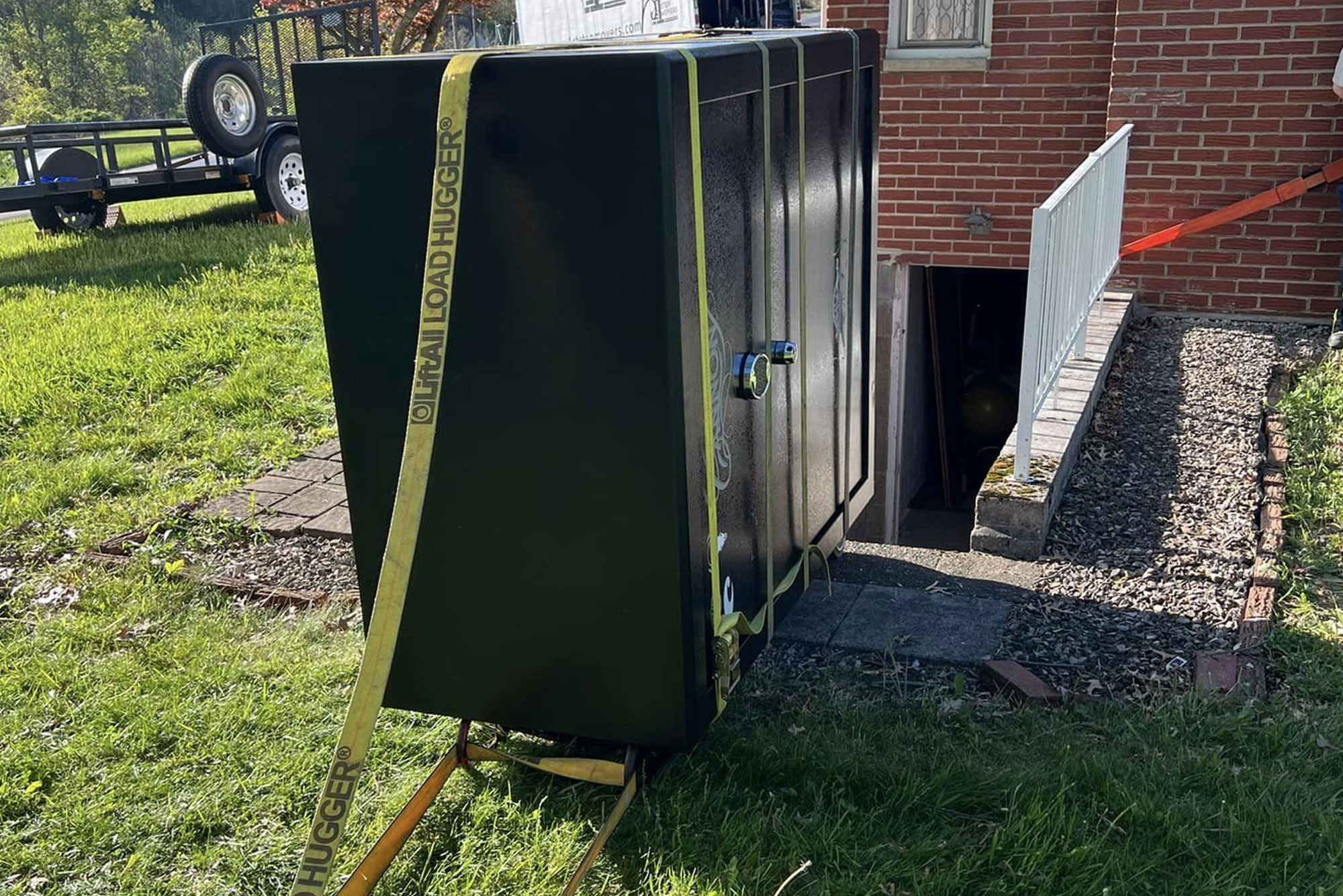
A gun safe is a different job. We offer gun safe moving, and the safe should be empty, with guns, ammo, documents and shelves removed, before it’s moved.
A black gun safe secured with yellow straps on a lawn beside a house.
If you’re crossing state lines, federal and state laws apply to how firearms travel. The ATF firearms page is the place to start, and our post on whether moving companies can transport firearms walks through the options.
Gray Area Items to Ask About
Some items can ride on the truck once they’re prepared. Ask us when you book so nothing is a surprise.
- Gas grills: the grill can go, the propane tank can’t. Disconnect it and take it to an exchange or give it to a neighbor.
- Lawn mowers, trimmers and generators: drain the fuel completely and run the engine until it stops. Fuel and oil residue is the problem, not the machine.
- Alcohol: sealed bottles are often fine for a local move, but opened bottles leak. For a move to another state, alcohol laws vary, so a nice collection is usually safer in your car.
- Batteries: household batteries in devices are normal. Car batteries and loose lithium batteries are not, since they can leak or overheat.
- Fire extinguishers: they’re pressurized, so put them in the car pile or replace yours after the move.
- Medication: movers can physically carry it, but keep it with you.
Moving Restricted Items Around Pittsburgh
Local conditions change how you handle the car pile. A few things to plan for in this area:
Winter cold. Paint, cleaning liquids and canned goods can freeze in an unheated truck or car trunk. Latex paint that freezes may be ruined, so move liquids you’re keeping inside the heated cabin.
Summer heat. Aerosols, candles, vinyl records and medication don’t do well in a hot vehicle. Keep them out of direct sun and don’t leave them in a parked car.
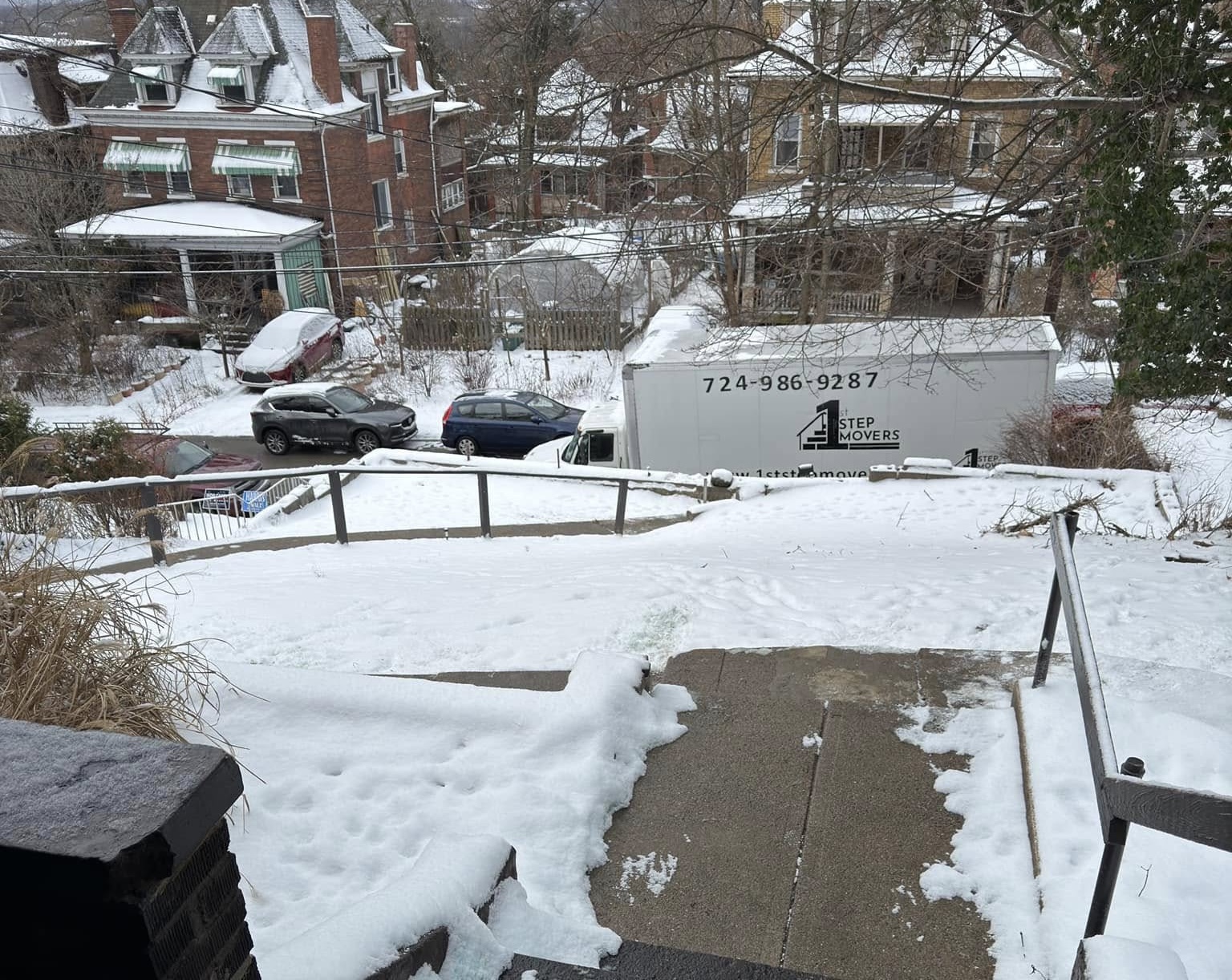
Hills, stairs and parking. On steep streets and in row house neighborhoods, the truck may park some distance from the door. Load your own car early so it isn’t blocking the curb.
A 1st Step box truck parked on a snowy street in a hillside neighborhood, seen from the top of a set of snowy steps.
Valuables stay with you
Keep one bag for cash, jewelry, passports, birth certificates, deeds, wills, keys, laptops, chargers and irreplaceable photos, and load it into your car first.
For anything you’re leaving behind that isn’t hazardous, such as old furniture, broken appliances or boxes of clutter, our junk removal crew can haul it.
Your Two Week Countdown
- Two weeks out: sort the house into truck, car and gone. Look up chemical collection dates and propane exchange spots.
- Ten days out: start eating down the freezer and pantry. Use up cleaning supplies.
- One week out: drain fuel from mowers and small engines. Disconnect propane tanks.
- Three days out: drop off hazardous items. Donate sealed food. Plan who carries pets and plants.
- The day before: empty and defrost the refrigerator. Pack the valuables bag and load it in your car. Set the car pile in one closed room so nobody packs it by accident.
Frequently Asked Questions
Can I leave things in my dresser drawers?
Light, soft items such as folded clothes or linens can sometimes stay in a sturdy dresser, but ask us first, because extra weight can strain drawers and joints on stairs. Take out anything breakable, heavy, liquid or valuable, and never leave restricted items like medication, cash, lighters or aerosols in a drawer. If in doubt, empty it and pack the contents in a box.
What happens if movers find a prohibited item in a box?
The crew will usually set it aside and ask you to deal with it, which can slow loading. If the box contains something that leaks, it may need to be unpacked and repacked. Being upfront about what’s in boxes you packed yourself avoids delays and protects the rest of your belongings in the truck.
Can movers move a refrigerator or freezer?
Yes, an empty refrigerator or freezer is a normal household item to move. The food is what stays off the truck. Unplug it a day ahead so it can defrost, wipe up the water, and leave the doors open to dry so meltwater and odors don’t reach the rest of your load. Mention an ice maker or water line so it can be disconnected properly.
Can I pack cleaning products in a moving box?
It’s best not to. A cracked bottle soaks through cardboard fast, and bleach and ammonia should never share a box, since mixing them releases dangerous fumes. If you want a few basics for cleaning the new place, keep one small sealed bin of unopened products in your car rather than on the truck, and buy the rest after you arrive.
Should I tell my mover about restricted items before the estimate?
Yes. Mention firearms, a gun safe, a piano, a propane grill, aquariums or a large amount of items you’re leaving behind when you ask for a quote. That lets us plan the crew, the equipment and the time correctly, and it avoids surprises on moving day.
Planning a move and want help sorting what can go on the truck? Contact 1st Step Movers for a free quote, and we’ll talk through your list before moving day.