Can movers move guns? Often yes, but it depends on the moving company’s policy, the type of firearm and whether your move crosses state lines. Ammunition is a separate question, because federal transport rules treat it as a hazardous material, and plenty of gun owners choose to carry their ammo and firearms in their own vehicle.
This guide covers the general rules for moving firearms and ammunition: what federal law says, how Pennsylvania treats guns in transit during a move, why ammunition gets handled differently, and what to bring up when you book. If you own a heavy safe, our gun safe movers can handle the safe itself while you plan for what goes inside it.
Short answer: Policies vary by mover, and loose ammunition rarely belongs on the truck. Tell your mover about every firearm when you book, check the official rules from the ATF and the Pennsylvania State Police, and plan to move your guns and ammo yourself if there is any doubt.
This article summarizes general rules. It is not legal advice, so confirm details with the ATF, the State Police or an attorney.
Can Movers Move Guns? It Depends on Three Things
The decision sits with each moving company and with the laws on your route. Three questions decide most cases.
- The mover’s policy. Every company sets its own rules for firearms, ammunition and other restricted items. Some will move unloaded guns that are declared in advance and packed a certain way. Others exclude them entirely.
- Where you’re going. A move across town in Pennsylvania falls under state law. A move to another state brings in federal law and the laws of the state you’re moving to.
- What you own. Ordinary rifles, shotguns and handguns are treated differently from items regulated under the National Firearms Act, such as machine guns and short barreled rifles or shotguns.
What Federal Law Says About Moving Firearms
Federal firearms law is enforced by the Bureau of Alcohol, Tobacco, Firearms and Explosives. The ATF firearms page is the best starting point for official guidance. A few federal rules come up again and again when people move.
Transporting guns across state lines yourself
Under 18 U.S.C. 926A, a person who is not prohibited by federal law from transporting, shipping or receiving firearms may transport a firearm for any lawful purpose from a place where they may lawfully possess and carry it to another place where they may lawfully possess and carry it. During the trip, the firearm must be unloaded, and neither the gun nor any ammunition can be readily accessible from the passenger compartment. In a vehicle with no compartment separate from the driver’s compartment, the firearm or ammunition must be in a locked container other than the glove compartment or console.
Handing firearms to a carrier
Under 18 U.S.C. 922(e), anyone who delivers a package containing firearms or ammunition to a common or contract carrier for interstate shipment must give the carrier written notice. In plain terms, if a mover carries your guns across state lines, you have to tell them in writing.
National Firearms Act items need approval first
Under 27 CFR 478.28, a person who wants to transport a destructive device, machine gun, short barreled shotgun or short barreled rifle across state lines must first request and receive authorization from the ATF. The request is made on ATF Form 5320.20. Build that approval time into your moving timeline. The ATF proposed a rule in May 2026 that would ease this process, but a proposal is not a final rule, so check the ATF for the current requirement before you move.
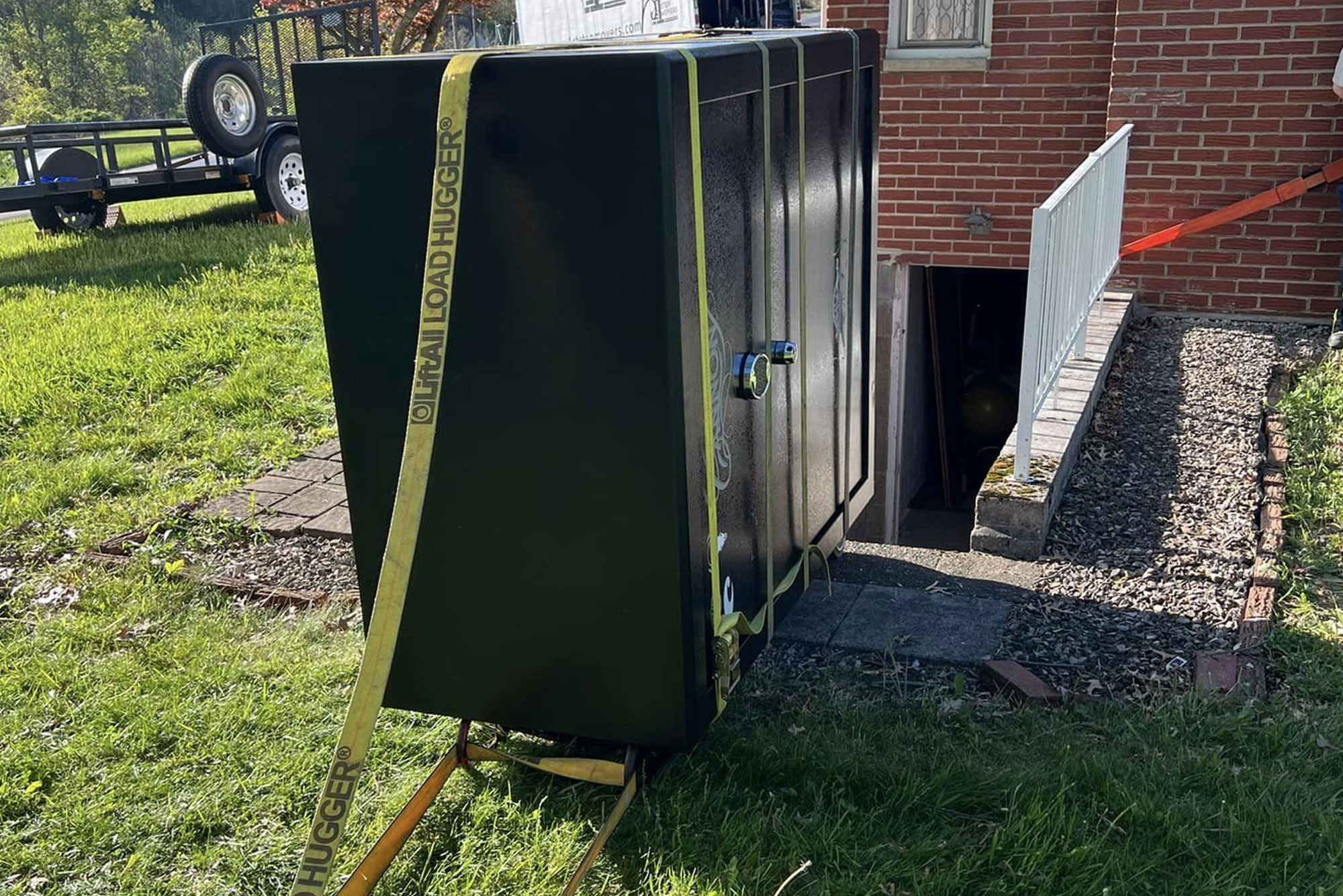
A gun safe and the guns inside it are two separate jobs. The safe is a heavy piece of furniture that needs the right equipment, straps and a planned path out of the house.
The firearms and ammunition inside should come out before the safe moves, so it is lighter and nothing shifts inside.
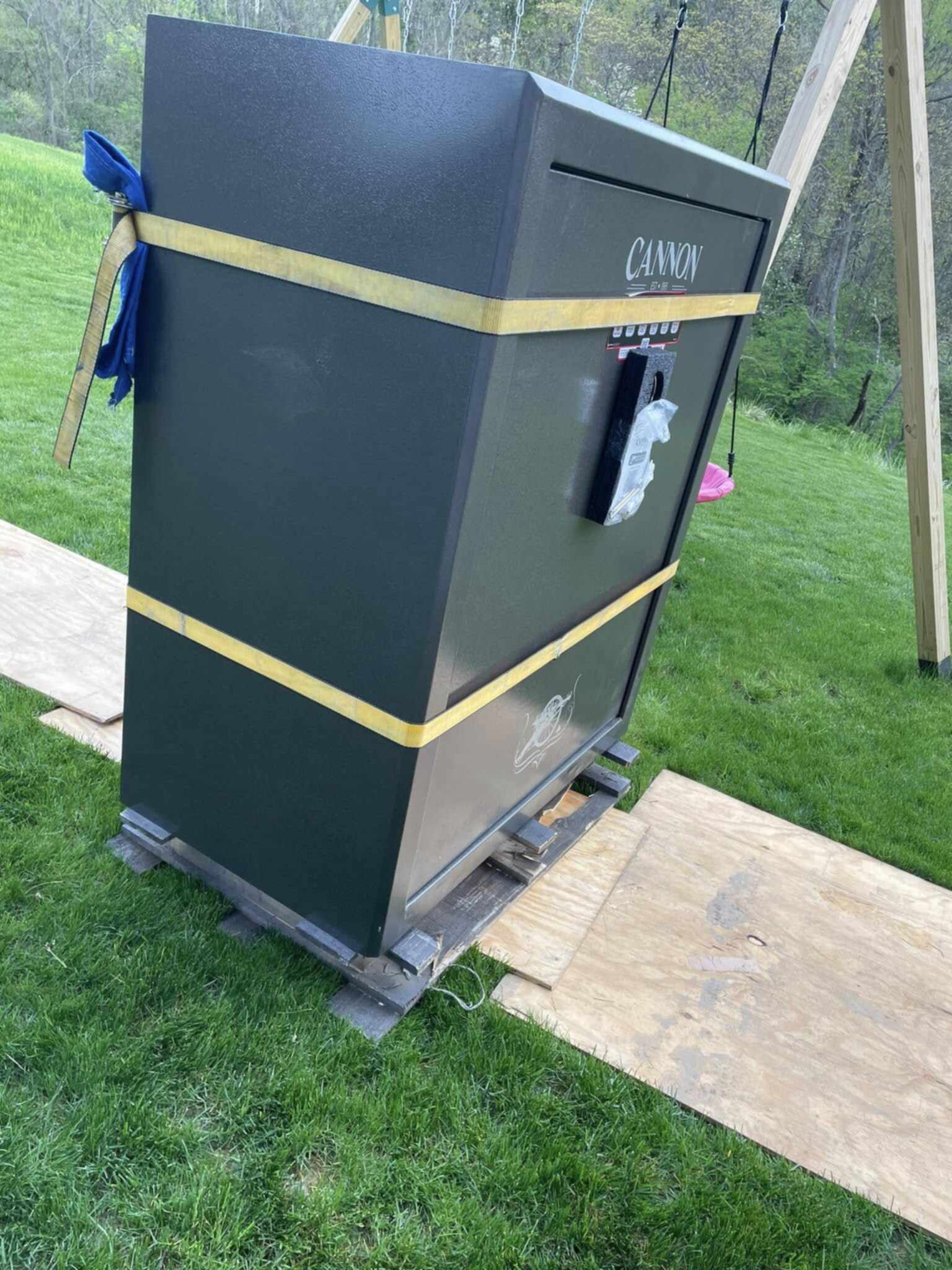
A black gun safe strapped with yellow straps on a lawn beside a house.
Pennsylvania Rules for Moving a Gun Between Homes
For most people reading this, the move starts in Pennsylvania. Two state rules matter most, and the Pennsylvania State Police firearms page is the official place to check them.
- License to Carry. According to the State Police, a Pennsylvania License to Carry Firearms allows a person to carry a firearm concealed on their body or in a vehicle. In most counties, applications go to the county sheriff.
- The moving exception. Pennsylvania’s Uniform Firearms Act, at 18 Pa.C.S. 6106(b)(8), lists exceptions to the license requirement. One covers a person carrying a firearm that is not loaded and is in a secure wrapper while moving from one place of abode or business to another.
So if you are moving from one Pennsylvania home to another, the statute describes carrying the firearm unloaded and in a secure wrapper. The exception itself does not spell out what counts as a secure wrapper, so contact the State Police with questions about your specific situation.
Why Ammunition Is Handled Differently
Ammunition raises a separate set of rules. Under federal hazardous materials regulations, small arms cartridges are classed as Division 1.4S explosives. They can ship legally when packaged as the rules require, but a household moving truck loaded with furniture, boxes and blankets is not set up for hazardous materials.
For that reason, ammunition often shows up on movers’ lists of restricted items, alongside fuel, propane, paint and cleaning chemicals. Our guide to household items movers won’t transport walks through that full list.
Reloading supplies need the same care. Smokeless powder and primers are hazardous materials too, so plan to move them yourself in their original containers and keep them away from heat.
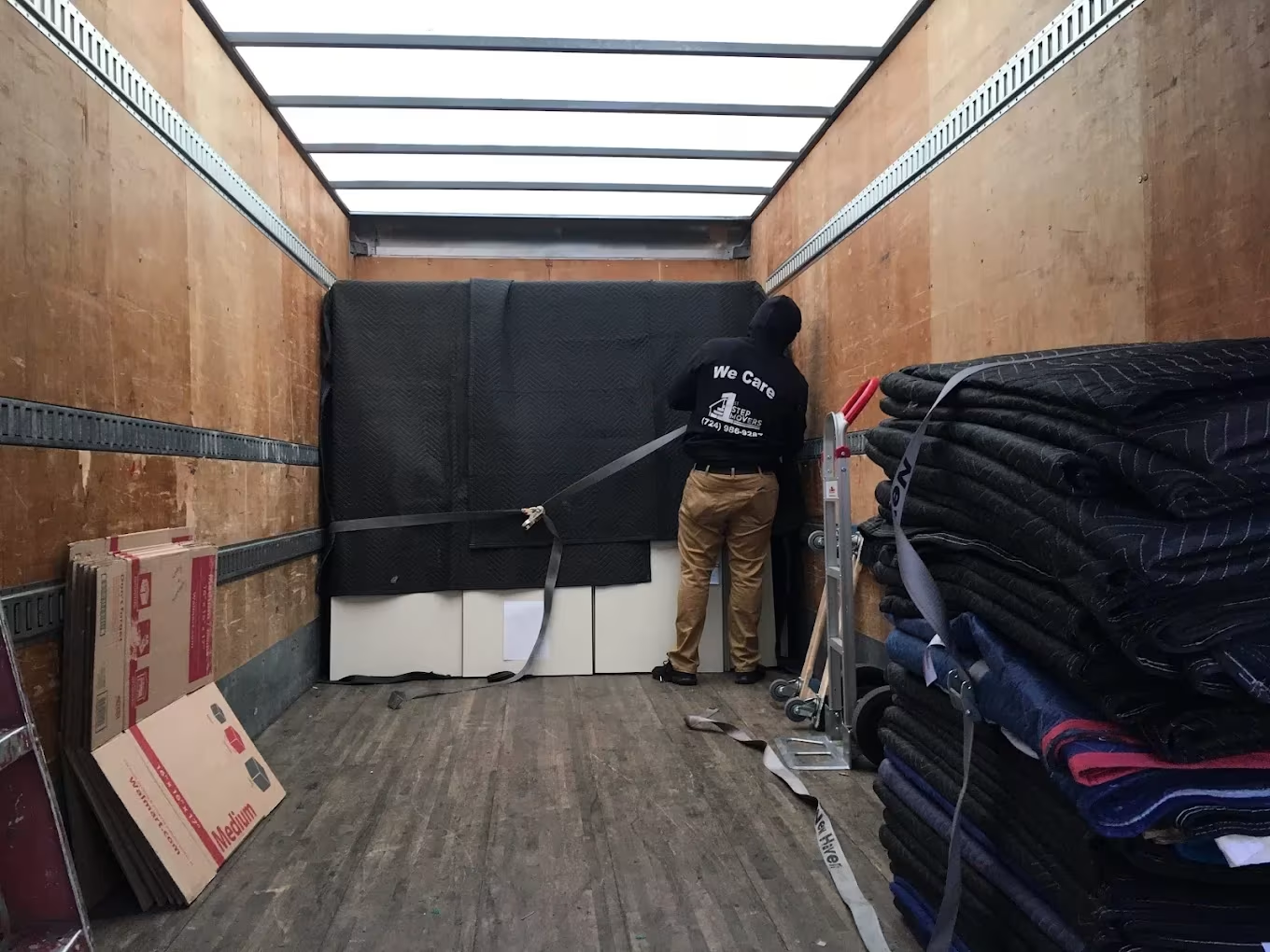
Inside the truck, furniture is wrapped in moving blankets and strapped to the wall so it cannot shift on the road. That works well for household goods.
It is not the place for loose ammunition, reloading powder or anything else classed as hazardous. Keep those items with you, in a cool spot in your own vehicle, and away from the passenger compartment if you are also carrying firearms.
A mover strapping furniture wrapped in moving blankets inside a 1st Step truck.
Quick Reference: How Each Item Usually Travels
Confirm your mover’s policy and the laws on your route.
| Item | Common approach | Why |
|---|---|---|
| Rifles, shotguns, handguns | Unloaded, cased and locked, often moved by the owner | Mover policies vary and you keep control of them |
| Ammunition | Moved by the owner in original boxes | Classed as a hazardous material in transport |
| Powder and primers | Moved by the owner, kept cool | Hazardous materials |
| NFA items | ATF approval before any interstate move | Required under 27 CFR 478.28 |
| Empty gun safe | Moved by a moving crew with the right equipment | Weight, stairs and floor damage risk |
How to Move Your Guns Yourself
If you keep your firearms with you, work through these steps.
- Make an inventory. Write down the make, model and serial number of every firearm and take photos. Keep the list with you, not in a box on the truck.
- Unload everything. Clear each firearm and double check it. Store ammunition separately in its original boxes.
- Use locked, hard cases. A locked case keeps the gun secure and lines up with the transport rules described above.
- Keep them out of reach. In a car, that means the trunk. In an SUV or pickup with no separate trunk, use a locked container, never the glove compartment or console.
- Check your destination. If you are moving to another state, read that state’s firearm laws before you leave, and get any NFA approvals in advance.
Local moving day tips
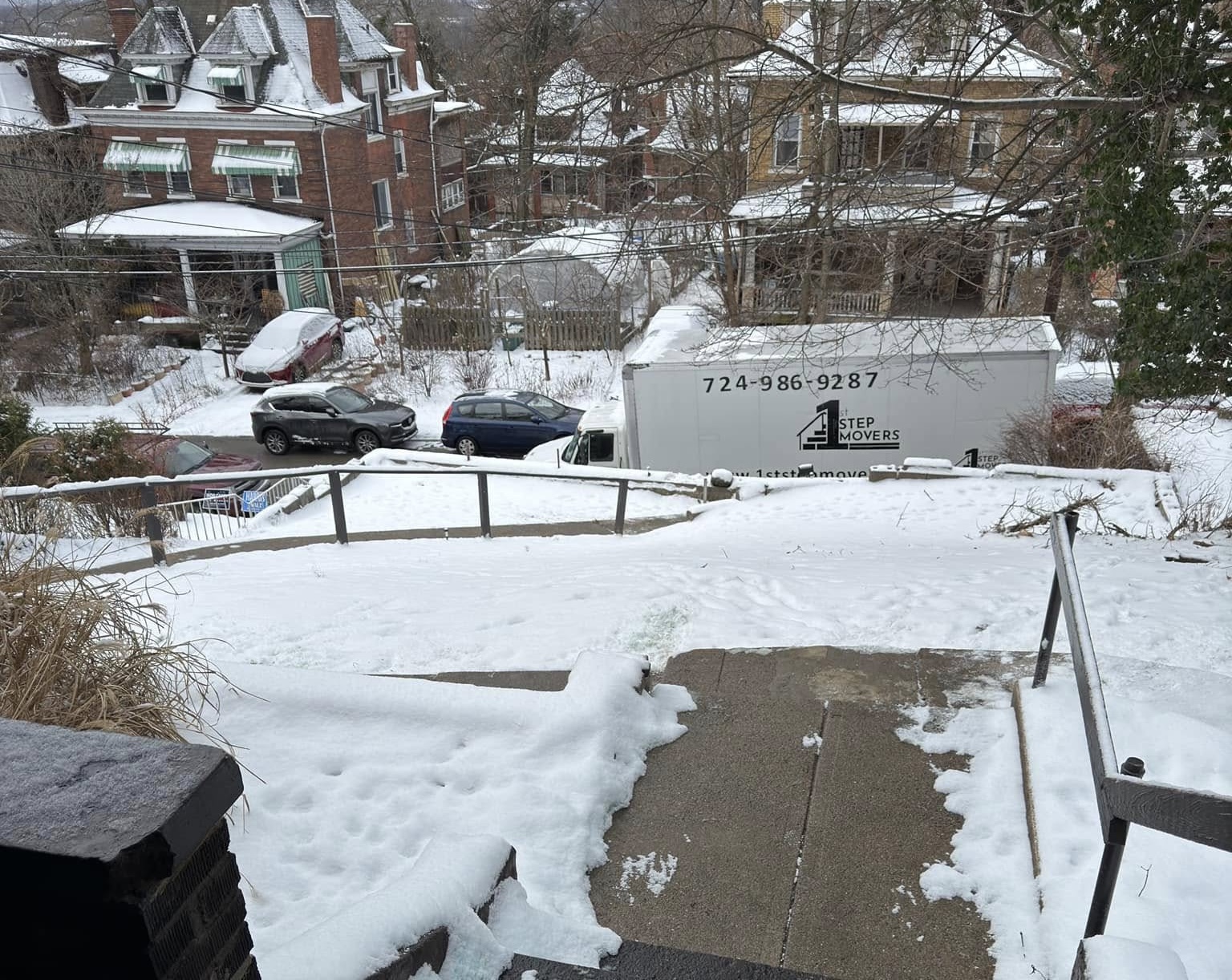
Pittsburgh area moves bring their own challenges. Street parking on steep, narrow city blocks often means your car sits away from the house while the crew works, so lock firearms in the trunk and keep the keys on you.
In winter, a gun that rides in a cold trunk and comes into a warm house can collect condensation. Let the case warm up before you open it, then wipe the firearm down.
A 1st Step truck parked on a snowy street in a hillside neighborhood.
Moving a Gun Safe and Everything Around It
A loaded safe is heavier, harder to balance and riskier on stairs, so empty it before the crew arrives. Older homes in the region often have narrow basement stairs, tight turns and steep front steps, which is exactly where a heavy safe needs a careful crew and the right dolly. Our guide to how to move a gun safe safely covers measuring, equipment and stairs in detail.
Under our PA PUC tariff, gun safes carry a separate per item charge, so mention the safe, its size and where it sits in your home when you ask for a quote.
If you are crossing state lines, our long distance moving team can plan the timing with you.
A black gun safe strapped with yellow straps on a wooden skid on a lawn.
Raise Firearms When You Book
Bring up firearms at the very start. When you request a quote from 1st Step Movers, tell us whether you own firearms, ammunition, reloading supplies or a gun safe. We will explain how we handle each one for your move, so there are no surprises on moving day.
Comparing companies? Get each answer in writing. Our guide on how to compare moving companies lists other questions worth asking.
Frequently Asked Questions
Can movers move ammunition?
Ask us when you book, because ammunition is a hazardous material in transport. Federal rules do allow small arms cartridges to ship as limited quantities when they sit in snug inner boxes inside a strong, securely closed outer package of no more than 66 pounds. Keeping ammo with you in its original boxes is simpler.
Do I have to tell my movers I have guns?
Yes. For interstate shipments, 18 U.S.C. 922(e) requires written notice to the carrier. The same law also says a carrier may not require a label on the outside of a package, luggage or container showing that it holds a firearm, so the notice goes to the company, not on the box. For a local move, telling us when you book lets us plan the job.
How do I legally transport a handgun in PA when moving?
The moving exception in 18 Pa.C.S. 6106(b)(8) covers a firearm that is not loaded and is in a secure wrapper. A separate exception, 6106(b)(11), covers a person carrying a firearm in a vehicle who holds a valid license issued under federal law or another state’s law. Questions about your situation are best taken to the Pennsylvania State Police.
Does a suppressor need ATF approval to move to another state?
The ATF approval rule in 27 CFR 478.28 lists destructive devices, machine guns, short barreled shotguns and short barreled rifles. Suppressors are not on that list, though they are still regulated under the National Firearms Act and your new state’s law still applies. Because the ATF has proposed changes to interstate transport of NFA items, confirm the current rules with the ATF before you go.
What should I do with the safe before moving day?
Take out firearms, ammunition, documents, valuables and any removable shelves, then close the door so it cannot swing open while the safe is tipped on a dolly. Keep the combination or key with you rather than packed in a box. Tell us the safe’s size, weight if you know it and which floor it is on. Our gun safe moving service handles the safe itself.
Planning a move with firearms or a gun safe? Request a free quote and tell us what you own, and we’ll explain how we handle it for your move.