How to move a gun safe comes down to four things: empty it, measure the whole path, strap it to a dolly rated for its weight, and have enough trained hands to control it on every step. The dolly does the lifting and the people steer, so nobody ever tries to carry the safe by hand.
That sounds simple until the safe weighs more than a refrigerator and the path runs down basement stairs, across a hardwood floor and up a steep Pittsburgh driveway. This guide walks through each step, the gear you need, where moves go wrong, and when it makes sense to call gun safe movers instead of rounding up friends.
Short answer: Empty the safe, measure every doorway and stair, protect the floors, strap the safe to a heavy duty dolly and move it with at least three helpers, never lifting it by hand or by its handle. For stairs or very heavy safes, hire a professional crew.
Before You Start: Know Your Safe
Gun safes vary enormously. A small cabinet style safe may weigh a couple hundred pounds, while a large fire rated safe can weigh well over half a ton. Guessing is how people get hurt, so find the real number first.
- Find the exact weight. Look for the model number on the label inside the door or on the back, then check the manufacturer’s specifications.
- Measure the safe. Record height, width and depth, including the handle, dial and hinges, since those stick out past the body.
- Check the floor and anchors. Many safes are bolted to the floor. Note where the bolts are and have the right tools ready to remove them.
- Know the destination. Decide exactly where the safe will sit in the new home before moving day, so the crew can roll it straight there.
How to Move a Gun Safe Step by Step
Here is the general process safe manufacturers recommend. Skipping a step is how floors get gouged and people get hurt.
1. Empty the safe completely
Take out every firearm, all ammunition, documents, jewelry and removable shelves. Emptying cuts the weight, stops contents from shifting the center of gravity and protects what’s inside. Firearms and ammunition have their own transport rules, so read our guide on whether moving companies can transport firearms before you decide how they will travel.
2. Secure the door
Close and lock the door so it can’t swing open while the safe is tilted. A heavy door swinging out will throw the whole load off balance. Write the combination down and keep it with you, not inside a moving box.
3. Strap it to the right dolly
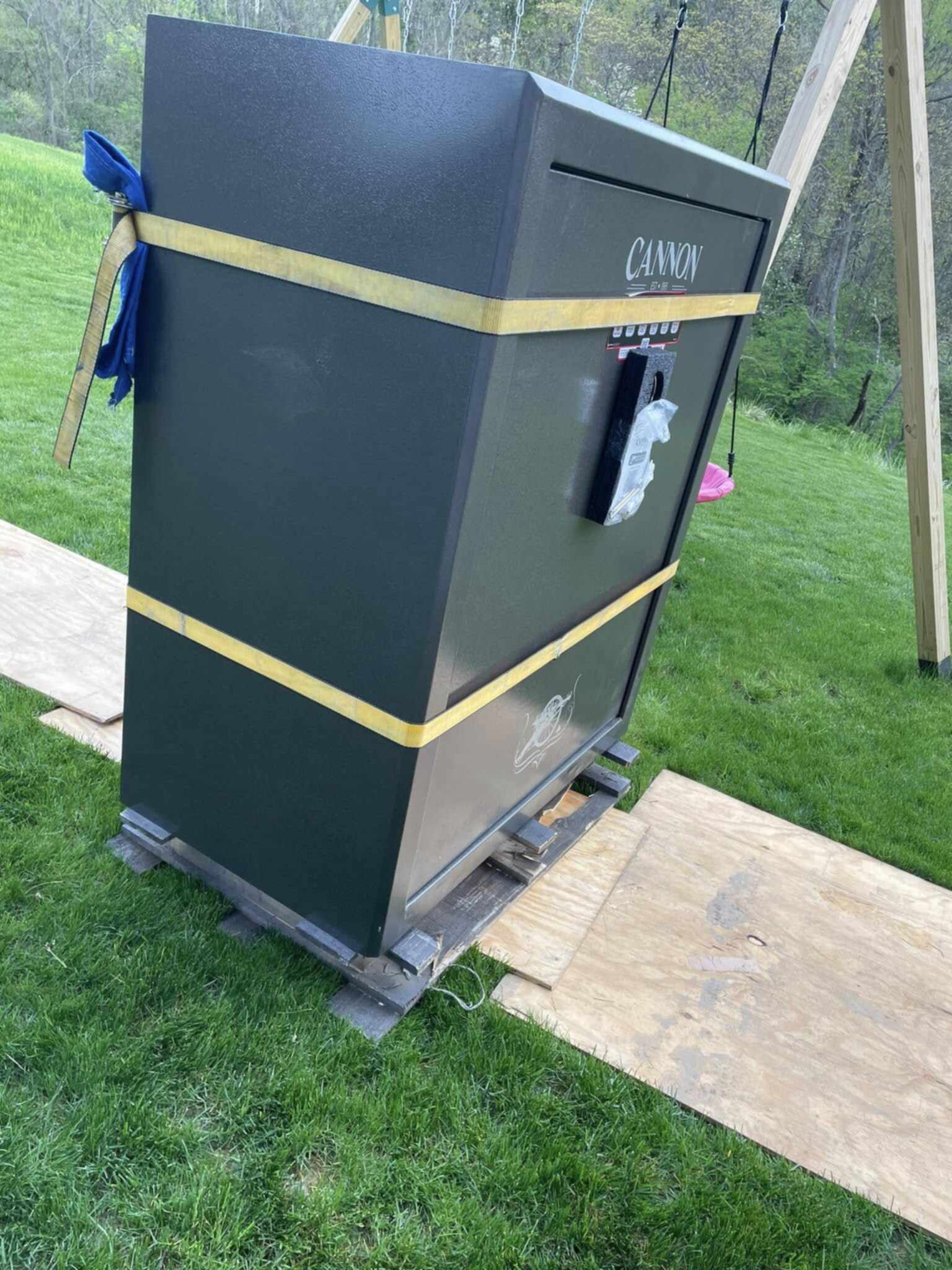
Use a heavy duty appliance dolly or a safe dolly rated above the safe’s weight. Tilt the safe back just enough to slide the plate underneath, then wrap the straps around the safe and the dolly frame and ratchet them tight.
Wrap the safe in moving blankets first so the straps and the dolly don’t scratch the finish. Never use the handle or the dial to lift, pull or lever the safe.
A black gun safe secured with yellow straps, with plywood sheets laid over the lawn.
4. Protect the path
Lay sheets of hardboard or plywood over hardwood, tile and carpet along the whole route. They spread the load and keep dolly wheels from gouging floors. Pad door frames and corners, and clear rugs, toys and furniture out of the way.
5. Move slowly with spotters
One person handles the dolly while helpers steady the sides and watch for obstacles. Keep everyone out of the path the safe would take if it got loose. If the load starts to tip, people step clear rather than trying to catch it.
6. Load and tie down the vehicle
Roll the safe onto the truck using a lift gate or a ramp rated for the weight. Keep it upright, push it against the front wall or a solid tie point, and strap it so it can’t slide or tip when the truck brakes or turns.
7. Place and anchor it
At the new home, roll the safe to its spot, remove the dolly carefully and anchor it to the floor following the manufacturer’s instructions. Load the contents back in only after it’s secured.
Equipment You Will Need
| Item | Why it matters |
|---|---|
| Heavy duty appliance or safe dolly | Carries the weight so people only steer |
| Ratchet straps and a belly strap | Lock the safe to the dolly and keep it stable |
| Moving blankets and stretch wrap | Protect the safe’s finish, walls and door frames |
| Plywood or hardboard sheets | Spread the load and protect floors |
| Ramp or truck with a lift gate | Gets the safe into the vehicle without lifting |
| Work gloves and closed toe boots | Grip and protection for hands and feet |
| Wrench or socket set | Removes and reinstalls floor anchors |
Tricks like rolling a safe on PVC pipe or golf balls only work on smooth, level floors and can damage finished surfaces. A rated dolly is the safer choice in nearly every home.
Stairs Are the Hardest Part
Stairs are where gun safe moves go wrong. The weight shifts on every tread, and going down is riskier than going up because gravity pulls the safe toward whoever is below it.
Before a stair move, measure the tread depth, the stair width and the headroom at the top and bottom landings. Check every turn, since a tight landing can stop a safe that fits the doorway just fine.
Stairs also have to carry the combined weight of the safe, the dolly and the crew. If a staircase feels soft or wobbly with normal use, stop and get it checked before anything heavy goes on it.
Two movers carrying a wooden dresser up a staircase.
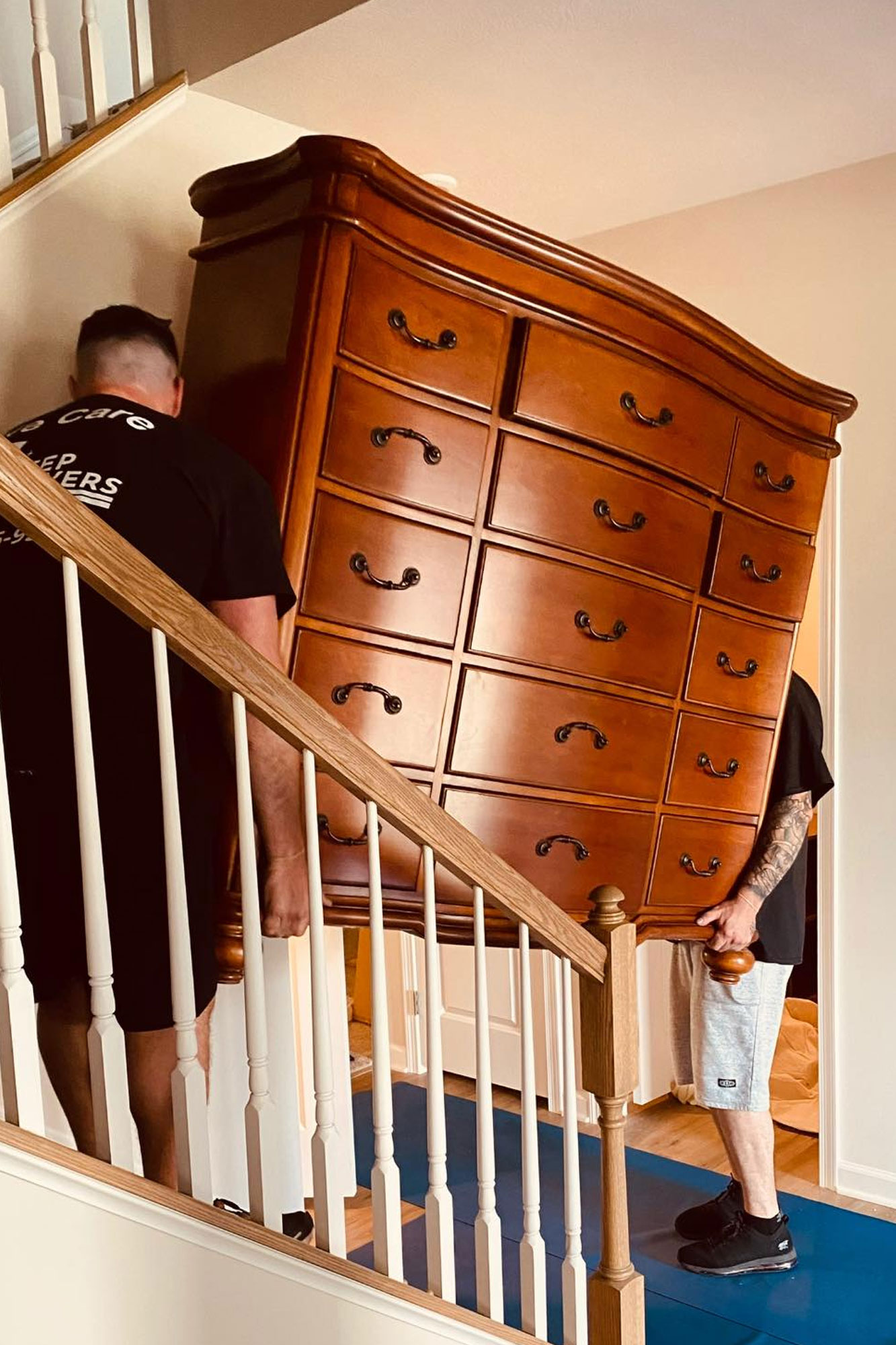
If your safe has to go up or down a full flight, that is the clearest sign to bring in a trained crew. The same goes for second floors, raised decks and any route with a turn on a landing.
Moving a Gun Safe in Pittsburgh and Washington County
Local homes and streets add challenges that generic guides don’t cover. Plan around them before moving day.
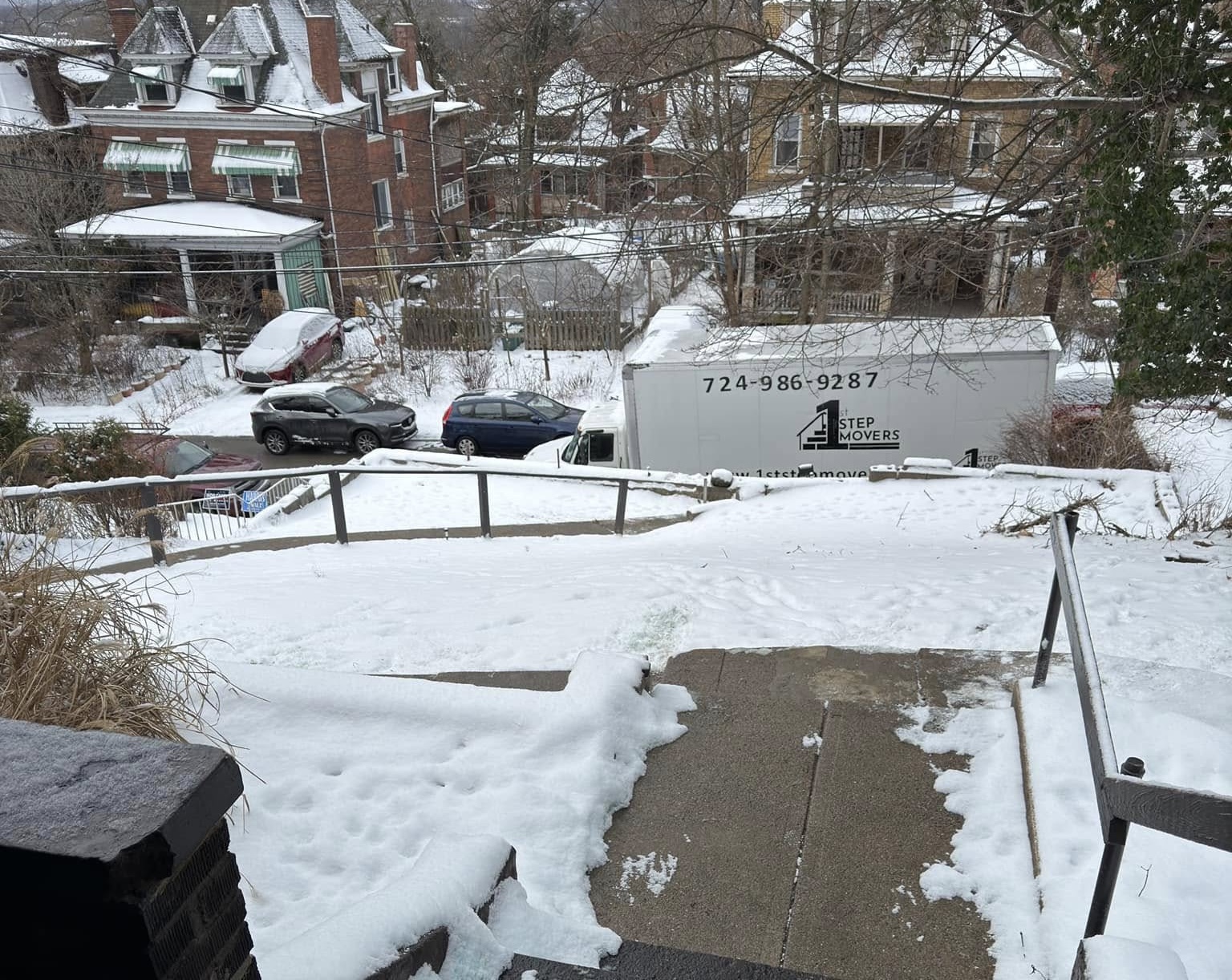
- Hills and steep driveways: a loaded dolly on a slope wants to run away. Take the gentlest grade available, move a few feet at a time and never move a tall safe sideways across a slope, where it can tip.
- Winter weather: ice and packed snow on walks and driveways make a heavy load dangerous. Salt and clear the full path the day before.
- Narrow city streets: parking close enough for a lift gate may take planning or a permit, so check local rules ahead of time.
A 1st Step truck parked on a snowy street in a hillside neighborhood.
Older homes, row houses and basements
Many older Pittsburgh homes have narrow doorways, steep basement stairs and tight turns, and safes often end up in those basements. Measure the basement door and stairwell carefully. In row houses, front steps and narrow hallways can leave very little room to tilt a dolly, so the crew needs a clear plan before the safe moves an inch.
Should You Move a Gun Safe Yourself?
A small, light safe on one level with a smooth path can be a reasonable DIY job with a good dolly and strong helpers. Call professionals when any of these apply:
- The safe weighs several hundred pounds or more.
- The route includes stairs, a landing turn, a steep driveway or icy ground.
- You have fewer than three capable adults to help.
- Anyone helping has back, knee or heart problems.
- You don’t have a dolly and ramp rated for the weight.
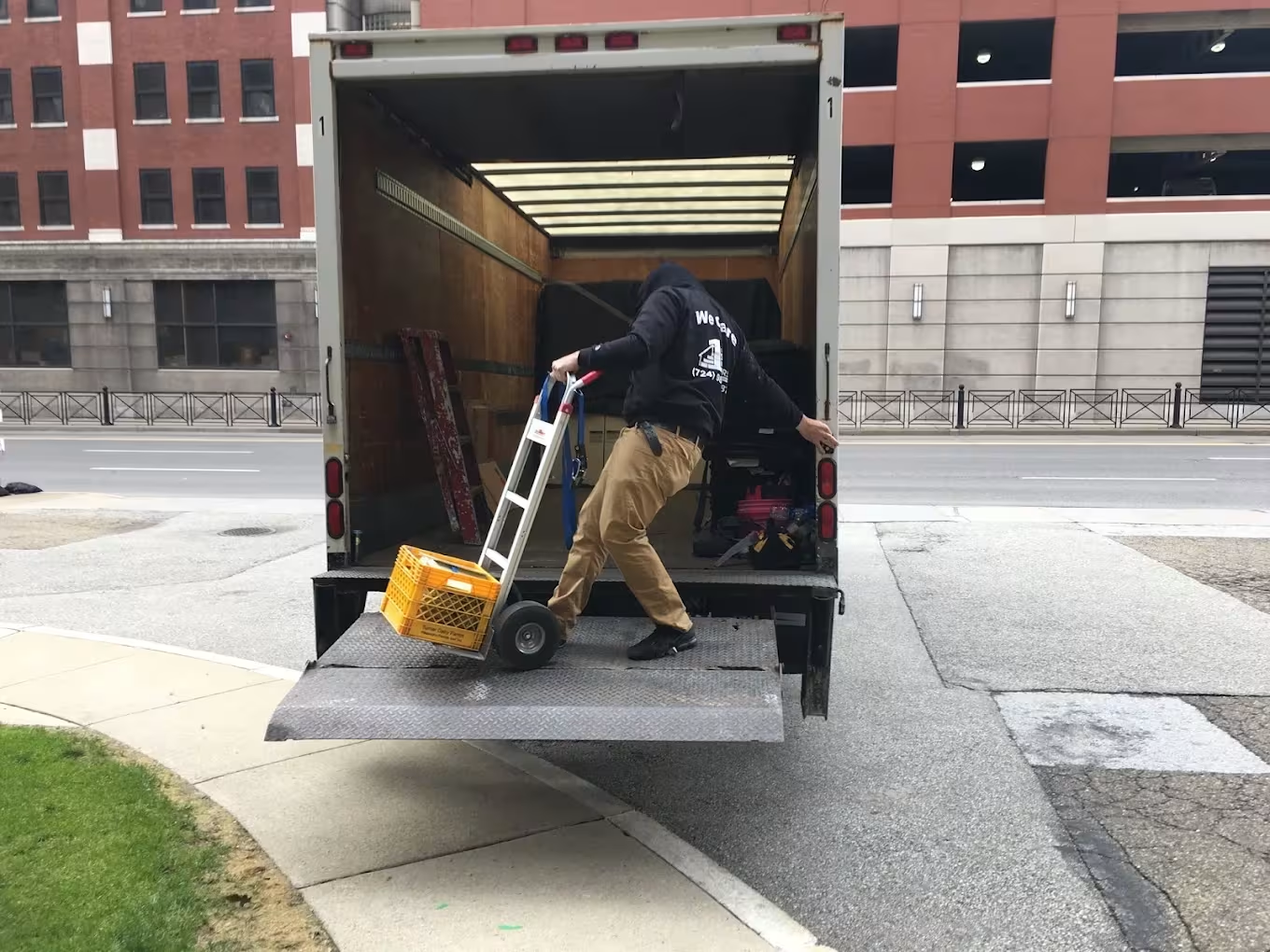
When you hire us, we plan the route through both homes, protect the floors along the way and secure the safe in the truck for the drive. A truck with a lift gate, like the one in this photo, raises a heavy load into the truck instead of pushing it up a steep ramp.
A gun safe can be moved on its own or as part of a full household move. If you also have a piano, ask about our piano moving service when you request your quote.
A mover using a hand truck to roll items up the lift gate into a 1st Step truck on a city street.
What Affects the Cost of Moving a Gun Safe
We don’t publish prices because every safe and every path is different, but these factors shape your quote:
- The safe’s size and weight.
- Stairs, landings and tight turns at either home.
- Distance between the two addresses.
- Whether the safe moves alone or with the rest of your household.
- Access issues like long walks, steep driveways or parking limits.
Under our PA PUC tariff, gun safes carry a separate per item charge, and our minimum is 3 hours Monday to Saturday and 4 hours on Sundays and holidays, travel time included. Ask for a free quote and we’ll explain exactly how yours is built. When comparing companies, confirm that each one is properly licensed; for moves across state lines you can check a mover through the FMCSA’s Protect Your Move site, and our post on red flags with movers covers what else to watch for.
Frequently Asked Questions
Can you use an appliance dolly to move a gun safe?
Yes, if its rated capacity, usually printed on the frame or nose plate, is higher than the safe’s weight. Appliance dollies are built for tall, heavy loads and have strong straps, but many top out below what a large safe weighs. A dedicated safe dolly or a stair climbing dolly handles more weight and gives better control on steps. A light hand truck meant for boxes is never enough.
How many people does it take to move a 400 lb safe?
Plan on at least three people for a 400 pound safe: one running the dolly and two steadying the sides and watching the path. Add helpers for stairs, slopes or tight turns, and keep everyone off the downhill side. The dolly should carry the weight, so the crew is there for control, not lifting.
Is it safe to transport a gun safe laying down?
Upright and strapped is the standard way to transport a gun safe. If a safe must lie down to fit through a space, lay it on its back on padding, never on the door side, and check the manufacturer’s guidance first. Lowering and raising a heavy safe is risky, so it’s best handled by a trained crew with the right equipment.
How do you move a gun safe with a pickup truck?
First confirm the safe’s weight is within the truck’s payload rating. Use a ramp rated for the load, keep the safe upright, push it against the front of the bed and strap it to solid tie points in several directions. Drive slowly and brake gently. For heavy safes, a truck with a lift gate is far safer.
Should I take the guns out of a safe before moving it?
Yes, always. Once the guns are out, store them unloaded in locked cases, keep ammunition in a separate container and decide who will carry them to the new home. Many people move firearms in their own vehicle rather than in the truck. Rules can differ by location, so review guidance from the ATF before you plan the trip.
Have a gun safe to move in the Pittsburgh area or Washington County? Request a free quote and tell us about the safe and the stairs, and we’ll plan the move with you.