
The biggest red flags with movers are a price given without anyone seeing your belongings, a demand for a large cash deposit, blank or vague paperwork, no verifiable license, and a crew that shows up in an unmarked rental truck. Those same warning signs sit behind most moving company scams, from lowball quotes that balloon on moving day to loads held until you pay more.
The good news is that most moving company scams are easy to avoid once you know what to check. This guide walks through each red flag, the common scams they lead to, how to verify a mover in Pennsylvania, and what to do if something goes wrong. If you’re planning local moving in Pittsburgh, the same checklist applies to any company you call, including us.
Short answer: Be wary of any mover that quotes sight unseen, wants a big cash deposit, won’t put everything in writing, can’t show a PA PUC certificate or USDOT number, or pressures you to book on the spot.
Moving Company Red Flags to Watch For
The federal mover regulator, FMCSA, and the FTC both warn about the same core behaviors. Here they are in plain terms, with why each one matters.
1. A quote without seeing what you own
A real estimate depends on what’s in your home, how many stairs there are, how far the truck parks from the door and whether anything needs special handling. A company that throws out a number after a thirty second phone call, without a walkthrough, a video call or a detailed inventory, has no basis for that number. That gap is where surprise charges come from.
2. A big deposit, especially in cash
Legitimate movers don’t need most of your money before they’ve lifted a box. A request for a large upfront payment, cash only, a wire transfer or a payment app is a classic sign of a company that may never show up. Paying by credit card gives you a way to dispute a charge if things go wrong.
3. Blank, vague or missing paperwork
Never sign a document with empty spaces for prices, dates or the list of items. Your estimate and contract should spell out the services, how you’re charged, the pickup and delivery dates and the company’s full legal name, address and phone number.

4. No name, no address, no marked truck
Watch for a phone answered with a generic “movers” instead of a business name, a website with no physical address, and a crew that arrives in a rental truck with no company markings.
An established mover has a name you can look up, a real address and trucks that carry its name and phone number. If you can’t figure out who you’re actually hiring, that’s reason enough to keep looking.
A 1st Step box truck with the company phone number on the side, parked on a snowy street.
5. Pressure to book right now
“This price is only good today” is a sales tactic, not a reason. A company that rushes you is usually trying to keep you from comparing quotes or checking reviews.
6. Vague answers about coverage
Ask what happens if something is damaged. A mover should explain its liability coverage clearly and in writing. “Don’t worry, everything’s covered” with nothing on paper is a warning sign.
7. A pattern of bad reviews, or almost none
Every company gets an occasional complaint. What matters is the pattern. Many reviews about prices jumping on moving day, or a company with no history at all under its current name, should make you cautious. Some rogue operators change names often to shake off bad reviews.
Common Moving Company Scams and How They Work
The red flags above usually point to one of a handful of scams. Knowing how each one plays out makes them easier to spot.
| Scam | How it works | How to avoid it |
|---|---|---|
| Lowball estimate | A quote far below every other company wins the job, then extra fees appear on moving day. | Get several written estimates based on a walkthrough and question any outlier. |
| Hostage load | Your things are loaded, then the crew refuses to unload until you pay much more than agreed. | Hire only licensed movers and get the price terms in writing before loading. |
| Deposit and disappear | A company takes a large deposit and never shows up. | Avoid big upfront payments and pay by credit card. |
| Bait and switch broker | A website books your move, then hands it to an unknown carrier you never vetted. | Ask directly whether the company will do the move with its own crew and trucks. |
| Blank contract | You sign incomplete forms that get filled in later with higher charges. | Never sign anything with blank spaces; keep a copy of everything. |
For a closer look at legitimate charges that can still catch people off guard, such as long carries, stairs or packing materials, see our guide to the hidden costs of moving.
How to Check if a Mover Is Legit in Pennsylvania
Licensing depends on where you’re moving, so check the right agency.
Moves within Pennsylvania
Household goods movers who carry belongings between points in Pennsylvania need authority from the Pennsylvania Public Utility Commission. Licensed movers also file a tariff with the PUC that sets how they charge, so the rules behind your bill are on record.
1st Step Movers holds PUC Certificate A-8922773 as a household goods carrier. Under our tariff, the minimum is 3 hours, travel time included.
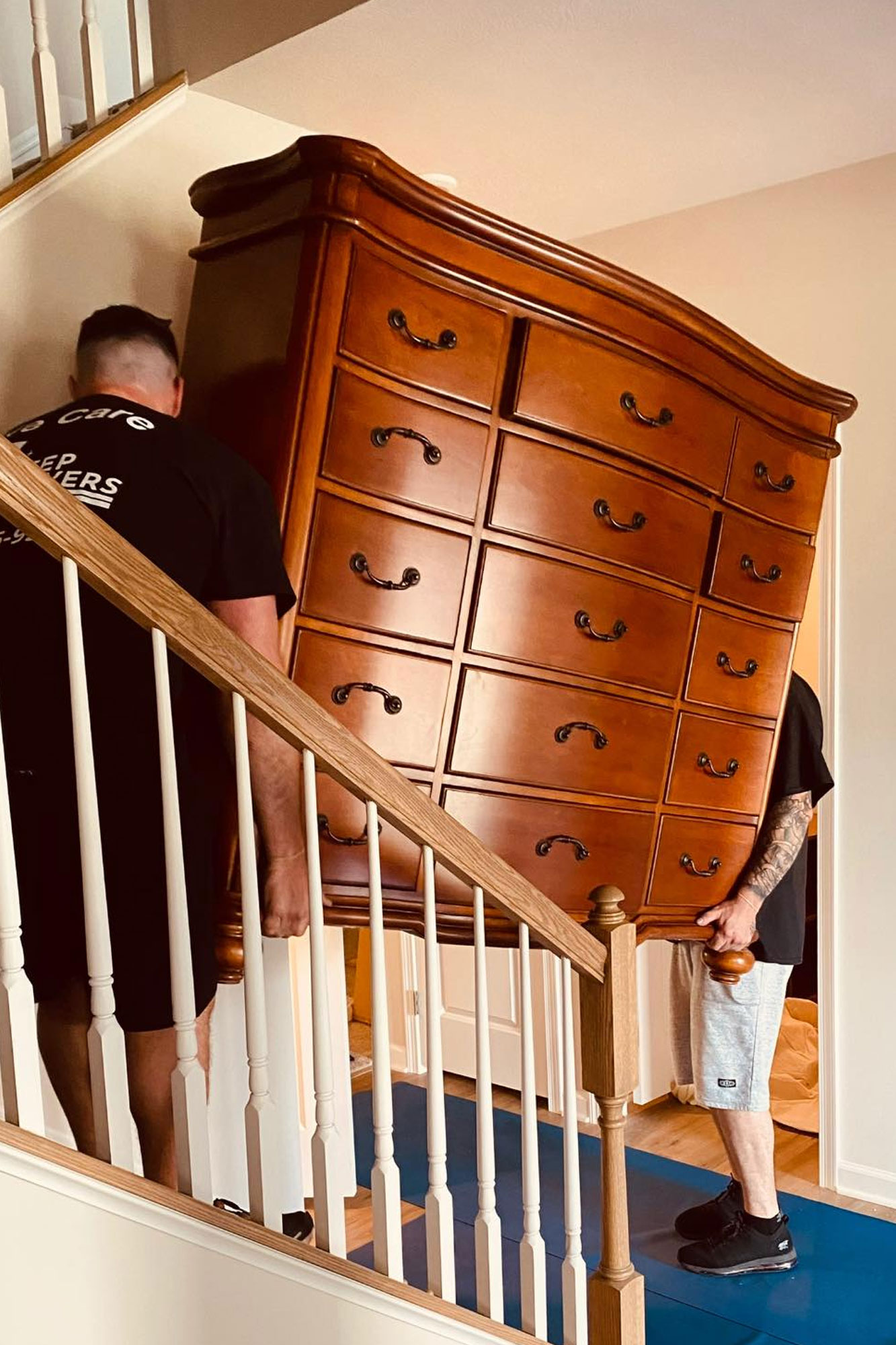
Two movers carrying a wooden dresser up a staircase.
Moves to another state
Interstate movers must be registered with the Federal Motor Carrier Safety Administration and have a USDOT number you can look up. FMCSA’s Protect Your Move site lets you search a company and explains your rights, including the “Your Rights and Responsibilities When You Move” booklet interstate movers must give you. 1st Step Movers is registered with FMCSA for interstate household goods moves.
Questions to ask every mover
- What is your full legal business name and physical address?
- Can you give me your PA PUC certificate or USDOT number?
- Will your own crew and trucks do the move, or will it be handed to another company?
- How is the price calculated, and what could change it on moving day?
- What deposit do you require, and how can I pay?
- How is damage handled, and can I see that in writing?
A legitimate company answers these without hesitation. For a fuller side by side process, read how to compare moving companies in Pittsburgh.
Local Red Flags in Pittsburgh and Washington County
Our region has its own quirks, and a good mover asks about them up front. A quote that ignores them is a red flag of its own.
- Stairs and hills: steep driveways, long front steps and split level homes add time. A mover who never asks about them is guessing.
- Parking and narrow streets: row house blocks and tight city streets can mean a longer carry from the truck. Ask how the crew plans for it.
- Older homes: narrow doorways and tight turns need protection for floors and walls.
- Winter weather: ask how the company handles snow, ice and delays.
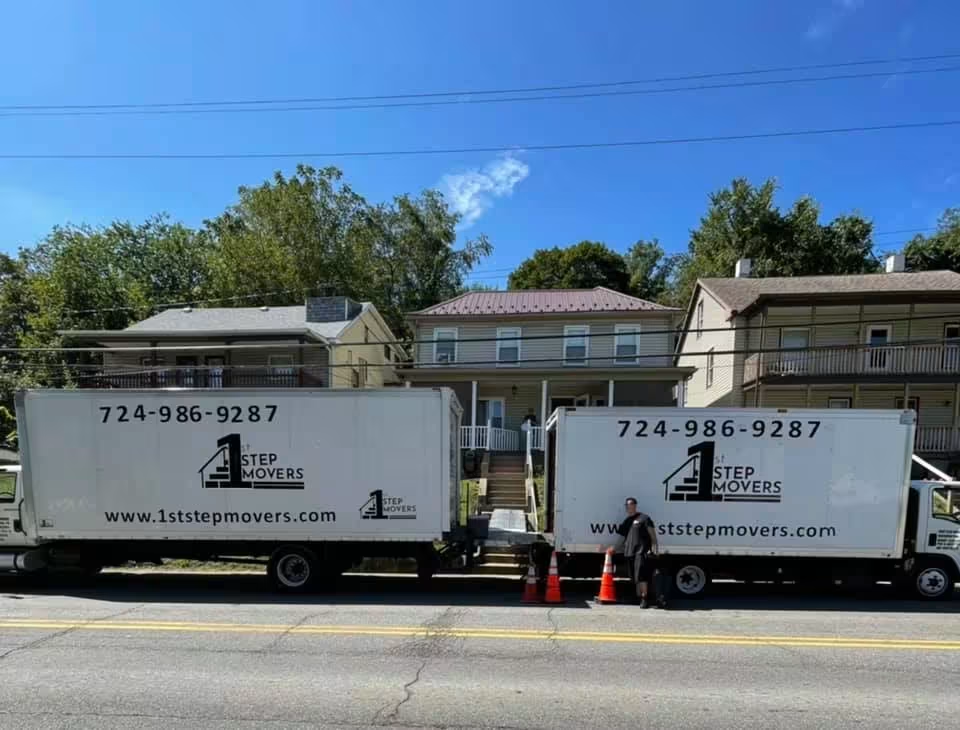
Two 1st Step Movers box trucks parked on a residential street in front of houses.
Timing matters too. Rogue operators lean on people who are short on time, so booking early gives you room to check credentials. Our post on how far in advance you need movers covers how much lead time to plan for.
What to Do if You Think You’re Being Scammed
Stay calm and keep everything in writing. Take photos of your paperwork, the truck and any markings or plate numbers, and save every text and email.
Don’t sign new documents or agree to charges you don’t understand. On an interstate move with a non-binding estimate, FMCSA rules say the mover must release your shipment once you pay 110 percent of the estimate, with the rest billed later. For an interstate move, file a complaint with FMCSA through Protect Your Move. For a move within Pennsylvania, contact the PA PUC. You can also report fraud to the FTC at ReportFraud.ftc.gov, and call local police if a company refuses to release your belongings.
A truck load tightly packed with blanket wrapped furniture.

Green Flags of a Trustworthy Mover
Red flags are only half the picture. Here’s what a reputable company looks like:
- A walkthrough or detailed inventory before the estimate.
- A clear written estimate and contract with no blanks.
- License numbers it shares without being asked twice.
- A real local address, a business phone and marked trucks.
- Reasonable deposit terms and normal payment options.
- Steady reviews over time, with complaints answered.
- Straight answers about pricing and what could change it.
1st Step Movers is locally owned, based in Washington County and has served Western Pennsylvania since 2019. We’re fully licensed and insured, and we believe in transparent pricing with no hidden fees. Ask us any question on the list above and we’ll answer it in writing with your estimate.
Frequently Asked Questions
How do I check if movers are legit?
Ask for the company’s full legal name, address and license numbers. For moves within Pennsylvania, confirm the mover holds household goods authority from the PA PUC. For interstate moves, look up the USDOT number on FMCSA’s Protect Your Move site. Then read reviews over several years and get a written estimate based on a walkthrough or a detailed inventory.
What agency oversees moving companies?
It depends on the route. Interstate household goods movers are regulated by the Federal Motor Carrier Safety Administration, which runs the Protect Your Move site. Moves between points within Pennsylvania fall under the Pennsylvania Public Utility Commission, which licenses household goods carriers and keeps their tariffs on file. Each agency also takes complaints about movers it oversees.
What is the most common moving scam?
The lowball estimate is one of the most common. A company quotes far below everyone else, often without seeing your home, then adds charges once your belongings are on the truck. In the worst cases this turns into a hostage load, where the crew refuses to unload until you pay more. Written estimates from licensed movers are the best defense.
Is it normal for movers to ask for a deposit?
Some legitimate movers take a reasonable deposit to hold a date, and that alone isn’t a scam. The warning signs are a large deposit, a demand for cash or a wire transfer, and pressure to pay before you’ve seen a written estimate. Paying by credit card gives you a way to dispute the charge if the company doesn’t show.
How long do you have to file a claim against a moving company?
For an interstate move, FMCSA’s Your Rights and Responsibilities booklet gives you 9 months from delivery to file a written damage or loss claim with the mover. For moves within Pennsylvania, check your contract and the mover’s PUC tariff for its claim terms. Either way, note damage on the paperwork at delivery and take photos before you unpack. Questions about suing a mover are best taken to an attorney.
Want a mover that puts everything in writing? Request your free quote from 1st Step Movers and ask us anything on the checklist above.