What is considered a long distance move? Many movers treat any move of roughly 100 miles or more as long distance, along with any move that crosses a state line, no matter how short. Everything else, a move that stays inside one metro area and usually finishes in a single day, is a local move.
That simple rule changes how your move is priced, scheduled and regulated, so it’s worth knowing which side of the line you’re on before you call for quotes. This guide explains the definitions, how a Pittsburgh area move fits them, and what to ask before you hire long distance movers in Pittsburgh or a local crew.
Short answer: A move is often considered long distance when it covers about 100 miles or more or crosses a state line. Under our PA PUC tariff, our local hourly rates apply to moves of 40 miles or less within Pennsylvania.
What Is Considered a Long Distance Move?
There’s no single national mileage cutoff. Each moving company sets its own definition, but most draw the line in the same general places. Two questions decide it: how far are you going, and are you leaving the state?
Local, intrastate and interstate moves
- Local move: a short move inside one metro area, usually priced by the hour and finished the same day.
- Intrastate long distance move: a longer move that stays inside Pennsylvania, for example from Washington County to the other side of the state. It falls under state rules.
- Interstate move: any move that crosses a state line. It is regulated at the federal level even if the trip is only a few miles.
Some movers draw the line at 50 miles, others at 100 miles or more. That’s why it pays to ask each company how it classifies your move instead of assuming.
How our tariff draws the line
1st Step Movers is a household goods carrier certified by the Pennsylvania Public Utility Commission. Under our PUC tariff, hourly local rates apply to moves of 40 miles or less within Pennsylvania, billed in half hour increments. Moves beyond that distance aren’t billed on the local hourly basis, so we’ll explain exactly how your quote is built before moving day.
Local vs Long Distance Moving at a Glance
| Factor | Local move | Long distance move |
|---|---|---|
| Typical distance | Within one metro area | About 100 miles or more, or any state line crossing |
| How it’s usually priced | Hourly crew time, including travel time | Usually shipment weight or volume plus distance |
| Timeline | Loaded and delivered the same day | Delivery date or delivery window, often several days |
| Who regulates it | State rules (PA PUC inside Pennsylvania) | PA PUC in state, FMCSA for interstate moves |
| Planning time | A few weeks is often enough | Book earlier, especially in summer |
How a Pittsburgh Area Move Fits the Definitions
Most moves around Pittsburgh are local. Going from one South Hills neighborhood to another, from the city out to Washington County, or between suburbs north and south of the rivers is often short enough to be loaded and unloaded the same day.
Western Pennsylvania sits close to state lines, though. A move of under an hour can still cross into another state, and that makes it an interstate move with federal paperwork, even though the drive is short. On the other hand, a move to the far side of Pennsylvania stays intrastate even though it covers hundreds of miles.
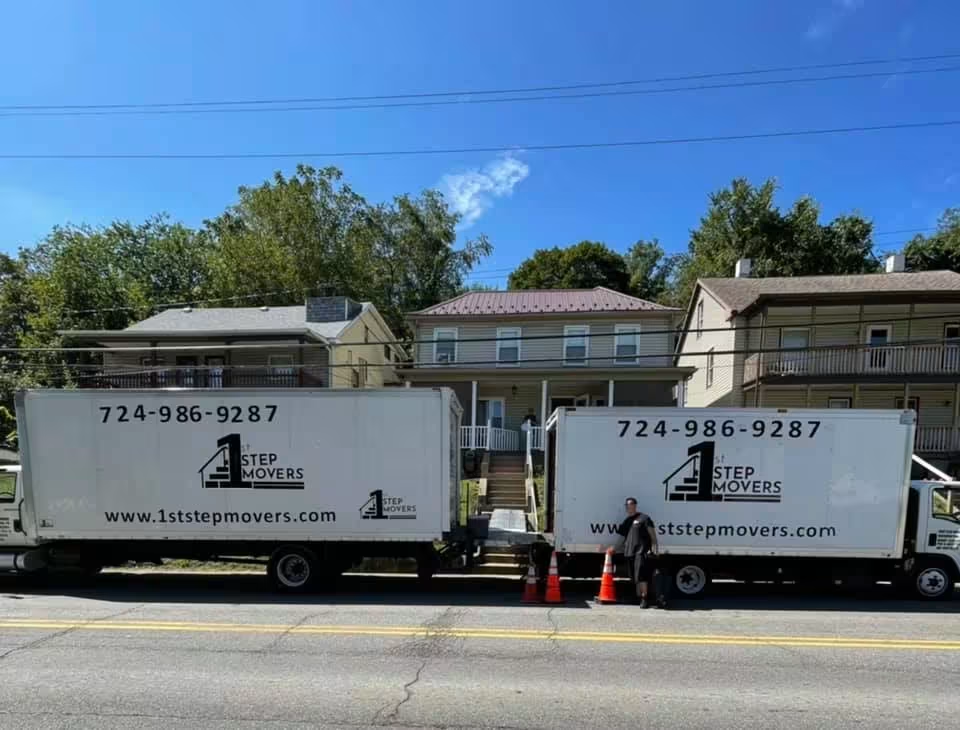
Local moves around Pittsburgh come with their own challenges. Hilly blocks, narrow streets and tight parking mean the crew has to plan where the trucks go before the first box comes out.
On a long distance move, that planning happens twice: once at the home you’re leaving and again at a destination the crew may be seeing for the first time. Tell your mover about street width, parking rules and anything that might keep a large truck from getting close to the door.
Two 1st Step Movers box trucks parked on a residential street in front of houses.
How Pricing Differs Between Local and Long Distance Moves
Local moves are usually priced on time. You pay for the crew and truck from the start of the job to the finish, and with us that time includes travel. Under our tariff, the minimum is 3 hours, travel time included.
Long distance moves are usually priced on the size of the shipment and how far it goes. Whatever the method, the quote should spell out what’s included. The things that drive cost on either type of move include:
- How much you’re moving and how many rooms are full
- Stairs, long carries from the truck to the door, and elevators
- Specialty items such as pianos and gun safes, which carry separate per item charges under our tariff
- Packing services and materials
- Your date, since weekends, holidays and summer fill up first
The more detail you give up front, the more accurate your free quote will be.
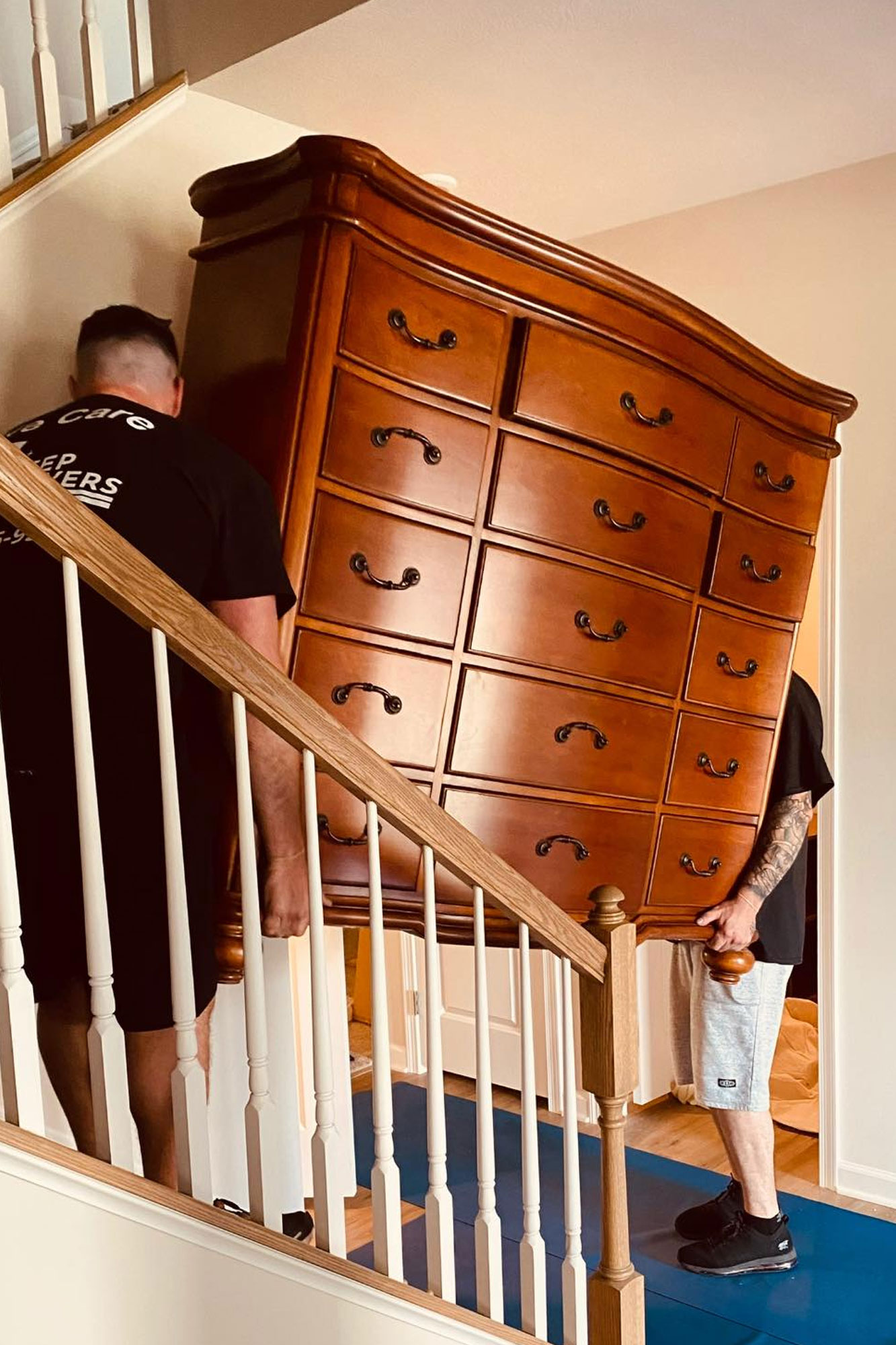
Stairs are one of the biggest reasons two moves of the same size take different amounts of time. Many older Pittsburgh homes have steep, narrow staircases, tight turns and basements reached by a single set of steps.
On a local hourly move, extra carrying time shows up in the total. On a long distance move it still matters, because the crew needs the right number of people and equipment at both ends. Mention every flight of stairs when you ask for a quote.
Two movers carrying a wooden dresser on a staircase.
Timeline: Same Day vs Multi Day Moves
A local move is usually one day from start to finish. The crew loads in the morning, drives across town and unloads the same afternoon or evening.
A long distance move takes more coordination. Loading may take a full day on its own, then the truck has to travel, and drivers have legal limits on hours behind the wheel. Many long distance moves are delivered on a set date or within a delivery window, so confirm in writing when your belongings will arrive and what happens if your new home isn’t ready.
Because of that, long distance moves need more lead time. Our post on how far in advance you need movers walks through booking timelines for busy and quiet seasons.
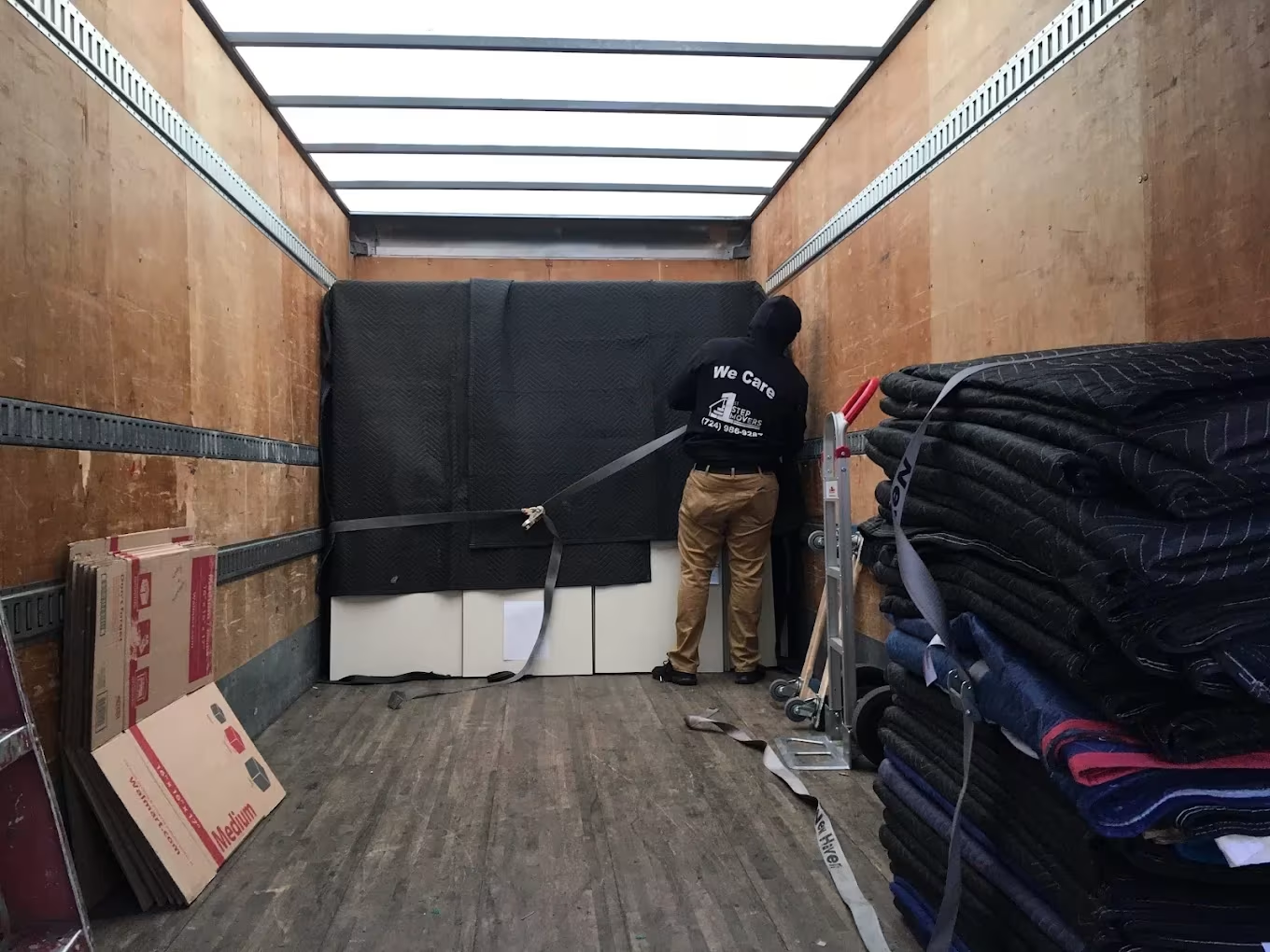
The longer the trip, the more the load matters. Furniture should be wrapped in moving blankets and strapped in place so nothing shifts on highway miles or hill grades.
A good crew loads heavy pieces first, fills gaps so items can’t slide, and secures each tier as the truck fills. Ask any mover how they protect and secure furniture for the trip, especially wood pieces and anything with glass.
A mover strapping furniture wrapped in moving blankets inside a 1st Step truck.
Licensing: State Rules vs Federal Rules
Inside Pennsylvania, household goods movers need authority from the Pennsylvania Public Utility Commission. 1st Step Movers holds PUC Certificate A-8922773 as a household goods carrier, and our rates are set by our filed tariff.
Interstate moves fall under the Federal Motor Carrier Safety Administration. A mover handling an interstate move should have a USDOT number you can look up, and FMCSA’s Protect Your Move site explains your rights and responsibilities as a shipper, including what a written estimate and bill of lading should cover.
Whatever the distance, watch for warning signs like quotes given without seeing your belongings, large cash deposits or blank paperwork. Our guide to red flags with movers lists what to look out for.
What a Local Pittsburgh Mover Adds
On either kind of move, the hardest part is often the street and the house, not the highway.
- Hills and steep driveways: trucks, ramps and hand trucks need a safe place to stage.
- Narrow city streets: some blocks can’t fit a large truck, so the crew may need a closer parking spot or a longer carry.
- Row houses and older homes: tight doorways, narrow stairs and low ceilings mean more careful handling.
- Parking: ask your building or the city ahead of time about reserving curb space.
- Winter weather: snow and ice slow everything down, so walkways need to be cleared before the crew arrives.
Western Pennsylvania winters add time to any move. Early darkness, snow and icy steps all slow down loading and unloading.
If you’re moving in winter, salt and clear steps and walkways the night before, keep a path open from the door to where the truck will park, and put down floor protection in entryways. For a long distance move, build in some flexibility in case weather affects the drive.
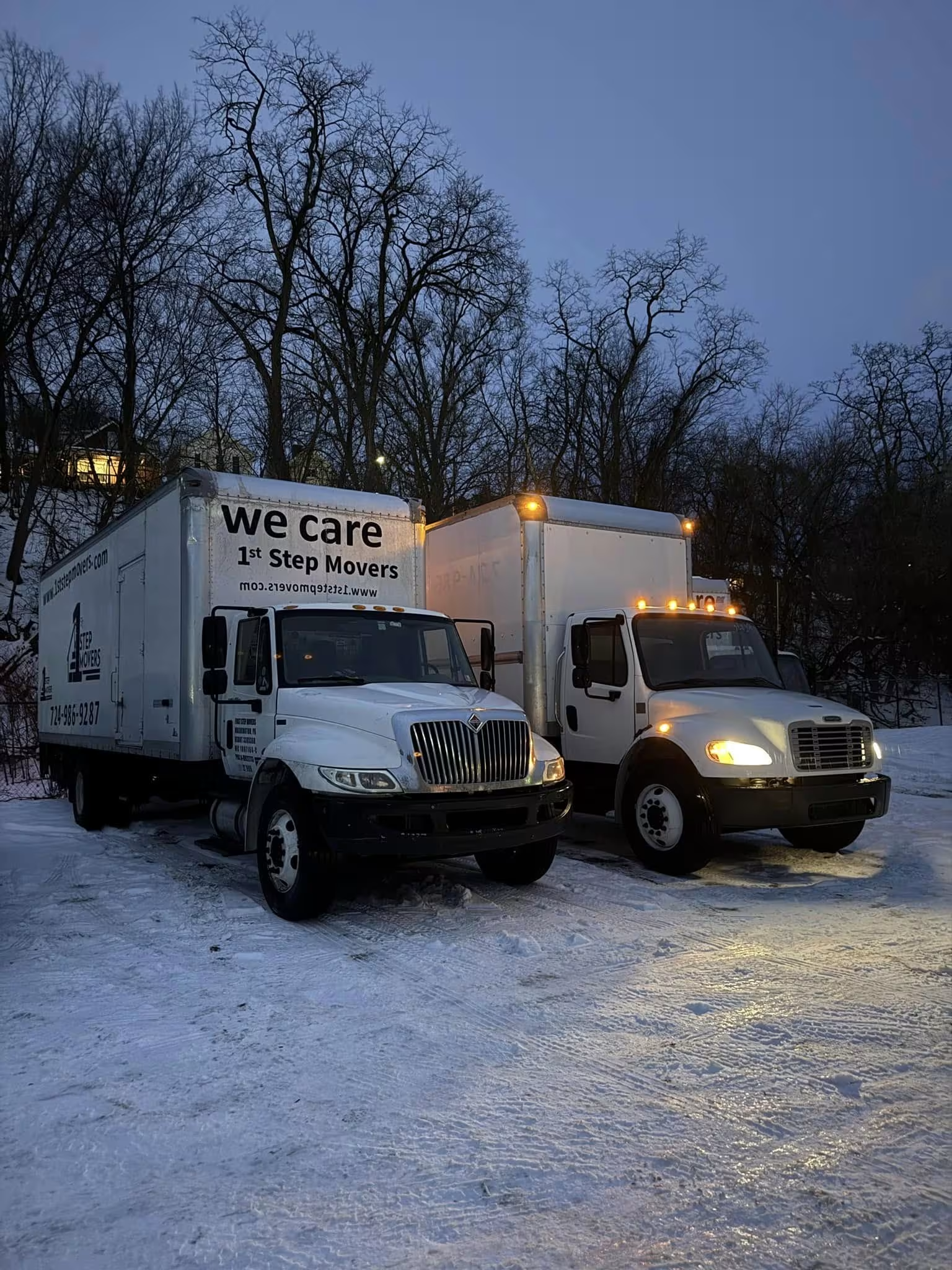
Two 1st Step box trucks parked in the snow with their headlights on in low light.
How to Prepare for Each Type of Move
For a local move
- Get a quote that lists the crew size, the minimum and how travel time is counted.
- Pack and label boxes by room so the crew can unload quickly.
- Driving a rental truck yourself? Book loading and unloading help so the heavy lifting is covered.
For a long distance move
- Get a written estimate and confirm your delivery date or window.
- Pack a bag with what you’ll need for several days, plus documents, medications and valuables that should travel with you.
- Set up mail forwarding with USPS and update utilities at both addresses.
- Check which items can’t go on the truck. Our list of household items movers won’t transport covers fuels, chemicals and perishables.
Need help with the packing itself? Our packing services are available for local and long distance moves.
Frequently Asked Questions
What qualifies as a long distance move?
There’s no single national rule. Many movers draw the line around 100 miles or at any state line, so the simplest step is to give each company both addresses and ask how it classifies the move. For us, our PA PUC tariff sets the line: moves of 40 miles or less within Pennsylvania are billed hourly, and longer moves are quoted on a different basis.
What are red flags to watch for in movers?
Be cautious of a mover that gives a firm quote without seeing or hearing about your belongings, asks for a large cash deposit, hands you blank or incomplete paperwork, or can’t show its license. In Pennsylvania, in state movers need PUC authority, and interstate movers need a USDOT number you can check through FMCSA.
What should I do to prepare for a long distance move?
Book early, get a written estimate, and confirm your delivery date or window. Declutter before you pack so you aren’t paying to move things you don’t want. Keep documents, medications and valuables with you, set up mail forwarding, and pack an essentials bag that will last until the truck arrives at your new home.
Do local moving companies do long distance moves?
Some do and some don’t, so ask. 1st Step Movers handles both local moves around Pittsburgh and Washington County and long distance moves across Pennsylvania or to another state. Whoever you hire, confirm that they hold the right authority for your route: PA PUC inside Pennsylvania and federal registration for interstate moves.
Is a short move across a state line still a long distance move?
It is treated as an interstate move, which falls under federal rules no matter how few miles it covers. That means a mover registered with FMCSA and the federal shipper protections explained on Protect Your Move. Some companies also price it like a long distance move, so mention the state line when you request your quote.
Planning a move across town or across state lines? Request a free quote and we’ll tell you how your move is classified and what goes into the price.