
For most moves, book movers four to eight weeks ahead. Give a local weekday move in a quiet month at least two to three weeks, and give a summer, end of month or long distance move eight weeks or more.
Knowing how far in advance to book movers comes down to three things: when you’re moving, how far you’re going and how much stuff is coming with you. This guide covers each one, plus fall moves, last minute moves and how to time your movers around a home closing. If you’re planning local moving in Pittsburgh or anywhere in Washington County, it will help you get the date you want.
Short answer: Book four to eight weeks out for a typical move. Go to eight weeks or more for summer, the last days of a month, a Saturday or a long distance move. Call as soon as you have a realistic target date.
How Far in Advance to Book Movers: The Quick Guide
Use this table as a starting point, then adjust for the factors in the next section.
| Your move | Book this far ahead |
|---|---|
| Small local move, weekday, quiet month | 2 to 4 weeks |
| Typical local move of a house or apartment | 4 to 6 weeks |
| Summer, month end or Saturday move | 6 to 8 weeks or more |
| Long distance move across Pennsylvania or to another state | 8 to 12 weeks |
| Move tied to a home closing | As soon as you have a target closing date |
| Move with a piano, gun safe or full packing service | Add a week or two to the times above |
There’s rarely a downside to booking early. The main thing to ask about is how the company handles a date change, since leases and closings can move.
What Changes How Early You Should Book
Season
Late spring and summer are the busiest time of year for movers. School is out, many leases turn over and a lot of home sales close. Winter is the quietest season, though in Pittsburgh it brings snow and ice. Our guide to the best seasons and days to move in Pittsburgh goes through each month in detail.
Day of the week and time of the month
Fridays, Saturdays and the last few days of any month fill first, because that’s when leases end and closings stack up. Tuesday through Thursday in the middle of the month is usually the easiest to get. Read more about which day of the week is cheapest to move.
Size of the home and special items
A one bedroom apartment can often be loaded in a morning. A four bedroom house with a full basement and garage needs a bigger crew and a longer block of time, and those bookings are harder to fit in on short notice.
Heavy specialty items need planning too. If you have a piano or gun safe, mention it on the first call so the right crew and equipment are scheduled.
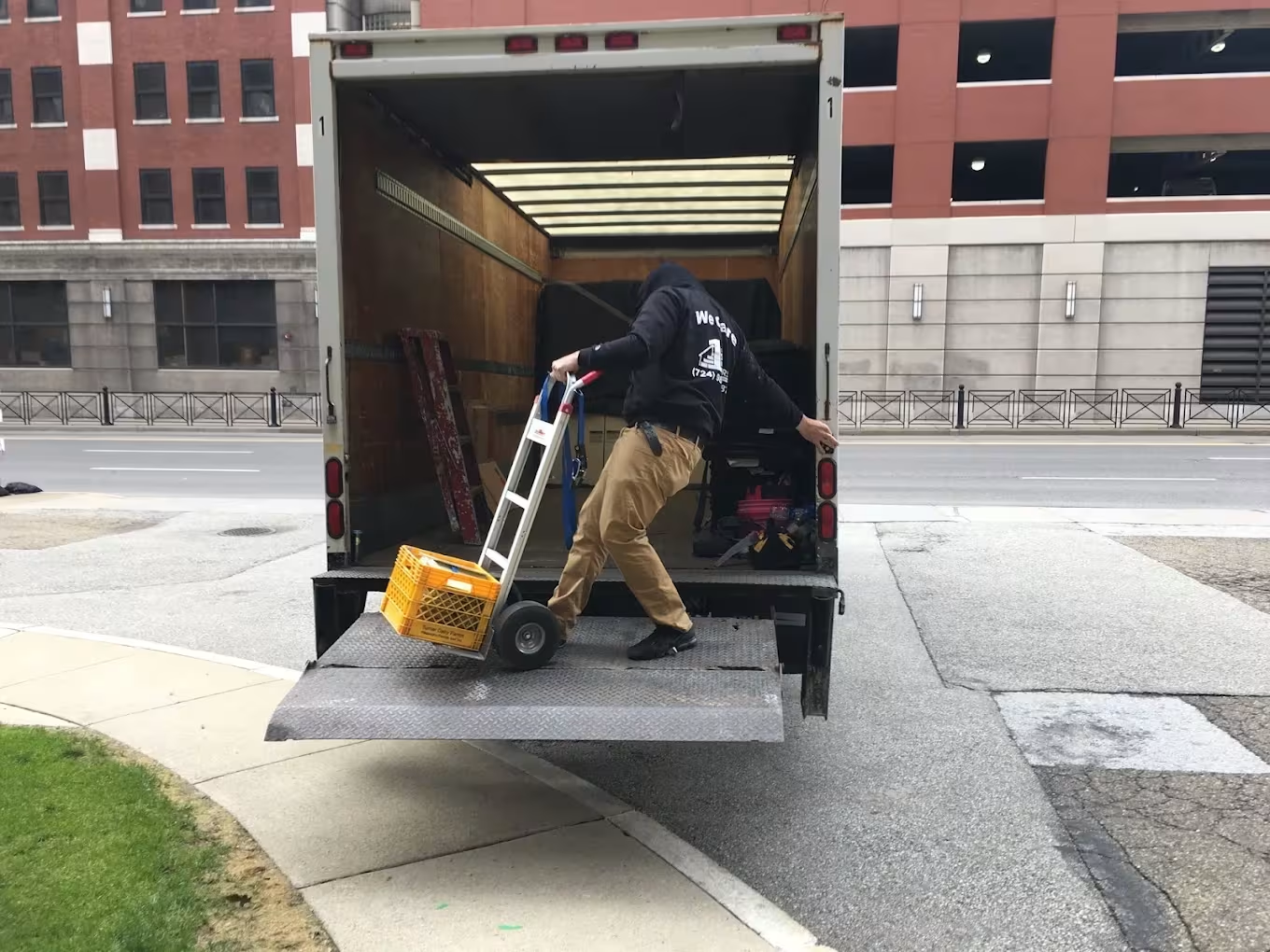
Mover using a hand truck to roll items up the lift gate into a 1st Step truck on a city street.
Distance
Long distance moves take a full day or more of a truck and crew, so they need more lead time than a local job. Interstate movers must be registered with the federal government, and the FMCSA’s Protect Your Move site explains your rights and the paperwork you should receive. 1st Step is registered with FMCSA for interstate household goods moves. See our long distance moving page for details.
Extra services
If you want professional packing, the packers usually come before moving day, so that day has to be on the calendar as well. Book packing services at the same time as the move.
Pittsburgh Details That Call for More Notice
Local conditions can add planning time that has nothing to do with the calendar.
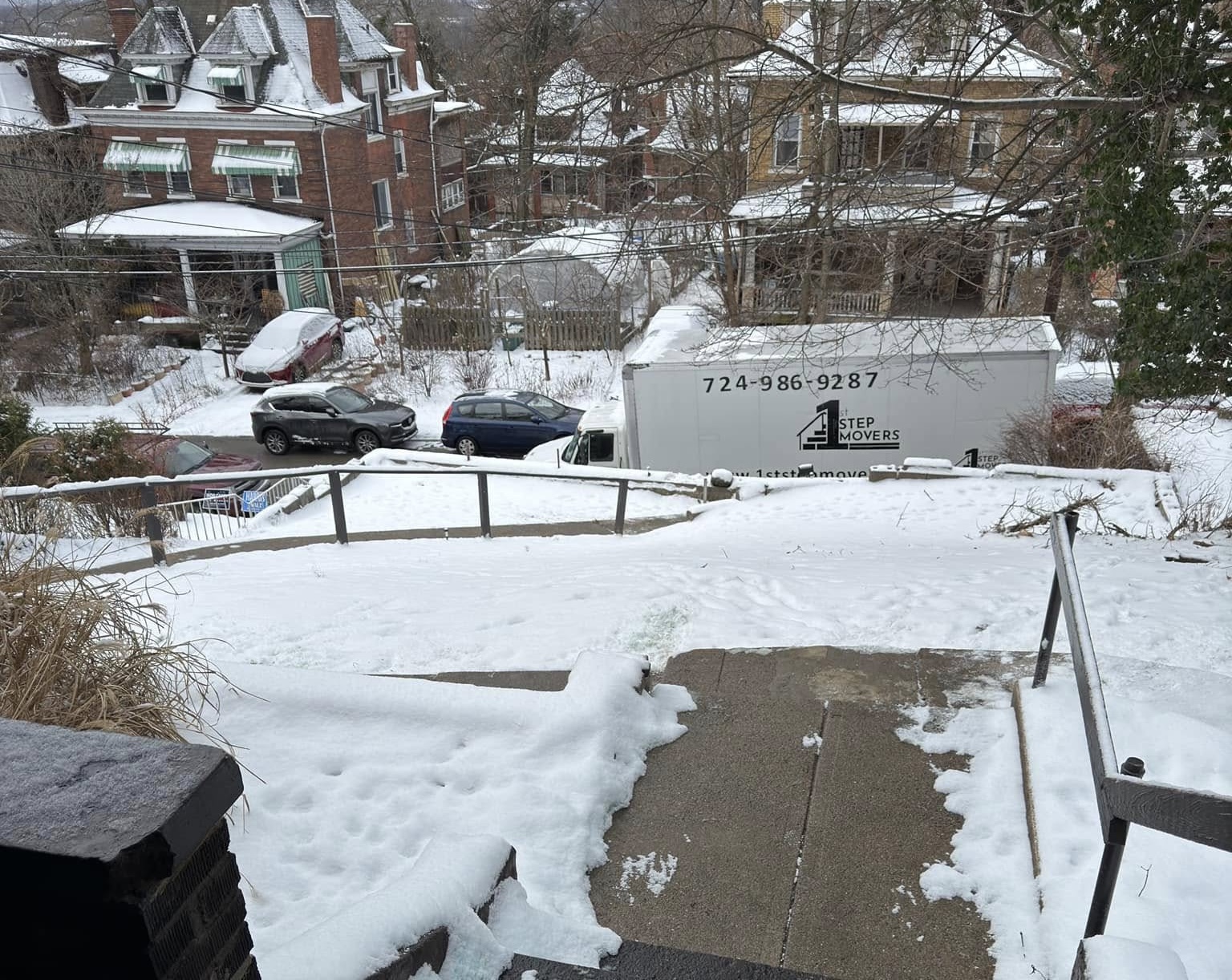
- Narrow streets and parking: Many city neighborhoods have tight streets, permit parking and row houses with no driveway. Give yourself time to sort out where the truck can park.
- Hills and steps: Long exterior staircases and steep driveways take more time and care, so tell your mover about them when you book.
- Apartment rules: Many buildings require you to reserve an elevator or loading time. Book it once your moving date is set.
- Winter weather: Snow can push a move back a day, so leave some room around a winter date.
1st Step truck parked on a snowy street in a hillside neighborhood.
Booking Movers for a Fall Move
Fall seems like a quiet season, but it doesn’t start that way. September carries a lot of summer’s momentum: students and staff are settling into new apartments, many leases begin September 1, and summer home sales are closing.
- Early to mid September: Treat it like summer and book six to eight weeks ahead.
- October: Demand eases. Four to six weeks is usually enough.
- November: Three to four weeks can work, but the week of Thanksgiving can fill quickly, so book that week earlier.
Sunset comes about an hour earlier once daylight saving time ends in early November, so ask for a morning start. Long distance moves still need eight weeks or more in any fall month.
Should You Hire Movers Before or After Closing?
Hire your movers before closing, but schedule the truck for after you have the keys. Hiring and moving are two separate decisions. Hiring reserves a crew and a date. Moving is the day the truck shows up.
Book as soon as you have a target closing date, especially for a closing near the end of a month. If you wait until every detail is final, the week you need may already be gone.
Closings slide for ordinary reasons: a lender asks for one more document, or a repair from the final walkthrough takes longer than planned. Keep your mover in the loop and ask up front how a date change works.
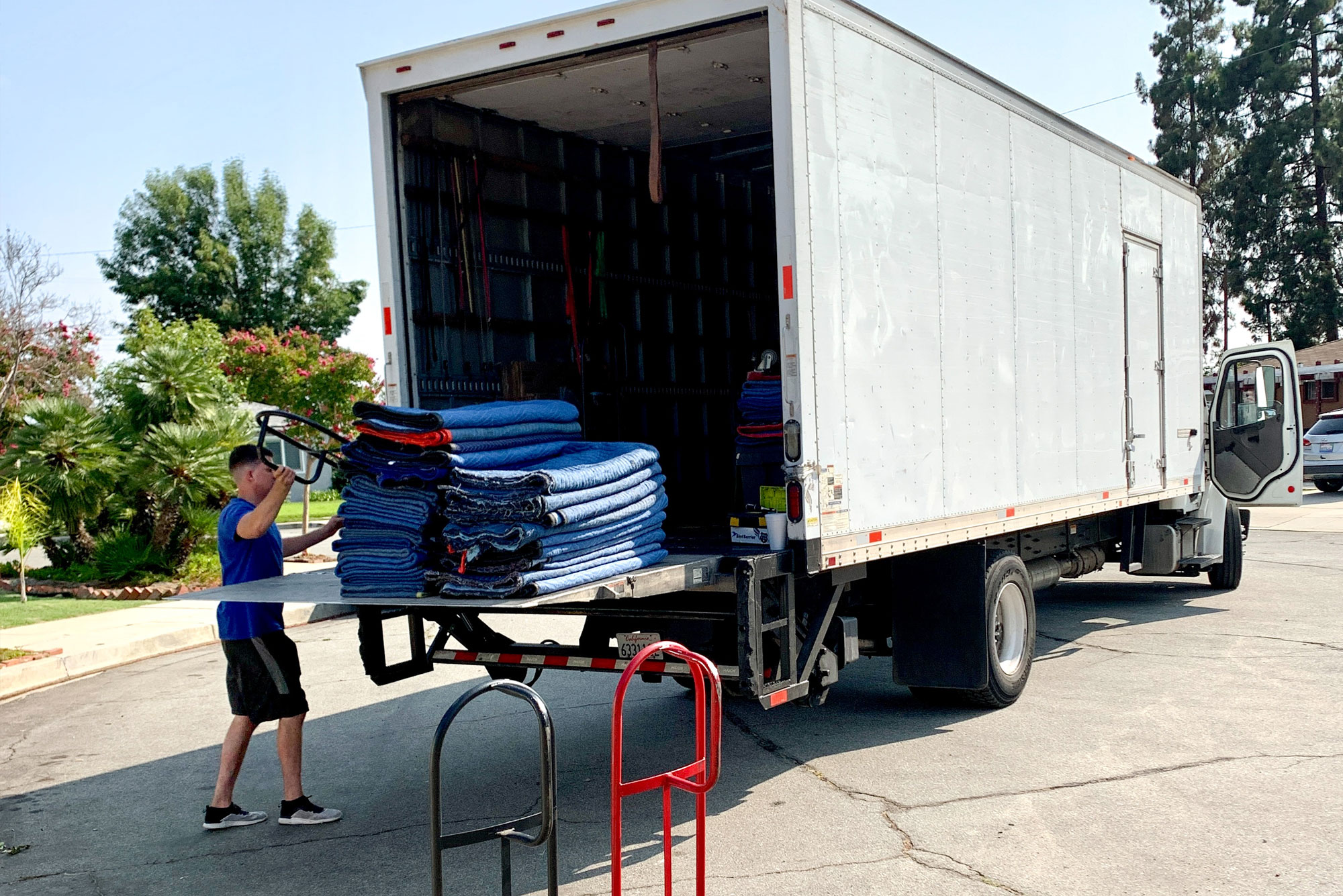
A mover unloading moving blankets from a box truck, with a hand truck on the street.
Leave a buffer after closing
Try not to load the truck the same morning you close on the home you’re buying. If the closing runs late, you’d have a loaded truck and no keys. A gap of a day or more is safer. Confirm the move date with your agent a week or two before closing.
Don’t move in before closing
Until the sale is complete, the seller still owns the house. Moving your things in early usually takes a written agreement with the seller, so talk to your agent before planning anything like that.
If you’re selling and buying at once
When you must be out of your old home before you can get into the new one, you’ll need a place for your things in between. Plan that gap early, while you still have options, and tell your mover so the move can be split into two days if needed.
Can You Book Movers Last Minute?
Sometimes. It depends on the date, the size of the move and what’s already on the calendar. A small weekday move in the off season is easier to fit in than a Saturday house move at the end of June. Be flexible on the day and time if you can.
If your timeline was cut short by a job change, a lease problem or a family situation, call us and ask. Our emergency moving service exists for moves that can’t wait.
To speed things up, have a rough room by room list ready, note any stairs or long walks to the truck, and tell us about heavy items so we can plan the crew before we arrive.
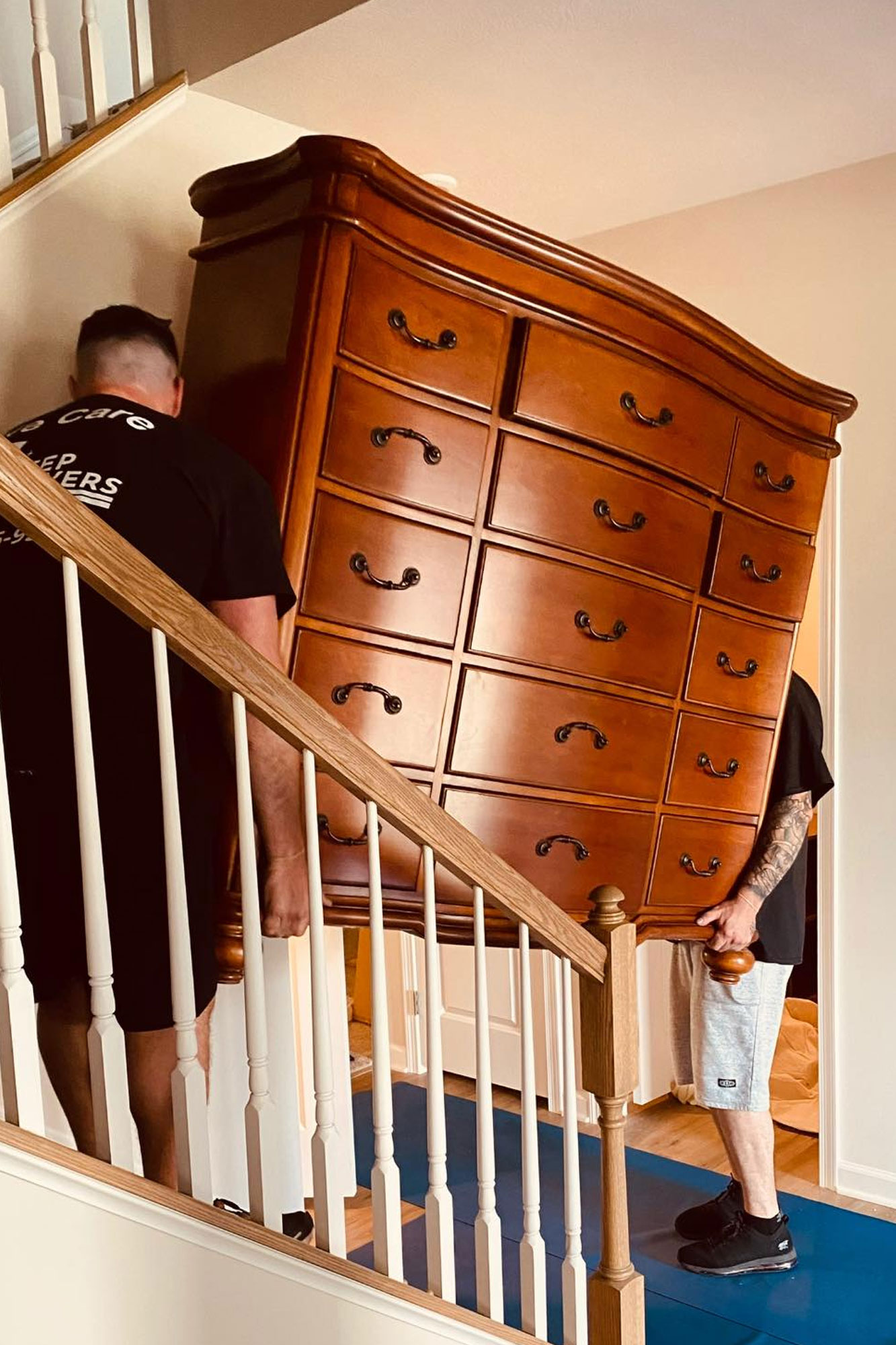
Two movers carrying a wooden dresser up a staircase.
How to Book Your Movers Step by Step
- Pick a target date and a backup. Midweek and mid month gives you the most choice.
- Get written estimates. Our guide on how to compare moving companies covers what to ask.
- Check the license. In Pennsylvania, household goods movers are certificated by the PA Public Utility Commission. 1st Step holds a PA PUC certificate and is fully licensed and insured.
- Ask about minimums and date changes. Under our PA PUC tariff, our minimum is 3 hours, travel time included.
- Confirm a week before. Recheck the date, start time, addresses and parking plan.
Then start packing. Our guide on how long before moving to start packing lays out a week by week plan.
Frequently Asked Questions
How far in advance should you book movers?
Four to eight weeks covers most moves. When you call, have your target date and a backup, both addresses, the number of bedrooms, any stairs or elevator rules, and a list of heavy items like a piano or gun safe. With those details ready, the mover can reserve the right crew and truck in one conversation.
What is the cheapest day to hire movers?
Weekdays in the middle of the month are usually the least in demand, so they’re the easiest to book, and your choice of start time is wider. Fridays, weekends and month end dates fill first. Under our PA PUC tariff, our minimum is 3 hours, travel time included, so even a small midweek move is easy to plan around.
Are you supposed to empty dressers for movers?
Ask your mover first. A full dresser is much heavier, and drawers can slide open while it’s carried, especially on stairs. Whatever you decide, never leave jewelry, cash, medications, important documents, liquids or anything fragile in drawers. Keep those items with you on moving day.
What are red flags when hiring movers?
Watch for a quote given without seeing or asking about your belongings, a demand for a large cash deposit, no written estimate, no physical address and no license you can check. In Pennsylvania, look the company up with the PA PUC. Our guide to red flags with movers covers more warning signs.
Should I book movers before or after closing on a house?
Book before closing, then set the truck for after you have the keys. Check the possession date in your sales agreement, since it is not always the closing day. If you are selling too, make sure your move out date and the buyer’s possession date line up, and share any changes with your agent and your mover right away.
Can you book movers too early?
Not really. Booking two or three months ahead gives you the widest choice of dates and time to compare written estimates. The key is to understand how the company handles a change to your date, since leases and closings can shift. Give the mover updated details about your home as your plans firm up.
Have a date in mind? Request a free quote and we’ll help you lock in your moving day.