
The cheapest time to move is a weekday in the middle of the month between September and April, when demand for movers is lowest. Weekends, the first and last few days of each month, and the summer months are when most people want to move, so they’re the hardest dates to book and often the most expensive.
That’s the general rule across the moving industry. For local moving in Pittsburgh, the details work a little differently, because licensed Pennsylvania movers charge local moves under a tariff filed with the Pennsylvania Public Utility Commission. This guide covers the cheapest day of the week, the cheapest month, how our tariff seasons and minimums work, and the Pittsburgh factors that change how long a move takes.
Short answer: Pick a weekday between September 1 and April 30, aim for the 10th to the 20th of the month, and start early. Then cut the hours your move takes, because local moves are billed by time.
What Is the Cheapest Time to Move?
Moving costs follow demand. When everyone wants the same Saturday at the end of June, movers fill up weeks ahead and prices across the industry tend to rise. When demand drops, you get more open dates, more choice of start times and a calmer crew schedule.
Three timing choices matter most:
- Season: fall, winter and early spring are the slowest months for moving.
- Time of month: the middle of the month is quieter than the first and last weeks, when leases turn over.
- Day of the week: Monday through Friday dates are less in demand than Saturdays, so they’re easier to book.
The fourth factor is the one people forget: how many hours your move takes. For a local move, time is the biggest part of the bill, so a well prepared move on any day can beat a poorly prepared move on the “perfect” date.
What Is the Cheapest Day of the Week to Move?
Across the industry, Tuesday and Wednesday are usually named the cheapest days to move, with Monday and Thursday close behind. Fridays and Saturdays are popular because people can take one day off work and settle in over the weekend, so those dates fill first.
At 1st Step Movers, local moves within Pennsylvania are priced under our PA PUC tariff, and the hourly rate is the same on every day we move, Monday through Saturday, at any hour. A Tuesday doesn’t carry a discount over a Saturday, and a Saturday doesn’t carry a weekend premium.
Where midweek still helps is availability and speed. Weekday dates are easier to get, streets are less crowded with weekend events, and building managers and utility offices are open if something comes up.
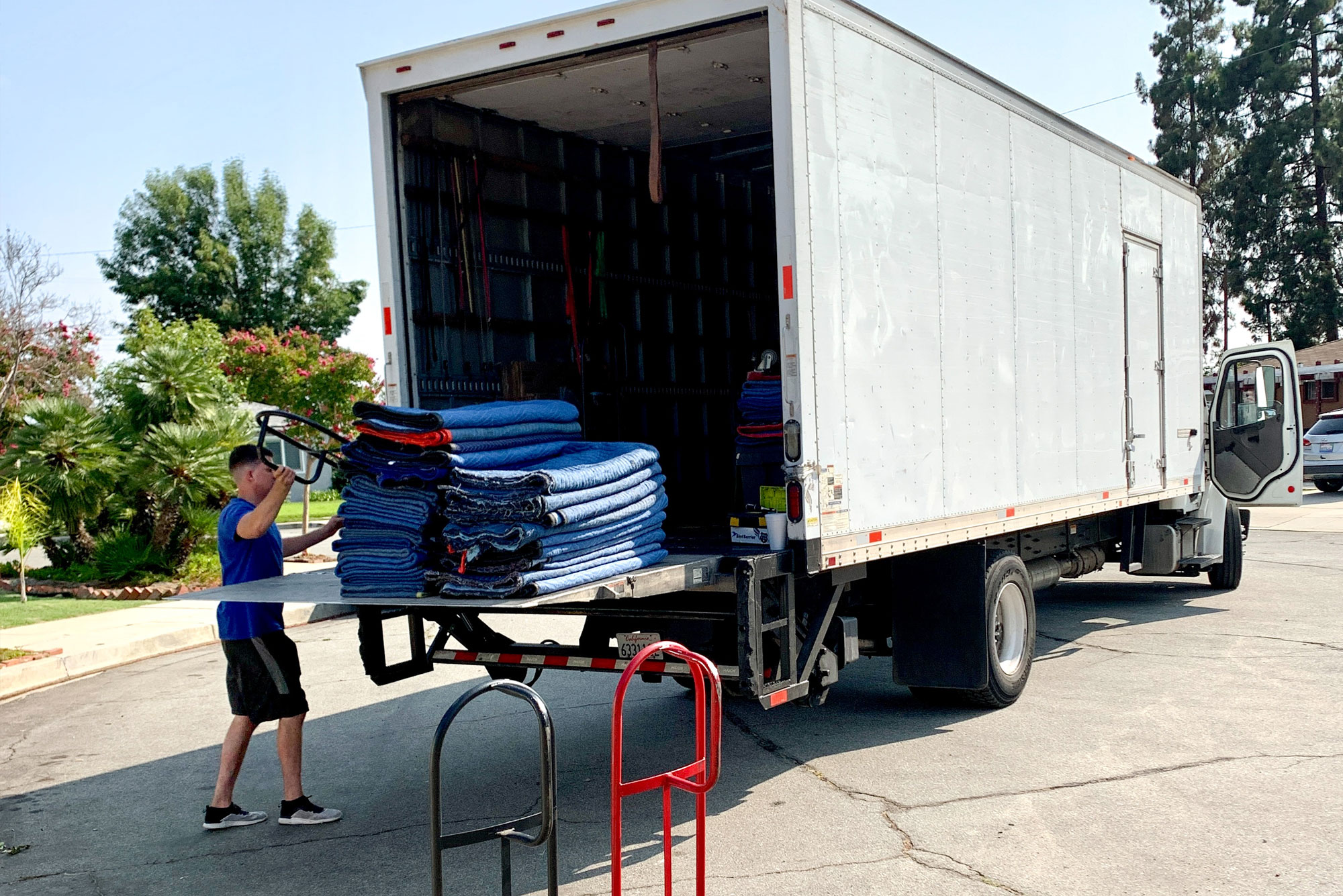
A mover unloading moving blankets from a box truck, with a hand truck at the curb.
Why demand matters more than the day
Saturdays are the most requested moving day of the week, followed by Fridays, because they cost people the least time off work. Those dates book up first, especially in summer and at the end of the month. A Tuesday or Wednesday usually leaves you more open dates, more choice of start times and a quieter street for the truck. Our minimum charge is 3 hours, travel time included, on any day we move.
Are movers cheaper on weekdays or weekends?
Some moving companies charge more on weekends. With 1st Step, Saturday is priced like any weekday for local moves, so the real choice comes down to availability and how much flexibility you have. If you can’t take a weekday off, a Saturday is a good option, just book it early because it’s one of the first days to fill.
What Is the Cheapest Month to Move?
The cheapest months to move are generally the ones with the fewest moves: January and February first, then late fall and early spring. December is slow too, though the holidays make it hard for many families. June, July and August are the busiest and usually the most expensive months, because school is out and many leases and home sales close in summer.
Our PA PUC tariff makes this concrete. It has two seasons:
- Peak season: May 1 through August 31.
- Non peak season: September 1 through April 30.
Peak season hourly rates are the same as or higher than non peak rates depending on the crew size, and they never go lower. So if your dates are flexible, a move between September and April is the safe way to keep your cost down.
| Timing | Demand for movers | Cost outlook |
|---|---|---|
| January and February | Lowest of the year | Non peak tariff season, widest choice of dates |
| March and April | Low, rising in late April | Non peak season, milder weather |
| May through August | Highest of the year | Peak tariff season, book well ahead |
| September through November | Moderate after Labor Day | Non peak season, comfortable weather |
| December | Low, busy around holidays | Non peak season, plan around family gatherings |
For a season by season look at weather and school calendars, see our guide to the best seasons and days to move in Pittsburgh.
The Cheapest Time of the Month
Most leases start and end on the first of the month, and many home closings land near the end of it. That crowds the last few days and the first few days of every month, especially in summer. The 10th through the 20th is usually the quietest stretch.
A midmonth date doesn’t change our tariff rate, but it gives you more choice of crew start times and a better chance of booking the exact day you want. If you’re a renter, ask your landlord whether you can overlap a few days between leases. That overlap lets you move midweek and midmonth instead of on the busiest day of the year.
Does Time of Day Change the Price?
Under our tariff, the hourly rate doesn’t change with the time of day, so there’s no morning or evening surcharge on a local hourly move. We work from 7:00 AM to 7:00 PM, Monday through Saturday.
An early start still helps in a practical way. Summer mornings are cooler for heavy carrying, you finish in daylight in winter, and you’re more likely to find curb space near the door before neighbors park for the day.
If your building has a freight elevator or a loading area, reserve it for the morning. Waiting on an elevator or a blocked dock adds billable time, and the clock runs whether the crew is carrying or waiting.
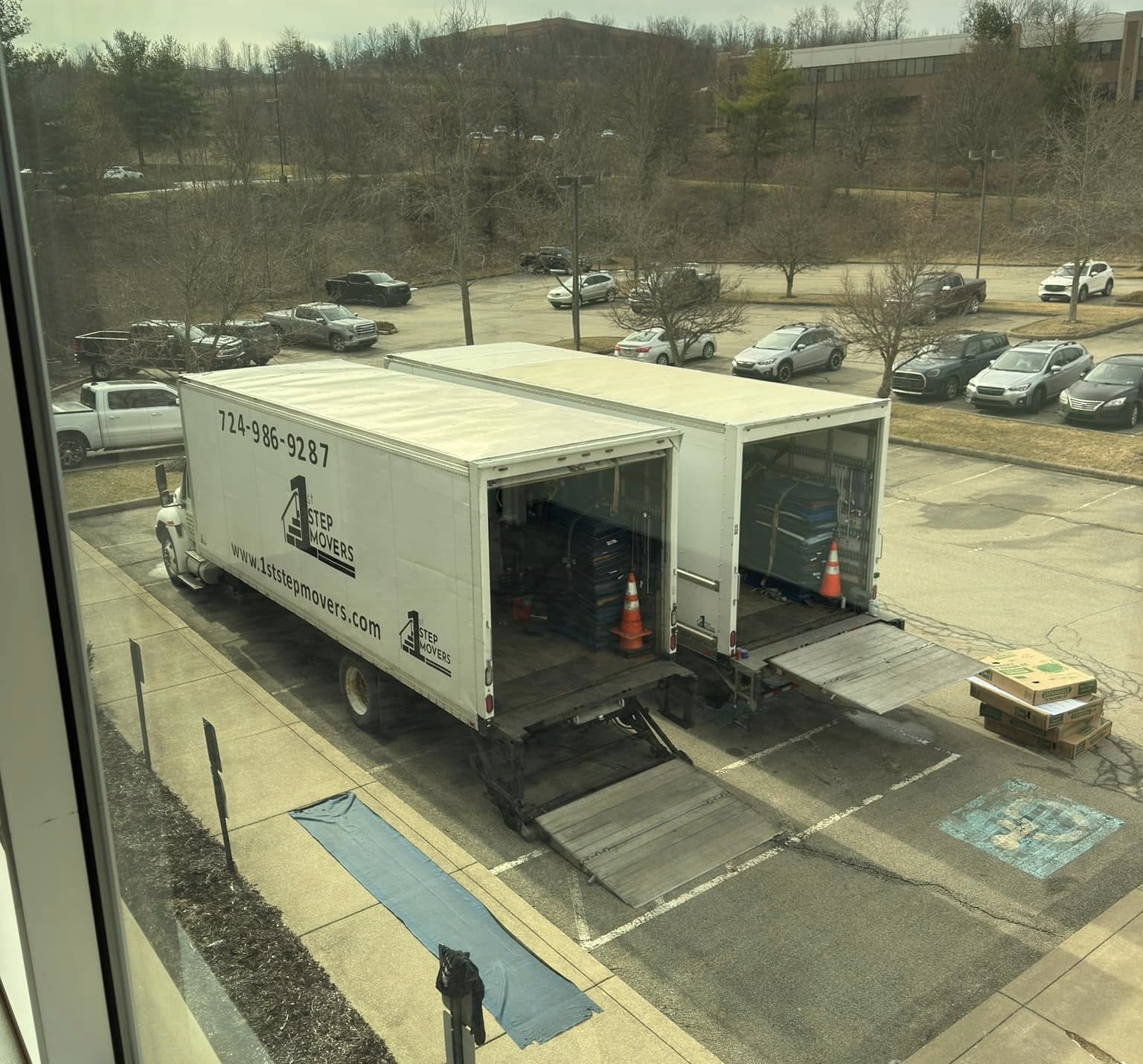
Two 1st Step trucks parked at a loading area, seen from an upper floor window.
Pittsburgh Factors That Add Hours
Because local moves are billed by the half hour, anything that slows the crew adds to the cost. Western Pennsylvania has a few common ones:
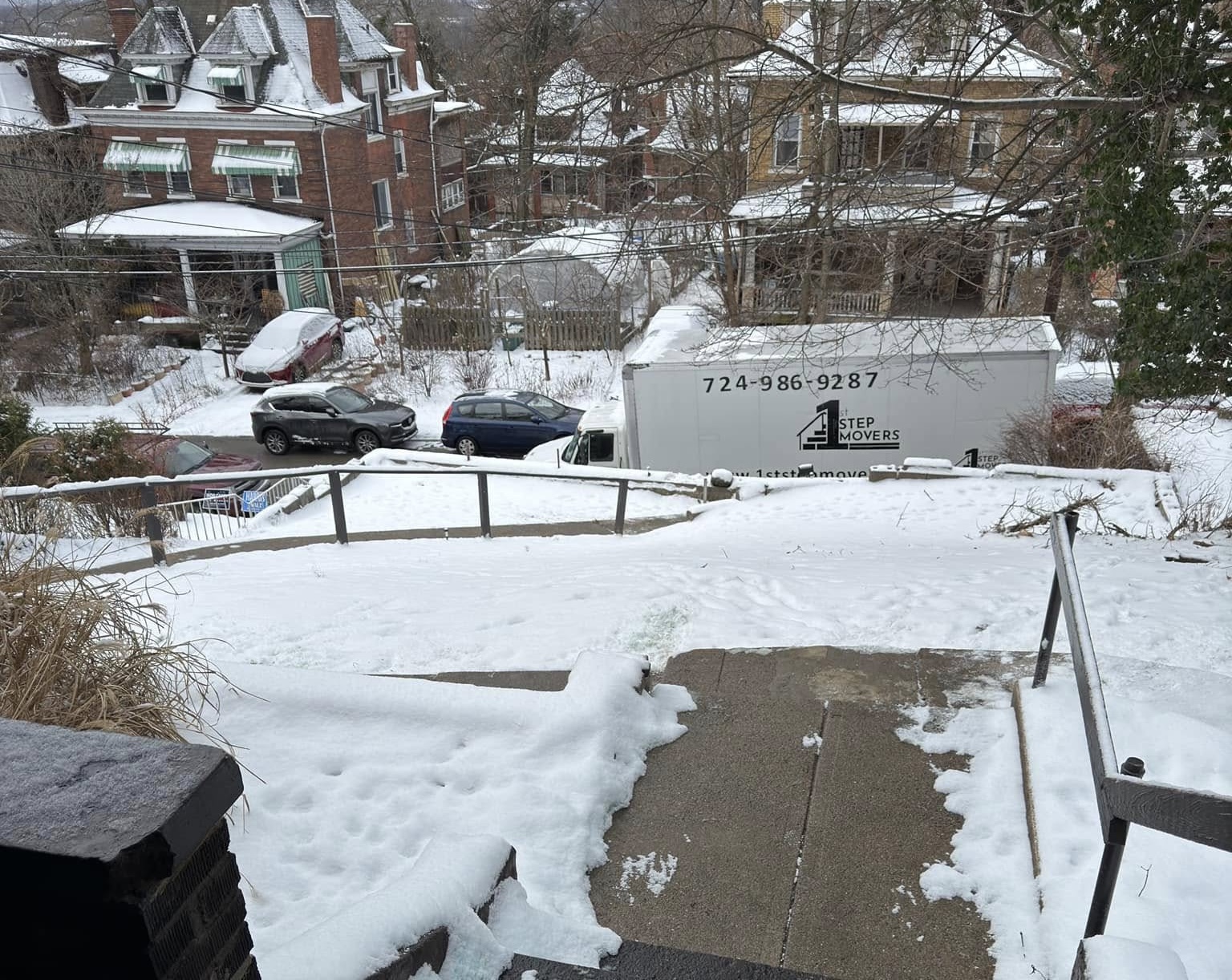
- Hills and steps: many Pittsburgh homes sit above the street with long outdoor stairways. Every trip up and down takes longer than a flat driveway.
- Narrow city streets: in older neighborhoods the truck may not fit close to the door, which means a longer carry.
- Winter weather: snow and ice on steps and sidewalks slow every carry. Shovel and salt paths the night before.
A 1st Step truck parked on a snowy street in a hillside neighborhood, seen from the top of snowy steps.
- Row houses and older homes: tight stairwells and narrow doorways can mean taking legs off tables or removing doors to fit large pieces.
- Parking: if you can, hold the spaces in front of both homes with your own cars, and check with your municipality or building about reserving curb space.
Winter is the cheapest season, but it only pays off if the paths are clear. In January and February, have a backup date in mind in case a storm closes roads.
How to Lower the Cost of Any Moving Day
Timing gets you the right rate. Preparation decides how many hours you pay for.
- Have every box packed, taped and labeled before the crew arrives.
- Empty desk drawers and remove loose items from dressers, and ask us when you book how drawers should be handled.
- Clear out what you won’t use before moving day, so you aren’t paying to carry it.
- Set aside a “do not load” area for things traveling in your car.
- Keep pets and kids out of the walkways.
Our packing services are worth a look if packing would otherwise stretch into moving day. If you would rather drive your own rental truck, our labor only crews can load and unload it for you.
A smiling 1st Step mover in a driveway next to a stack of moving blankets.

Also ask for a written quote that lists the crew size, the minimum hours and any per item charges. Our tariff has separate per item charges for pianos and gun safes, so mention those when you call. If you’re weighing the full picture, our guides on hidden costs of moving and whether it’s cheaper to DIY or hire movers break down what else to budget for.
When a Busy Date Still Makes Sense
Sometimes the cheapest date isn’t the right one. If your lease ends on the 31st, your closing is set for a Friday in July, or your kids need to start at a new school in August, the date is already chosen. In that case, book as early as you can so you get the start time you want, and focus on cutting hours instead. And if a closing or lease change leaves you only days to move, call about our last minute moving service.
Moving out of state follows different rules. Interstate moves are regulated by the Federal Motor Carrier Safety Administration, and 1st Step is registered with FMCSA for interstate household goods moves. You can check any interstate mover at FMCSA’s Protect Your Move, and you can confirm a Pennsylvania mover’s certificate through the Pennsylvania Public Utility Commission.
Frequently Asked Questions
What is the cheapest day of the week to move?
Midweek days are usually the easiest to book because fewer people move then. For a local move with us, every day we move, Monday through Saturday, shares one hourly rate, so pick the day that lets you be fully packed and lets someone stay home to direct the crew. Saturdays fill first, so book early if you need one.
What is the cheapest month to move?
Midwinter months are usually the least busy. If you are choosing between two dates near the season change, note that our tariff switches to peak rates on May 1 and back to non peak on September 1, so a late April or early September date can keep you in the lower season while the weather is still mild.
How far ahead should I book a move to get a good date?
Book as soon as your date is firm. In summer, and on weekends or the first and last days of a month, the best start times go first. In the non peak season you usually have more open dates, but a written quote early still lets you plan packing and parking. See our guide on how far in advance you need movers.
What’s the cheapest way to move out?
Lower the hours more than anything else. Pack and label every box ahead of time, take apart beds and tables you can handle yourself, move small fragile items in your own car, and sell or donate what you no longer use. Our guide on DIY versus hiring movers covers the full comparison.
Is it cheaper to move in the off season?
Usually, yes. Our PA PUC tariff has a non peak season from September 1 through April 30 and a peak season from May 1 through August 31, and peak hourly rates are never lower than non peak rates. Off season dates are also easier to book, so you get more choice of days and start times. Our minimum is 3 hours, travel time included.
Have a date in mind, or a few to choose from? Request a free quote and we’ll help you pick the day that fits your move and your budget.