The cheapest way to move, on paper, is to do it all yourself: borrow or rent a truck, pack your own boxes and recruit friends to lift. Whether it’s actually cheaper than hiring movers depends on how much you own, how far you’re going, and what stairs, hills and parking stand between your old door and your new one.
For a small apartment with light furniture and an easy curb, DIY can be the lowest bill, especially if you bring in paid help only for the heavy pieces. Once you add a full house, heavy pieces, a third floor walkup or a steep Pittsburgh driveway, the gap shrinks fast, and hiring a crew for local moving in Pittsburgh can cost less than you’d expect once every DIY expense is counted. This guide walks through each option, the hidden costs, and the hybrid choices that sit in between.
Short answer: Moving yourself is usually the cheapest way to move a small, light household a short distance. For bigger homes, heavy items or tough access, a professional crew or a hybrid move can come surprisingly close once you add truck fees, fuel, supplies, time off work and injury risk.
What Is the Cheapest Way to Move?
There are really five ways to get your things from one home to another. From the least money out of pocket to the most, they look like this:
- Your own car or a borrowed pickup. Only practical for a few boxes and small items that fit in one or two trips.
- A rental truck or trailer, all DIY. You pack, load, drive and unload.
- A hybrid move. You rent the truck and drive it, and you hire movers for the loading and unloading.
- A portable container. A company drops a box at your curb, you pack and load it, and they haul it.
- Full service movers. A crew brings the truck, equipment and labor, and can pack for you too.
Is It Cheaper to Move Yourself or Hire Movers?
Moving yourself almost always has a lower starting number. The question is what gets added to it before you’re done.
A rental truck is advertised at a daily rate, but the real cost includes mileage, fuel, the damage protection the rental company offers, and any dollies or pads you rent on top.
A moving crew arrives with the truck, hand trucks, straps, blankets and the know how to use them. That’s a big reason an experienced crew can often finish in hours what might take a group of friends a full weekend.
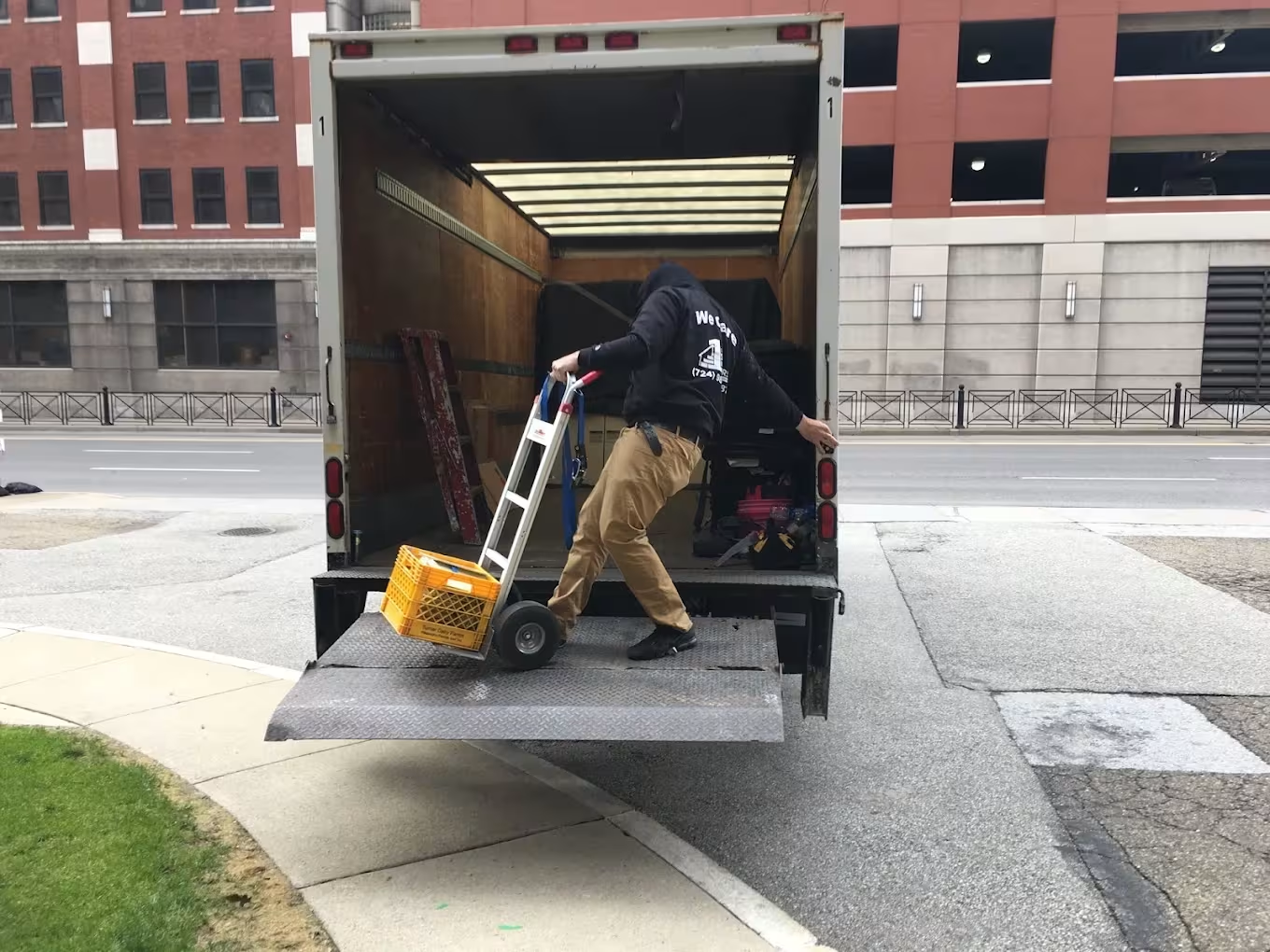
A mover rolls items up a truck lift gate with a hand truck on a city street.
Comparing the options side by side
| Option | Who does the work | Best fit | Watch out for |
|---|---|---|---|
| Car or borrowed pickup | You | A few boxes and small items | Many trips, weather, bulky furniture won’t fit |
| Rental truck, all DIY | You and helpers | Small homes, short moves, strong helpers | Mileage, fuel, rental damage coverage, injuries |
| Hybrid: truck plus hired labor | You drive, movers lift | Heavy items, stairs, tight timelines | You still pack and drive |
| Portable container | You pack and load, they haul | Flexible dates, longer distances | Curb space, permits, you still do the lifting |
| Full service movers | The crew | Family homes, older homes, busy schedules | Book early in busy months |
The Hidden Costs of a DIY Move
The DIY bill grows in small pieces that are easy to overlook while you’re planning. Here’s what most people forget to count:
- Mileage and fuel. Rental trucks are often billed per mile, and a loaded box truck uses far more fuel than a car, especially climbing hills.
- Rental damage coverage. Your personal auto policy may not cover a rental truck, so check before you sign.
- Equipment. Dollies, furniture pads, straps and a ramp all cost extra if the rental doesn’t include them.
- Packing supplies. Boxes, tape, paper and wrap add up for a full household.
- Time off work. A DIY move can take several days once you count pickup, packing, loading, driving, unloading and returning the truck.
- Damage and injury. A dropped dresser, a gouged hardwood floor or a strained back can wipe out everything you saved.
For a deeper look at the fees that surprise people on both sides of the decision, read our guide to the hidden costs of moving.
What Makes Hiring Movers Cost More or Less
If you’re comparing a DIY plan with a quote, it helps to know what actually moves the number. For a local move with us, the biggest drivers are:
- Hours on the job. Local moves are billed by the hour.
- Crew size. More movers can mean fewer hours on a big home.
- Volume and weight. Fewer things to wrap, carry and strap means less time.
- Access. Stairs, long walks from the truck, elevators and tight turns add time.
- Prep. Boxes that are packed, taped and labeled before the crew arrives keep the clock moving.
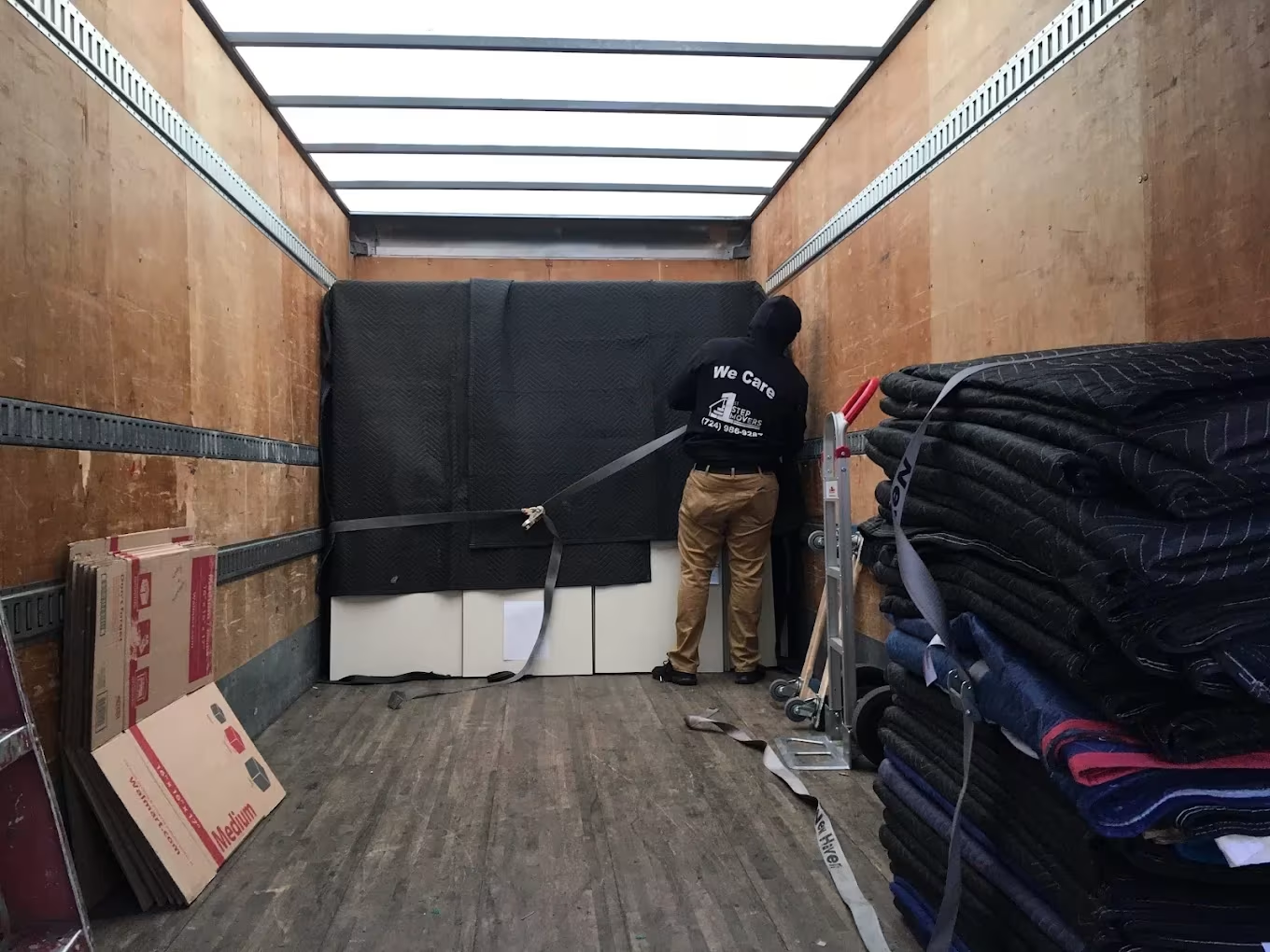
A mover straps blanket wrapped furniture inside a 1st Step truck.
How our minimum works
Under our Pennsylvania Public Utility Commission tariff, 1st Step Movers has a 3 hour minimum, with travel time included. Our hourly local rates apply to moves of 40 miles or less within Pennsylvania and are billed in half hour increments. Pianos and gun safes carry their own separate item charges. Any Pennsylvania household goods mover should hold PUC authority, and you can look up a company with the Pennsylvania Public Utility Commission before you book.
The best way to compare is to get a free quote and put it next to your honest DIY total.
Why Pittsburgh Moves Cost More to Do Yourself
Western Pennsylvania adds a few challenges that make doing it yourself harder and slower.
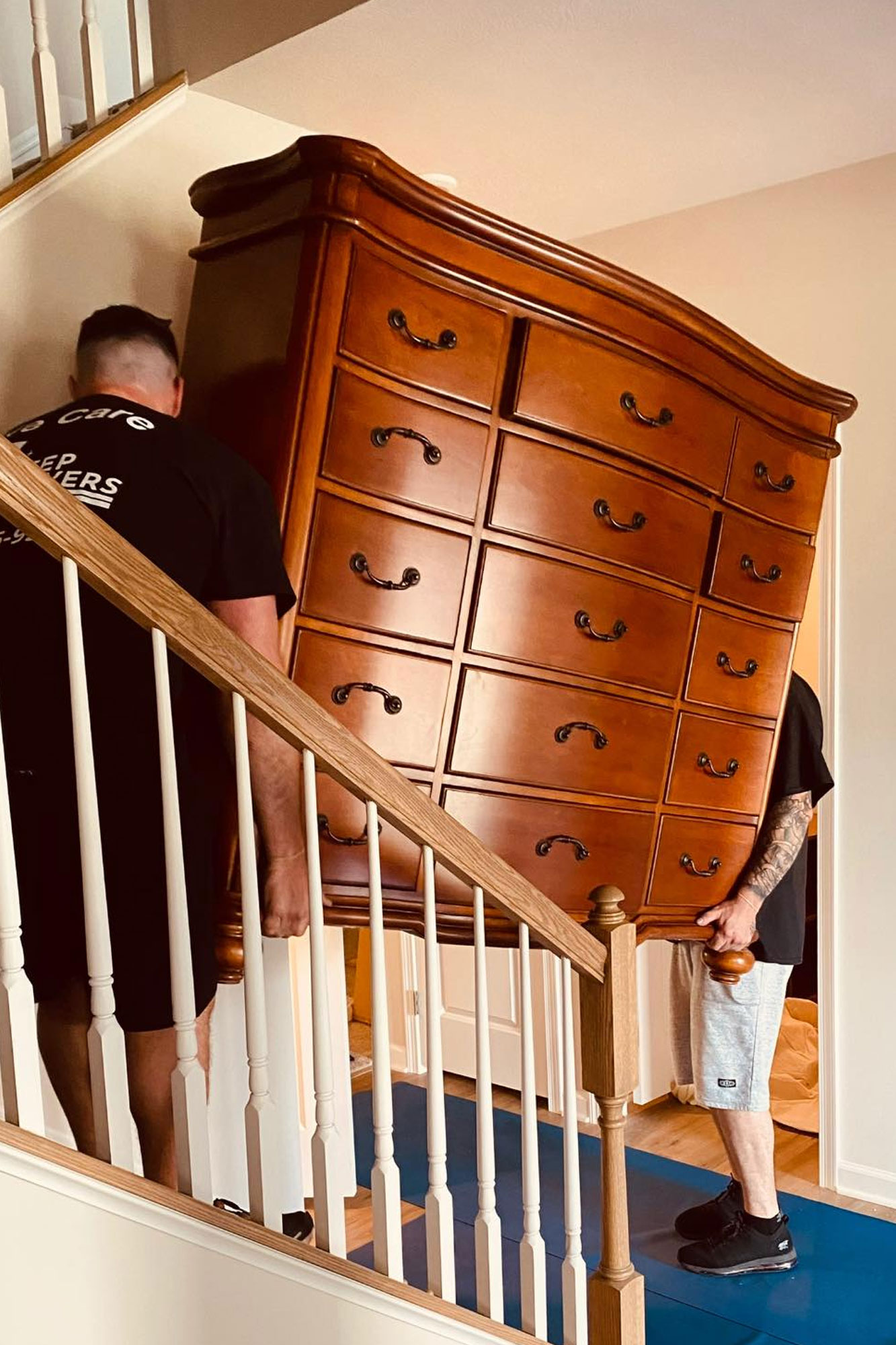
Stairs everywhere. Row houses, older homes and hillside lots often mean long exterior steps, narrow interior stairways and tight landings. Carrying a dresser or sleeper sofa up those safely takes the right grip, the right straps and people who do it every day.
Older homes. Narrow doorways, plaster walls and original woodwork are easy to damage. Wrapping furniture in moving blankets and planning the route through each doorway before lifting helps pieces come through clean.
Two movers carry a wooden dresser on a staircase.
Hills, narrow streets and parking
Many city streets are narrow, steep or lined with parked cars, and a rental box truck is not an easy vehicle to back into a tight spot on a grade. If you’ll need curb space, check with the City of Pittsburgh or your borough about temporary no parking rules well before moving day.
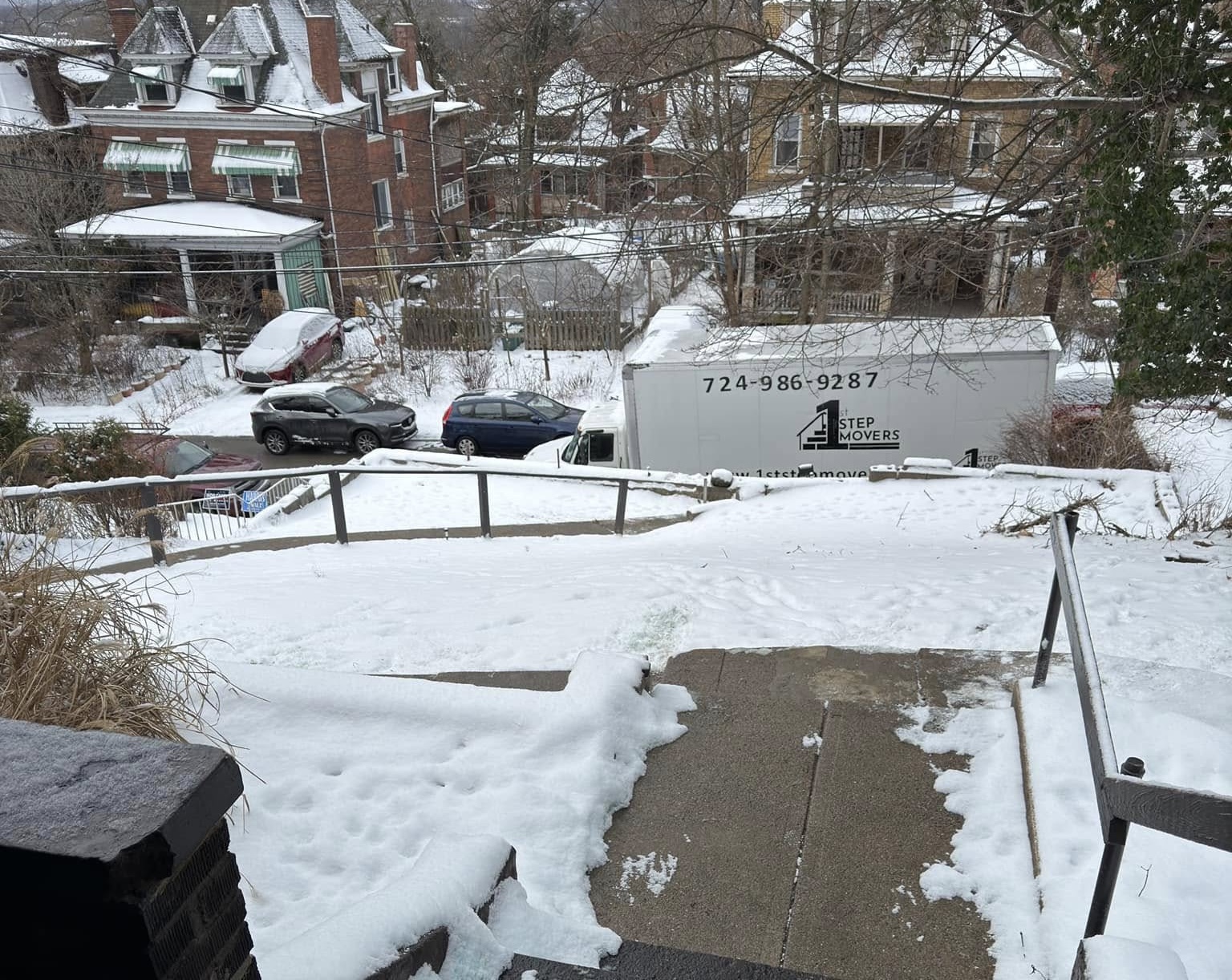
Winter weather. Snow and ice turn a hilly driveway into a hazard for anyone carrying a heavy load. If you move between December and March, plan for salt, cleared paths and extra time.
A rental truck on an icy grade is harder to control than your car, so leave extra time and skip the shortcut up the steepest street.
A 1st Step truck parked on a snowy street in a hillside neighborhood.
Hybrid Moves: The Middle Ground
You don’t have to choose between doing everything and paying for everything. A hybrid move can give you most of the savings of a DIY move without the heavy lifting.
Hire labor only
Rent the truck and drive it yourself, then book our labor only moving help to load and unload. You get professional movers on the hardest part of the day, and you stay in control of the driving and schedule. We explain how this works in hiring movers just to load and unload.
Containers vs hiring movers
A portable container can make sense when your dates are flexible and you’re moving a longer distance. Keep in mind you still pack and load it yourself, you need a legal spot on the street or driveway for it, and someone still has to carry every piece up and down your stairs at both ends. A moving crew handles the loading, driving and unloading in one trip, which matters most when access is tight or time is short.
How to Move With Very Little Money
Whichever route you choose, these steps lower the total:
- Declutter first. Every item you sell, donate or toss is one less thing to pack and carry. Our decluttering guide walks through it room by room, and our junk removal crew can haul away what’s left.
- Pick a slower day. Weekdays and the middle of the month are usually easier to book than summer weekends and month end dates.
- Collect free boxes. Ask local stores and neighbors, and keep sturdy boxes for heavy items like books.
- Get a written quote. Compare it against your full DIY total, not just the truck rental.
- Check the mover. A suspiciously low quote is a common sign of a scam. For moves across state lines, the federal Protect Your Move site explains your rights.
When DIY Makes Sense and When It Doesn’t
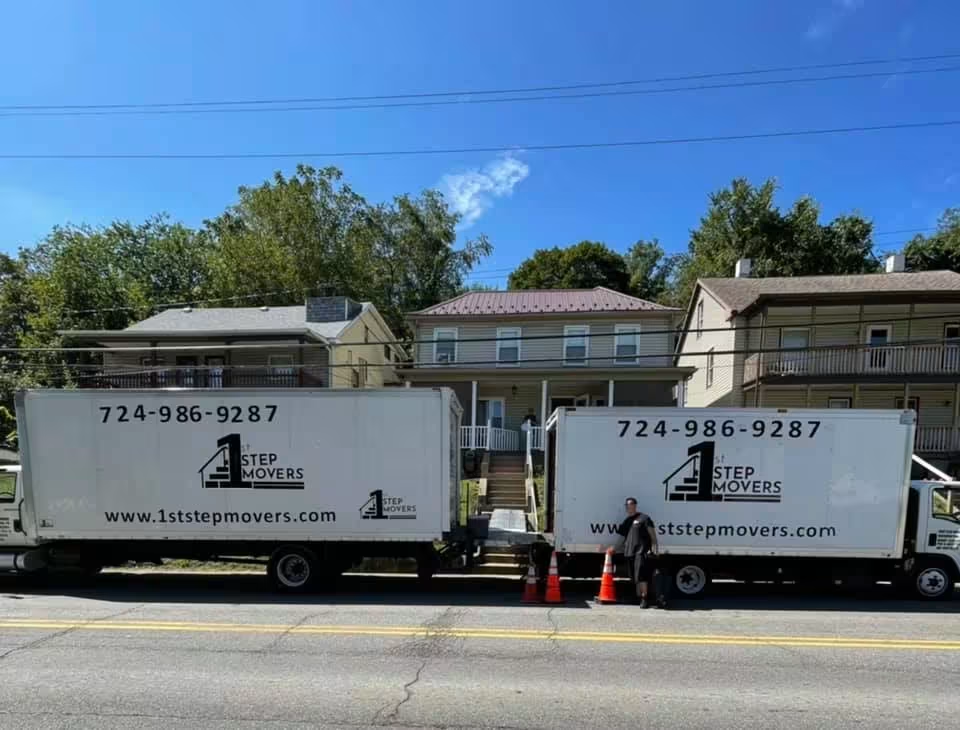
Moving yourself is a reasonable choice when you have a small household, light furniture, ground floor or elevator access at both ends, a short distance, a flexible schedule and healthy helpers who’ve done it before.
Hiring movers usually comes out ahead when you have a family home, heavy or valuable pieces like a piano or gun safe, lots of stairs, a hard parking situation, a winter move date, or a job you can’t take days away from. Long distance moves across Pennsylvania or to another state add hours of driving, fuel and overnight costs to a DIY plan, which is when professional long distance moving often closes the gap.
Frequently Asked Questions
What is the most inexpensive way to move?
For most people it is loading your own vehicle or a rented truck. To keep it that way, measure your largest furniture before you pick a truck size so you avoid a second trip, reserve the truck early, ask whether pads and a dolly are included, and return it on time with the fuel level the rental agreement requires. Late returns and refueling charges are easy to avoid.
How do you move with very little money?
Build a written budget before you commit to a date: deposits, first month’s rent, utility setup fees, truck or mover costs and supplies. Then cut what you move, since less stuff means a smaller truck or fewer hours. Use towels and linens as padding instead of buying wrap, and pack a week ahead so nothing gets rushed or broken on moving day.
Is it cheaper to move yourself or hire movers?
Make two lists. On the DIY side, write the truck, mileage, fuel, coverage, equipment, supplies and the days of work you’d miss. On the movers side, get a written quote based on your actual inventory and stairs. Compare the totals, then ask which plan you’d rather live through on moving day. The answer is often clearer on paper than in your head.
Is a hybrid move worth it?
It usually is when the heavy lifting is the part you dread. Have the boxes packed, taped and stacked near the door, and the truck parked as close as you legally can, before the movers arrive. Tell them about stairs, an elevator or oversized pieces when you book so the right number of people show up and the hours stay low.
What is the minimum time for 1st Step Movers?
Three hours, with travel time included, under our PA PUC tariff. If your move is small, booking on a weekday keeps you on the shorter minimum, and having everything packed lets you use that time for the actual moving. Contact us for a free quote.
Want to see how hiring a crew compares with your DIY plan? Request a free quote from 1st Step Movers and we’ll walk you through what drives the cost of your move.