Here’s how to choose a moving company: confirm the mover is legally authorized for your type of move, get written quotes from at least three companies, read recent reviews for patterns, and ask direct questions about crews, coverage and charges before you sign anything. The right mover is the one that passes every check, not simply the one with the lowest number.
That sounds simple, but moving around Pittsburgh and Washington County adds its own tests: steep driveways, narrow city streets, row houses with tight stairways and winter weather that can change a moving day overnight. This guide walks through each step, from the license check to the signed paperwork, whether you’re planning a move across the state or local moving in Pittsburgh.
How to Choose a Moving Company: The Step by Step Checklist
- Define your move. Distance, home size, specialty items and services.
- Verify authority. PA PUC certification for moves inside Pennsylvania, FMCSA registration and a USDOT number for interstate moves.
- Check coverage. Ask how damage claims are handled.
- Collect three written quotes for the same work.
- Read reviews for patterns.
- Ask hard questions about crews, access and payment.
- Watch for red flags.
- Get it in writing.
Start by Defining What Your Move Needs

Before you call anyone, write down the basics: where you’re moving from and to, the size of your home, your target date and how flexible it is.
Then list anything unusual. A piano, a gun safe, an antique cabinet, a third floor walkup or a long carry from the curb all change who is a good fit. Decide which services you want, such as full packing, help with only the heavy items, or junk hauled away before the move. A clear list lets every company quote the same job, which is the only way to compare them fairly. If either of the first two is on your list, see how we approach moving a piano and relocating a heavy gun safe.
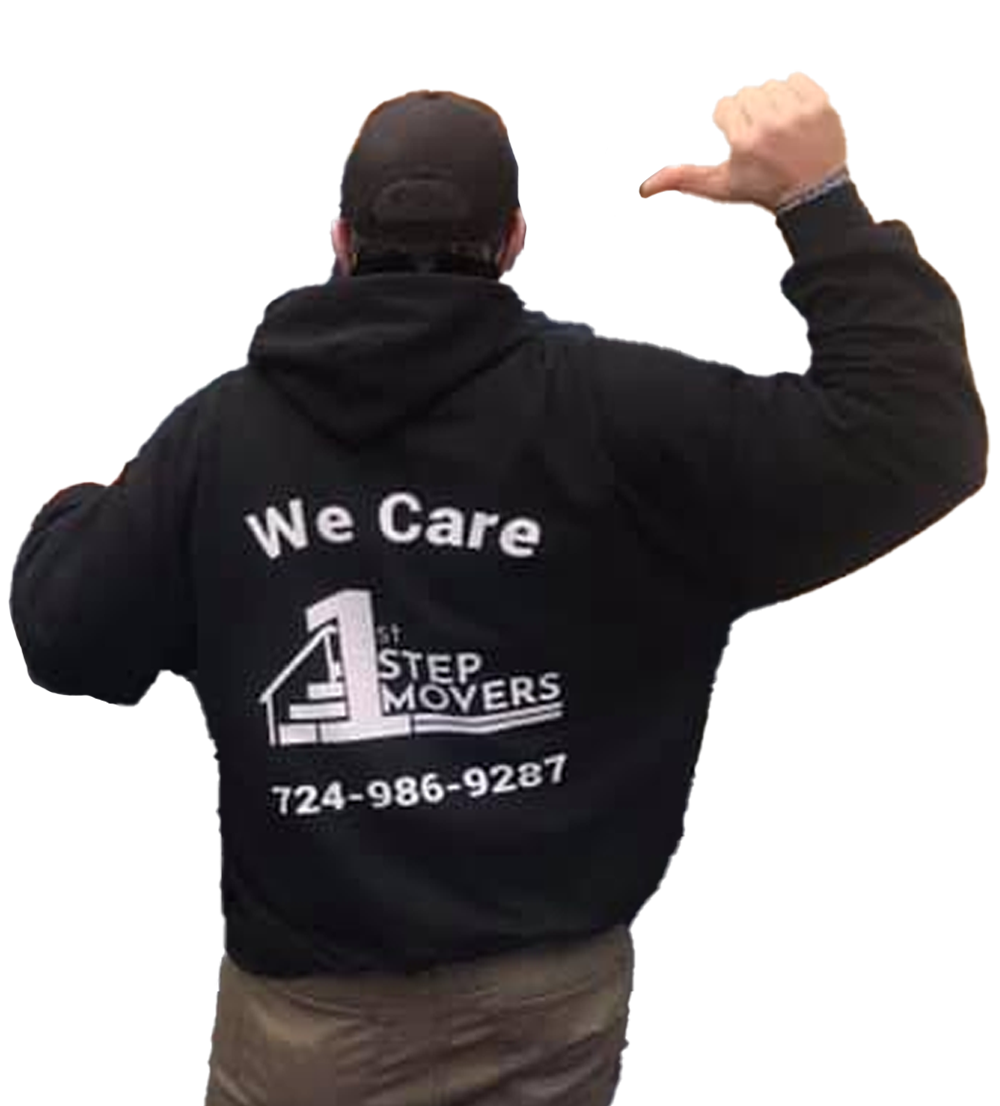
Two movers in We Care shirts loading a truck.
Verify Licensing: PA PUC and FMCSA
This is the most important check. Which authority a mover needs depends on where your belongings are going.
Moves within Pennsylvania
Household goods movers that carry belongings between points in Pennsylvania for pay must hold a certificate from the Pennsylvania Public Utility Commission. A certificated mover operates under a tariff filed with the PUC, which sets out how it charges and the rules it follows. Ask any mover for its PUC certificate number, then confirm it with the PUC.
1st Step Movers holds an active PA PUC certificate as a household goods carrier, and our rates follow our filed tariff. For example, our minimum is 3 hours, travel time included, and local moves are billed in half hour increments.
Moves to another state
Any mover that takes household goods across a state line must be registered with the Federal Motor Carrier Safety Administration and have a USDOT number with household goods authority. The FMCSA’s Protect Your Move site lets you look up a company, see whether its authority is active and check its complaint history. It also explains your rights as an interstate customer. 1st Step Movers is registered with the FMCSA for interstate household goods moves.
One more thing to confirm on an interstate move: are you talking to the moving company itself or to a broker? A broker sells the job and hands it to a carrier you may never have met. Ask directly who will show up with the truck.
Check Insurance and Liability Coverage
Ask every company two questions: what insurance do you carry, and what happens if something is damaged? A professional mover answers both without hesitation and puts its claims process in writing.
- Liability and vehicle insurance protect your home and property during the move.
- Workers’ compensation covers the crew if someone is hurt on your stairs.
- Valuation is the mover’s liability for your goods. Interstate movers are required to offer you a choice of coverage levels, so ask what each option covers.
Also check whether your homeowner’s or renter’s policy covers belongings in transit.
Compare Written Quotes the Right Way
Get at least three written quotes. A good mover asks detailed questions about your home and belongings, or looks at them by video or in person, before giving a number. A quote given in thirty seconds with no questions asked is rarely accurate.
Then compare the details, not just the bottom line. Is the price based on hours, weight or a set amount? Does it include travel time, packing materials, stairs and long carries? A quote that looks low can end up higher once the missing pieces are added.
Ask, too, how furniture is padded and secured in the truck. Blanket wrapped pieces packed tight, like the load shown here, are far less likely to shift on the road.
A truck load tightly packed with blanket wrapped furniture.

For hourly local moves, ask how many movers and trucks are planned and how time is counted. For a closer look at charges that catch people off guard, read our guide to the hidden costs of moving.
| Ask about | Why it matters |
|---|---|
| Rate basis (hourly, weight or set amount) | Tells you how the final bill is calculated |
| Minimum hours and travel time | Affects small moves the most |
| Crew size and number of trucks | A bigger crew can finish faster |
| Stairs, long carries and elevators | Common in older homes and city buildings |
| Specialty items like pianos and gun safes | These often carry separate item charges |
| Packing materials and supplies | May or may not be included |
| Deposit and payment methods | Shows what you owe, when, and what happens if plans change |
Read Reviews With a Critical Eye
Reviews show how a crew actually behaves in someone’s home. Read them on Google and elsewhere, and look for patterns.
- Recency: reviews from the last year say more than ones from five years ago.
- Specifics: mentions of care with furniture, punctuality and final bills that matched the quote.
- Repeated complaints: one bad review is noise, the same complaint ten times is a pattern.
- Owner responses: a company that answers complaints calmly and tries to fix them will likely treat you the same way.
Friends, neighbors and your real estate agent are good sources too.
Questions to Ask Before You Book
A short phone call tells you a lot. Ask:
- Are your movers employees, and who will be on my crew?
- How do you protect floors, doorways and banisters?
- How do you wrap and secure furniture in the truck?
- What’s your arrival window, and what happens if weather delays the move?
- How do you handle damage claims?
- Can you move my piano, gun safe or other heavy items?
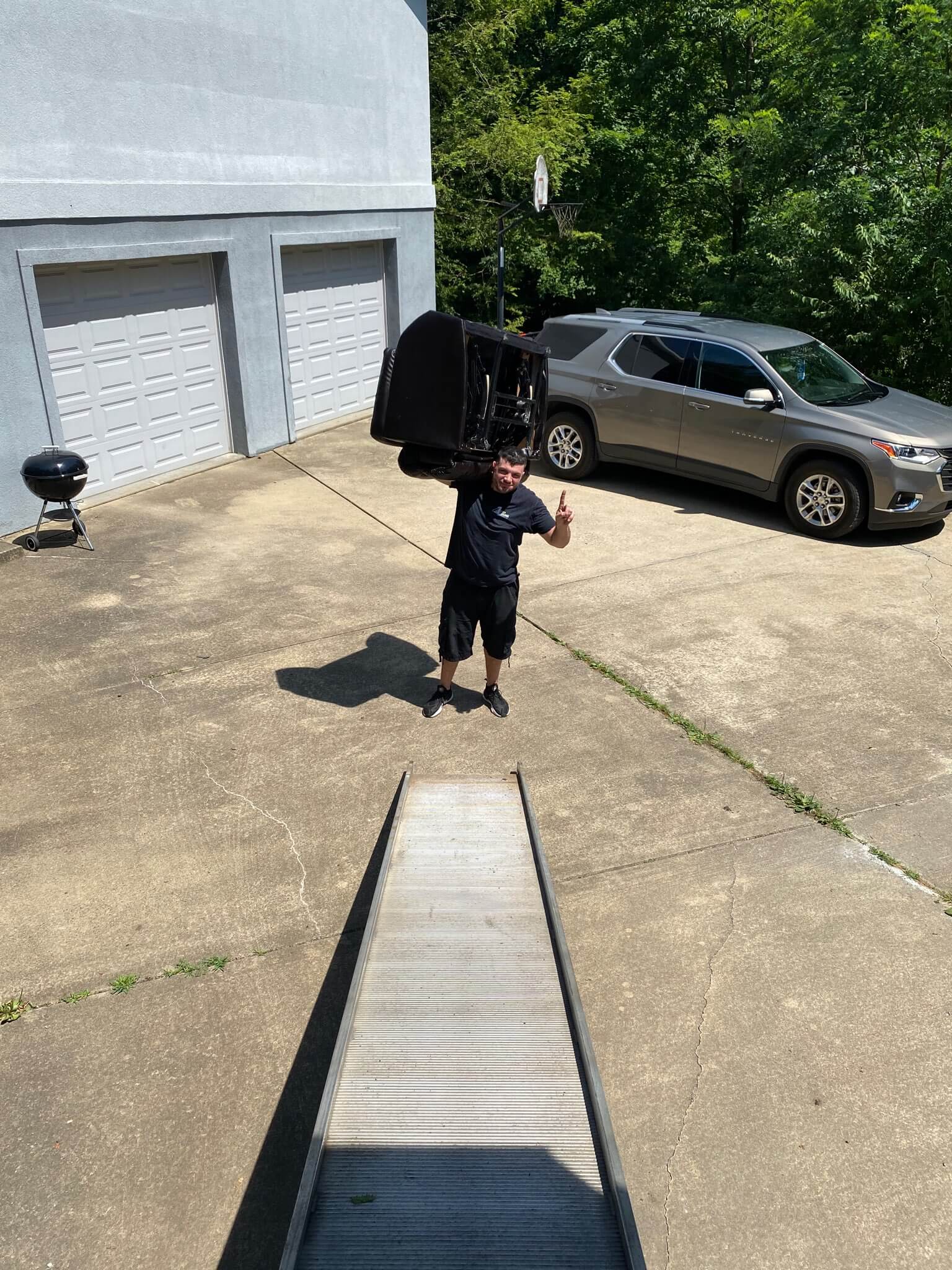
A mover carrying a load across a driveway toward the truck ramp.
Local Knowledge Matters in Pittsburgh and Washington County
A mover who works here every day plans around problems an outside crew discovers on moving day. Ask how each company would handle your street and home.
Hills, streets and parking
Steep driveways, hillside lots and narrow city streets affect where a truck can park and how far your belongings have to be carried. Some streets have tight permit parking or no room for a large truck at all. Ask whether the company will check access ahead of time and whether you need to reserve a space.
Row houses, older homes and stairs
Many older homes around Pittsburgh have narrow front doors, turning staircases and low ceilings. A crew used to these homes brings the right tools and padding and plans what comes out first.
Winter weather
Snow and ice change how a move runs. Ask what the company does to keep walkways safe, how it protects your floors from slush and how it decides whether a move goes ahead in bad weather.
A clear answer is a good sign. If you have flexibility, our guide to the best seasons and days to move in Pittsburgh can help you pick a date.
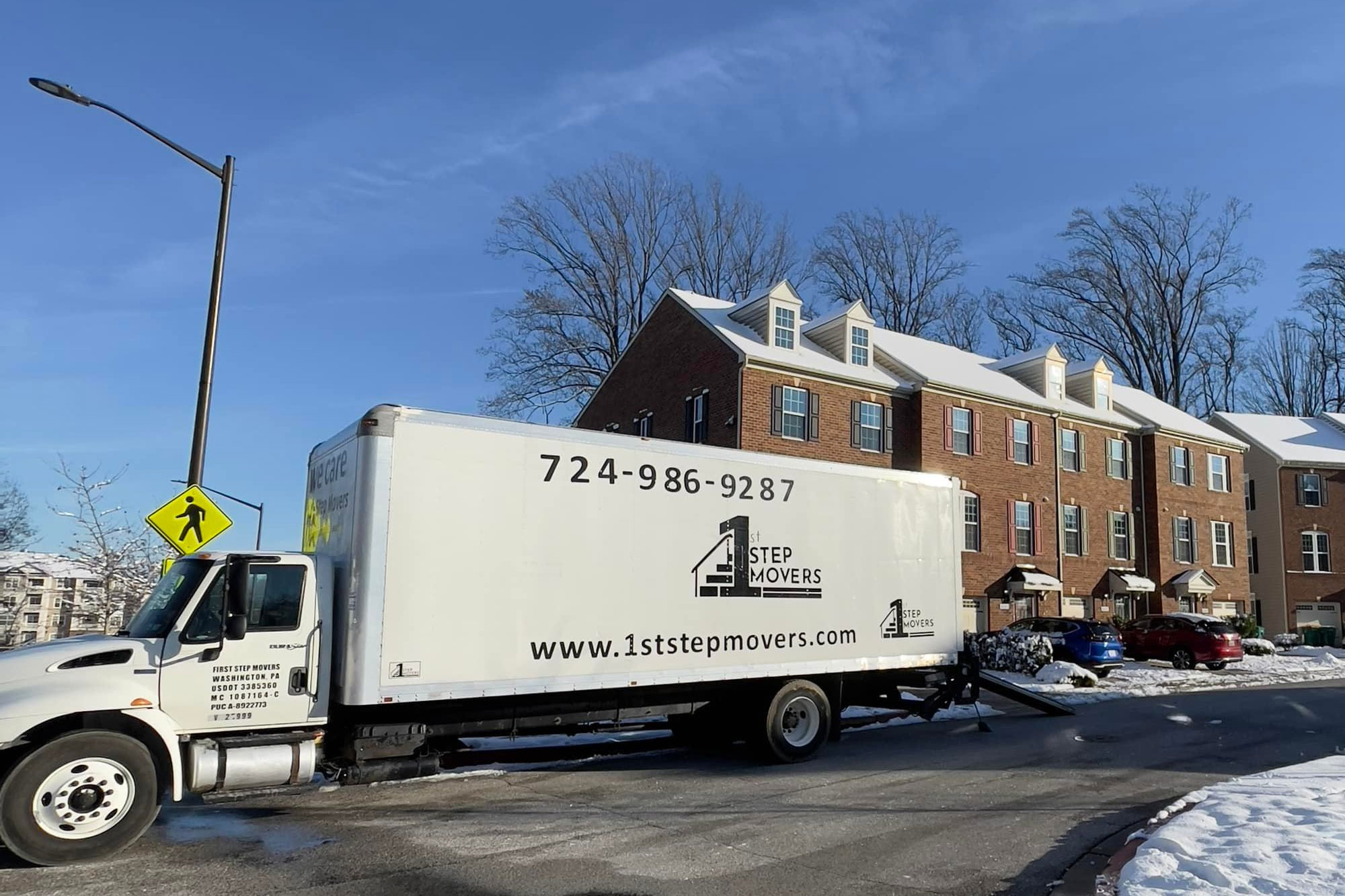
A 1st Step box truck with the phone number on its side, parked on a snowy street.
Moving Company Red Flags to Avoid
Walk away from any company that shows these warning signs:
- No PA PUC certificate for a Pennsylvania move, or no USDOT number for an interstate move.
- A quote given without any questions about your home or belongings.
- A demand for a large cash deposit before moving day.
- Pressure to book right now before you can compare.
- No written estimate, contract or policies.
- No real business address.
- Vague answers about who will actually do the move.
We go deeper on each of these in what are red flags with movers.
Local Mover or National Chain?
Both can do good work. A locally owned company often gives you direct contact with the people running the business and crews that know local streets. Either way, hold them to the same checklist.
1st Step Movers is locally owned and based in Washington County, serving Washington, Pittsburgh and Western Pennsylvania since 2019. We handle local and long distance household moves, packing, labor only help, piano and gun safe moving, and junk removal, so you can see our full list of moving services before you compare.
Get Everything in Writing Before Moving Day
Once you’ve chosen a mover, confirm the details in writing: the date and arrival window, the address of each stop, the services included, how you’ll be charged, the deposit and payment terms and the claims process. Read it before you sign, and keep a copy with you on moving day.
Book early, especially for summer. Our guide on how far in advance you need movers covers timing in more detail.
Frequently Asked Questions
How do I pick a good moving company?
Narrow your list to two or three companies that pass the license and insurance checks, then let the walkthrough decide. The better mover asks about your stairs, parking, heavy items and access at both homes, explains its plan for the day in plain terms, and puts everything in writing. If a company can’t explain how it will handle your hardest item, keep looking.
What are red flags for moving companies?
Beyond a missing license or a big cash deposit, watch what happens on moving day. A rental truck showing up instead of a company vehicle, a crew that asks you to sign blank or incomplete paperwork, or a business that has operated under several different names are all warning signs. The FMCSA lists more on its Protect Your Move site.
How do I check if a mover is licensed in Pennsylvania?
Go to puc.pa.gov and use the PUC’s utility search to look up the company by name or certificate number. Confirm the status is active and that the authority covers household goods. A certificate number painted on a truck or printed on a website is not proof by itself, so always check it against the PUC’s own records before you book.
What is the difference between a binding and a nonbinding estimate?
A binding estimate is a set price for the services listed, as long as you don’t add items or services. A nonbinding estimate is the mover’s best projection, and the final bill depends on the actual weight or time. On interstate moves, federal rules let the mover collect up to 110 percent of a nonbinding estimate at delivery, with any balance billed later.
Should I get an in home or video estimate?
Yes, whenever you can. Seeing your rooms, stairs and furniture lets a mover plan the right crew and truck instead of guessing from a phone call. For interstate moves, federal rules require the mover to do a physical survey before giving a written estimate, unless you waive it in writing before loading. Think twice before you sign that waiver.
What should I do if something is damaged during my move?
Note any damage on the inventory or delivery paperwork before the crew leaves, take clear photos, and keep damaged items and packing until the claim is settled. Then file the claim in writing. For interstate moves, federal law gives you at least nine months to file, but it’s easier to prove damage the sooner you report it.
Comparing movers for your next move? Request a free quote from 1st Step Movers and we’ll walk you through exactly how your move will be priced.