My grandmother lived in the same Mount Lebanon house for 47 years. When it came time to move her to a smaller place closer to family, we walked in one Saturday morning convinced we’d “knock it out in a weekend.” We were wrong. Three weekends later, we were still standing in the basement, holding a box of Steelers programs from the 1970s and quietly arguing about whether to keep them. If you’ve ever helped a parent leave a home they loved, you already know exactly what I mean.
Here’s the good news. This process gets so much easier with a plan instead of a panic. Over the years, I’ve watched the families who give themselves two to three months and a clear system come out the other side calmer, lighter, and honestly closer to one another. Downsizing before a move is one of the biggest transitions a family goes through — and here’s how families in Western PA can make it easier, step by step.
Why Downsizing Feels So Heavy (It’s Not Just the Furniture)
Let’s be honest about something first. Sorting through a lifetime of belongings isn’t really about the belongings at all. It’s about the birthday cards, the kitchen where four kids were raised, and the recliner that still smells faintly like Dad. When people say the downsizing process is emotional, they aren’t exaggerating — it can knock the wind out of you when you least expect it.
Naming that up front actually helps. I’ve learned to tell families that both the physical load and the emotional load are real, and both deserve patience. The stuff is heavy. The memories are heavier. Go in expecting a few tears and a few laughs, and you won’t be blindsided when they arrive.
Start With the Space, Not the Stuff
Here’s the mistake almost everyone makes. They fling open a closet, grab a trash bag, and start “getting ahead” before they know a single dimension of the new place. Don’t. Before you sort one drawer, call the new residence or assisted living community and ask for a floor plan or the room measurements.
When you know the new living room is only twelve feet wide, the decision about the sectional makes itself. Measuring first turns a thousand emotional choices into a handful of practical ones. I keep a tape measure and a printed floor plan in my car for every family I help. We sketch where the bed, the dresser, and the two favorite chairs will go — and anything that doesn’t fit lands in a “decide” pile instead of a “someday” pile. That one habit saves weeks.
The Four-Box Method That Actually Works
Once you know your space, go room by room, closet by closet, drawer by drawer. Give every single item one of four homes. This is the part where a simple table beats a long paragraph, so here it is.
| Box | What Goes In It | Quick Rule of Thumb |
|---|---|---|
| Keep | Daily-use items that fit the new floor plan | If it earns its square footage, it stays |
| Donate | Gently used clothes, dishes, small furniture | Someone else could love this tomorrow |
| Sell | Antiques, jewelry, collectibles, quality pieces | Real value, worth the effort to list |
| Trash / Recycle | Broken, stained, expired, or unusable | If you’d apologize handing it over, toss it |
The trick is to touch each item once and decide. No “maybe” pile — a maybe pile is just procrastination wearing a costume. When a family gets stuck on an heirloom, I ask one gentle question: do you want to store it, use it, or honor it? More often than you’d expect, a single framed photograph honors the memory far better than a sealed box in a new, smaller garage ever could.
What Is a Good Checklist for Organizing My Move?
People ask me this constantly, usually with a little edge of panic in their voice. A good checklist is short enough to actually follow and specific enough to keep you moving forward. Here’s the countdown I hand out to every family.
Your 8-to-12-Week Countdown
- 10–12 weeks out: Get the new floor plan and measure your big furniture.
- 8 weeks out: Start the four-box sort in low-emotion rooms first, like the garage and linen closet.
- 6 weeks out: Book your donation pickups and schedule your movers.
- 4 weeks out: Tackle the emotional rooms — bedrooms, the family room, the attic.
- 2 weeks out: Confirm dates, label boxes by room, and set aside daily essentials.
- Move week: Pack a “first night” bag and, please, breathe.
Notice the order. We start where the tears aren’t and build momentum before we ever reach the photo albums. By the time you hit the hard rooms, you’ve already proven to yourself that you can do this — and that confidence is worth more than any packing tape.
How to Get Organized When Packing to Move?
Packing is where good intentions turn into chaos if you let them. The families who stay sane follow a few unglamorous rules. Label every box on the side, not the top, with the room it belongs to and one quick line about what’s inside. Keep a single “open me first” box stocked with medications, phone chargers, toiletries, a change of clothes, and yes, the coffee. Use your own towels and linens as padding, since they’re free protection you were moving anyway.
One more tip sounds small but isn’t: pack the kitchen last and unpack it first. A working coffee maker and two clean mugs on morning one make a strange new place feel a little like home. That’s not fluff, and I won’t pretend it is. For someone leaving a house of forty years, that first familiar cup of coffee matters more than almost anything you unpack that day.
Where to Donate, Sell, and Haul Away the Rest in Western PA
Getting unwanted items out the door quickly is what keeps your staging piles from slowly swallowing the whole house. For donations, Goodwill of Southwestern Pennsylvania accepts drop-offs across the region, and Vietnam Veterans of America offers free home pickups when a trip across town is one errand too many. For furniture and bulk items, plenty of local haulers will take the load — but here’s the catch. Not everything is allowed in the truck.
That detail trips people up all the time. Paint, tires, old chemicals, and certain electronics often get refused, and finding that out on haul day is a genuine headache. Save yourself the surprise and skim this quick guide on What Items Won’t Junk Removal Companies Take? before you book a thing. A few minutes of reading now spares you a driveway full of leftovers later.
Downsizing Before a Move? Here’s How Families in Western PA Can Make It Easier With the Right Team
You can absolutely do this alone. But you don’t have to, and the best moving services exist for exactly this reason. A senior move manager quietly handles the pieces that overwhelm most families — building the floor plan, running the estate sale, coordinating donations, and setting up the new home so those coffee mugs are already in the cabinet on day one. If you want a sense of the standards these professionals hold themselves to, the National Association of Senior & Specialty Move Managers is a great place to start reading.
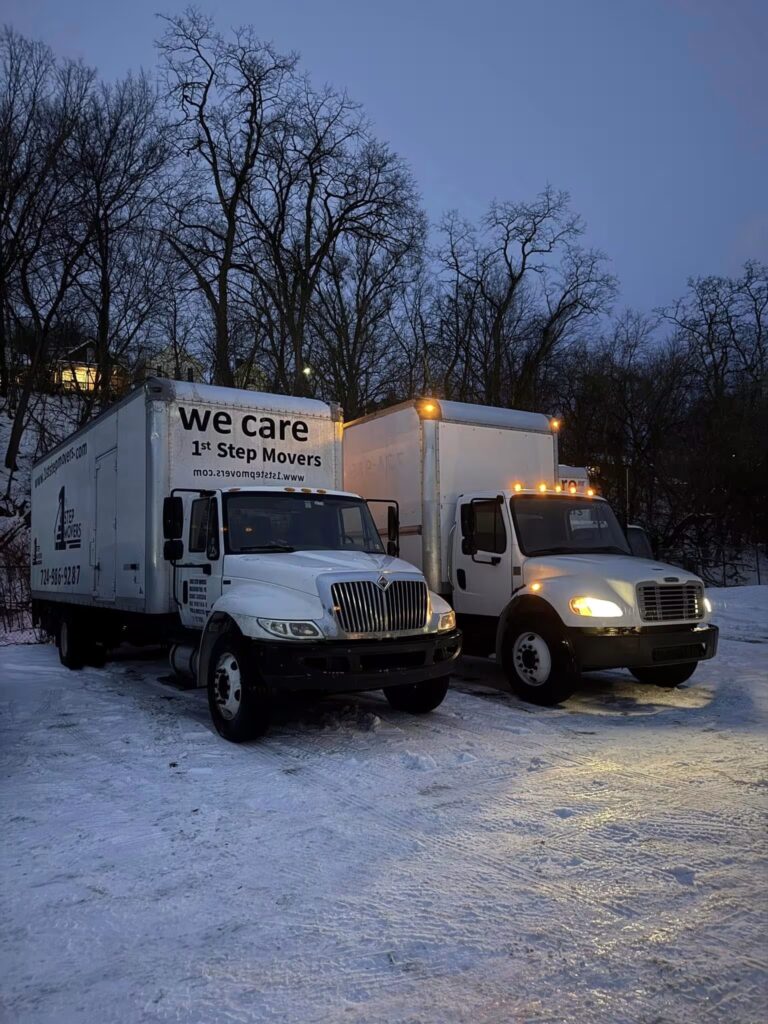
In the Pittsburgh area, this is where I steer families toward 1st Step Movers. They pair full-service muscle with the patient, compassionate touch these moves genuinely demand, and they don’t simply haul boxes away — they haul thoughtfully, donating a large share of what they remove instead of dumping it. When someone asks me for reliable Pittsburgh movers who actually understand the emotional weight of a downsizing move, they’re the name I trust to get it right the first time, not the third.
Give Yourself Grace Through the Transition
Here’s what I wish someone had told my family in that Mount Lebanon basement. You will not make every single decision perfectly, and that is completely fine. Keep the Steelers programs if they spark joy. Let the third set of mixing bowls go without guilt. Take breaks. Order the pizza. Laugh when you find the sixth pair of reading glasses.
Downsizing before a move is one of the harder things families do together. But done with a plan, a few good systems, and a little help, it becomes something else entirely — a chance to honor a life well lived and step into the next chapter with lighter arms. Two or three months. Four boxes. One steady team in your corner. That’s the whole secret, and now it’s yours.