What will junk removal not take? Most junk removal companies won’t haul hazardous materials such as wet paint, solvents, motor oil, gasoline, propane tanks, pesticides, asbestos, medical waste, ammunition and fireworks. Some items, like refrigerators, tires, old TVs and construction debris, are accepted only with special handling or not at all, depending on the hauler.
Those limits come from safety rules and disposal laws, not from crews being picky. This guide covers the full list, why each item is restricted, where to take it instead in the Pittsburgh area, and how to get your home ready so your junk removal in Pittsburgh goes quickly. It also covers appliances and estate cleanouts, the two jobs that raise the most questions.
Short answer: Junk haulers generally refuse anything hazardous, flammable, pressurized, explosive or medical. Furniture, mattresses, boxes, household clutter and most appliances are usually fine.
Why Junk Removal Companies Have Limits
A junk removal truck takes loads to transfer stations, landfills, scrap yards and recyclers. Each of those places has rules about what it accepts, and hazardous waste has its own separate disposal system. If a hauler can’t legally drop something off, it can’t load it.
Safety matters too. A leaking gas can or a crushed aerosol can in a packed truck is a fire risk for the crew and for other drivers. Chemicals that mix in a load can release fumes. That’s why the answer to “will you take this?” is sometimes no, even for a small item.
What Will Junk Removal Not Take? The Full List
Here are the categories most haulers turn away, with common examples and where they belong instead.
| Category | Examples | Where it goes instead |
|---|---|---|
| Paints and solvents | Wet latex or oil based paint, stain, varnish, paint thinner | Household hazardous waste collection |
| Automotive fluids | Motor oil, antifreeze, gasoline, brake fluid | Auto parts store or hazardous waste event |
| Lawn and pool chemicals | Pesticides, herbicides, fertilizer, pool chlorine, rodent poison | Household hazardous waste collection |
| Household chemicals | Drain cleaner, bleach, ammonia, oven cleaner | Use up, or a hazardous waste event |
| Pressurized containers | Propane tanks, fire extinguishers, helium tanks, full aerosol cans | Propane exchange or retailer take back |
| Explosives and ammunition | Ammo, fireworks, road flares, gunpowder | Contact your local police department |
| Medical waste | Needles, sharps, biohazards, prescription drugs | Drug take back for medicines; ask your municipality or pharmacy about sharps |
| Building hazards | Asbestos insulation or tile, lead paint debris | Licensed abatement contractor |
| Mercury items | Fluorescent tubes, old thermostats, thermometers | Hazardous waste or retailer recycling |
| Batteries | Car batteries, loose lithium batteries | Auto parts store or battery recycling |
The EPA explains what counts as household hazardous waste and why it needs separate handling. If you have unlabeled containers in the basement or garage, set them aside and ask before the truck arrives.
Items that depend on the hauler
Some things fall into a gray area. A hauler may take them, take them with extra steps, or decline:
- Dried paint: latex paint that has been fully hardened is often treated as regular trash. Wet paint is not.
- Tires: many disposal sites won’t accept them in a normal load, so they go to a tire recycler.
- TVs and computers: Pennsylvania’s Covered Device Recycling Act bars TVs, desktop and laptop computers, monitors and computer peripherals from municipal waste disposal, so they can’t go out with household trash. The PA DEP lists electronics collection programs. A hauler that takes them has to send them to a recycler, not a landfill.
- Construction debris: small loads of drywall or lumber may be fine, while concrete, brick, dirt and roofing shingles in volume usually need a dumpster.
- Regular bagged kitchen garbage: junk removal is for bulk items, not weekly trash.
Junk Removal for Appliances: Do Haulers Take Them?
Yes, appliances are one of the most common junk removal jobs. Washers, dryers, stoves, dishwashers, microwaves, water heaters and freezers are all heavy and awkward, which is exactly why people hire a crew instead of fighting them up the basement steps.
The catch is refrigerant. Refrigerators, freezers, window air conditioners and dehumidifiers contain refrigerant, and under the Clean Air Act it has to be recovered before the unit is finally disposed of. The EPA’s appliance disposal page explains who is responsible and how it works.
That’s also why the City of Pittsburgh won’t take Freon appliances at the curb. When you book, tell us exactly which appliances are going so we can plan how each one is handled.
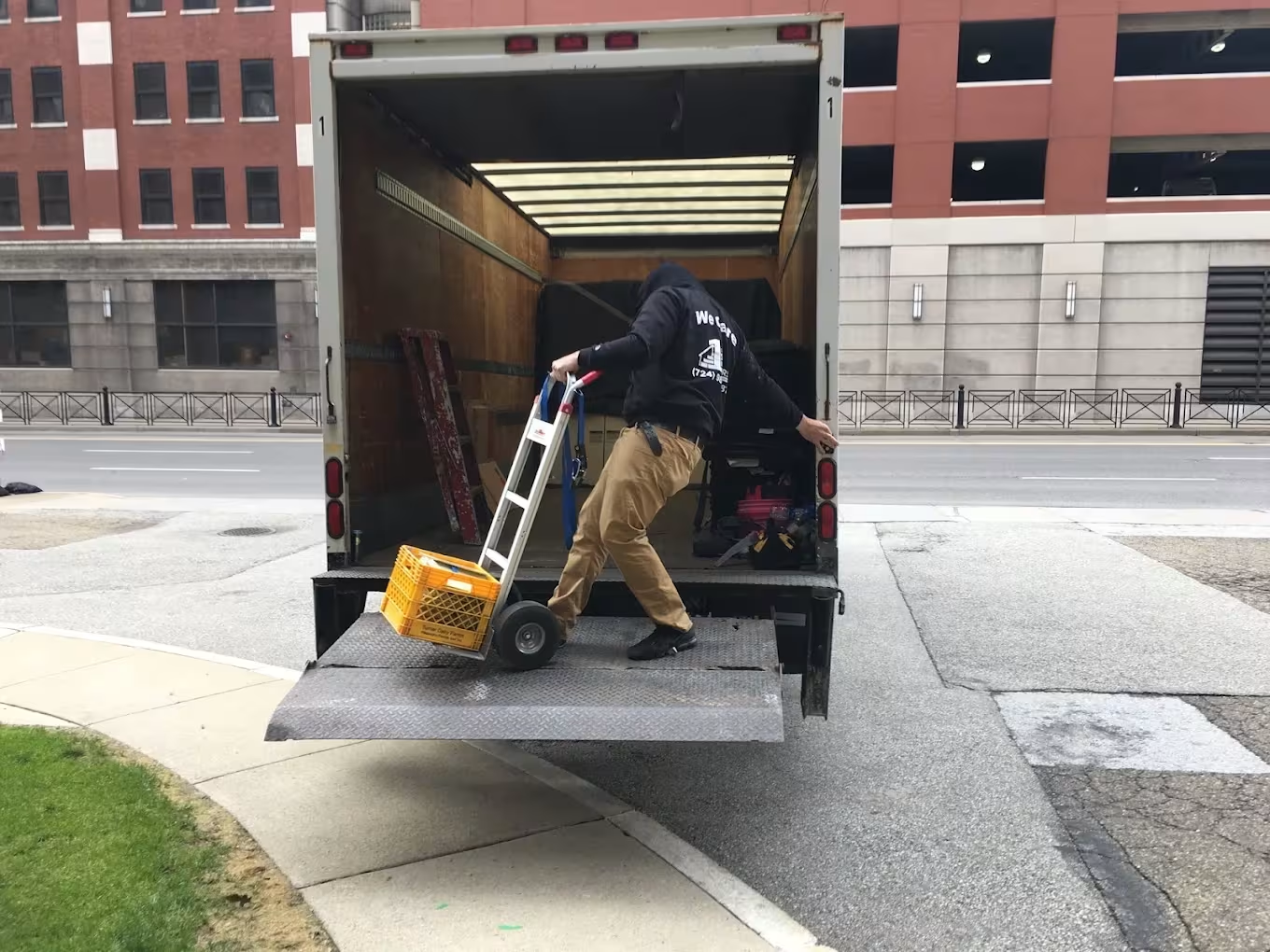
A mover using a hand truck to pull a load up the lift gate into a 1st Step truck on a city street.
Common appliances and what to know
| Appliance | What to know before pickup |
|---|---|
| Refrigerator or freezer | Contains refrigerant. Empty, unplug and defrost it a day early. |
| Window AC or dehumidifier | Contains refrigerant. Drain the water tray or bucket. |
| Washer or dishwasher | Shut off the water supply and drain the hoses. |
| Gas dryer or gas range | Have the gas line shut off and capped by a qualified pro. |
| Electric dryer, range or microwave | Unplug it and clear the space around it. |
| Water heater | Turn off power or gas and drain the tank first. |
What is the best way to get rid of an old appliance?
It depends on whether it still works. A working washer or fridge can be sold or donated, though many charities only take appliances in good working order, so call first. If you’re buying a new one, ask the retailer whether it hauls the old unit away at delivery. For a dead appliance in a basement, a cramped kitchen or an upstairs laundry room, junk removal is the simplest route because the crew does the carrying and the hauler handles where it goes.
If you’re deciding between repairing and replacing, a common rule of thumb is that a repair costing more than about half the price of a new unit, on an appliance past the middle of its expected life, usually isn’t worth it.
Getting appliances out of older homes
Plenty of local houses were built before today’s wide refrigerators and stacked laundry units. Measure the tightest doorway or stair turn on the way out, and tell us if an appliance sits in a basement with a narrow or steep staircase. A fridge may need its doors removed to clear a frame, and a defrosted unit won’t drip on the floors as it’s carried out.
Junk Removal for Estate Cleanouts
Clearing a loved one’s home is one of the heaviest jobs a family takes on, emotionally and physically. The order you work in matters more than speed.
- Secure documents and valuables first. Pull wills, deeds, titles, insurance papers, photos, jewelry and keepsakes before anything leaves. Check pockets, books, drawers and freezers.
- Get an appraisal if needed. If the home has antiques or collections, have them looked at before an estate sale or cleanout.
- Hold the estate sale before the haul. Sell or give away what has value, then schedule junk removal for what’s left.
- Sort into keep, donate and haul. Label the keep boxes clearly so they don’t get mixed into the haul pile.
- Pull out the hazardous items. Older homes often have decades of paint cans, garden chemicals and cleaning supplies in the basement. Those need a hazardous waste drop off.
Many families need both a cleanout and a move. Furniture the family is keeping can go to a new home or a relative’s house, while the rest is hauled away.
Because 1st Step is a moving company that also offers junk removal, one call can cover both jobs. Stairs, heavy dressers and tight hallways are everyday work for our crews.
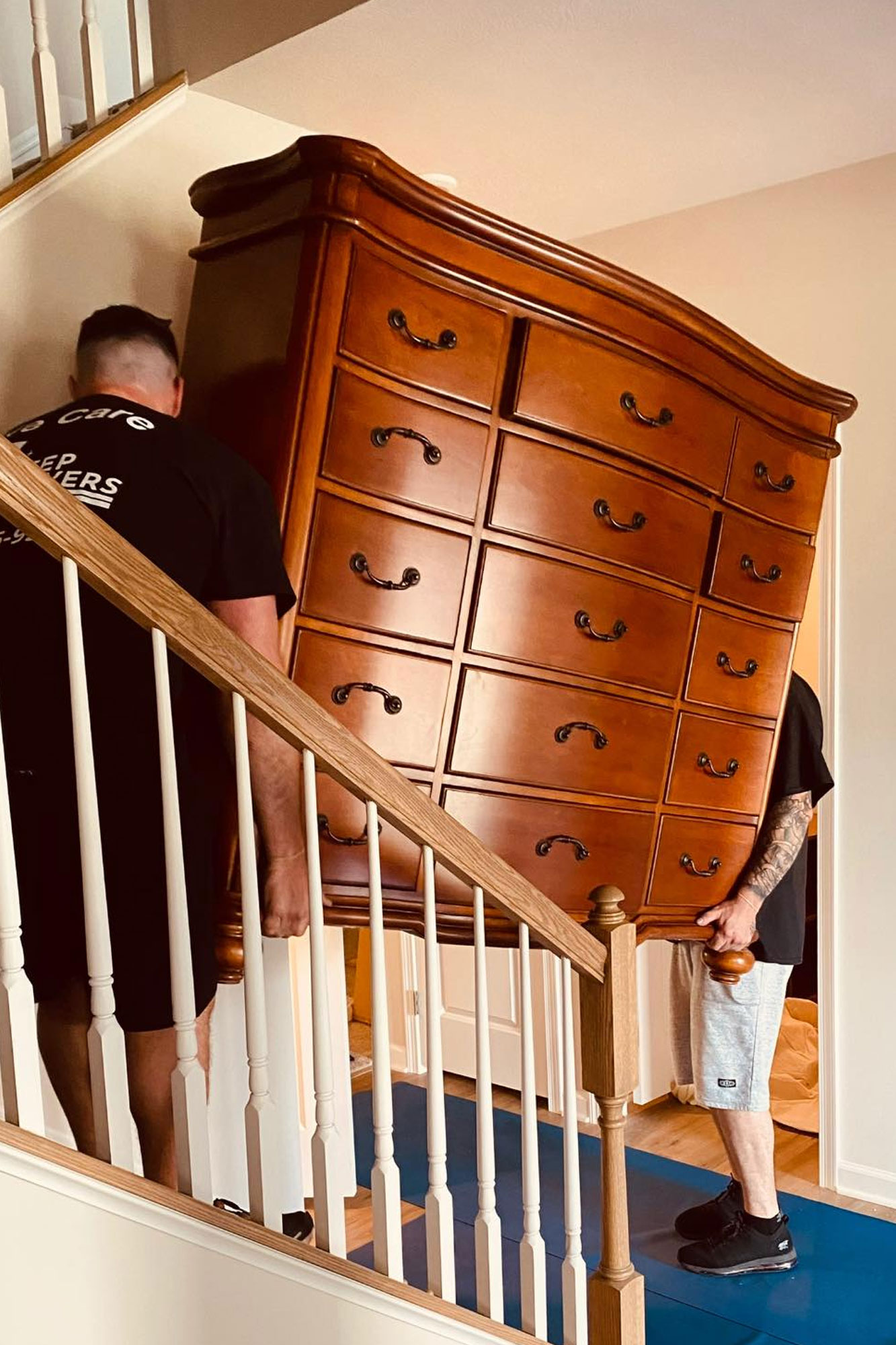
Two movers carrying a wooden dresser up a staircase.
How to Prepare Your Home for Junk Removal
A little prep makes the appointment faster and avoids surprises on the day.
- Walk through every room. Basement, attic, garage, closets and sheds. Make a rough list so your quote reflects the real volume.
- Sort first. Separate trash, donations and recycling. Our guide on what to throw out before a move helps you decide what goes.
- Stage items near an exit if you can do it safely. Box or bag small loose items.
- Mark what stays. Painter’s tape or a KEEP sign on furniture prevents mix ups.
- Set aside anything hazardous from the list above.

Clear the route from the pile to the truck. Move rugs, cords and small furniture out of hallways.
In winter, shovel and salt the walk, steps and driveway. A clear path keeps the crew safe and the job moving.
A mover walking a cleared path through snow toward a house.
Pittsburgh and Washington County Tips
Local homes and streets add a few things to plan around:
- Hills and steps: many houses have long exterior stairs from the street. Mention them when you book so we bring the right equipment and crew size.
- Row houses and narrow streets: parking a truck close can be tough in older city neighborhoods. Check whether you need to save a space or ask neighbors to move cars.
- Older homes: narrow staircases and low basement ceilings make bulky items harder to get out. Measure ahead.
- Winter weather: ice on hillside driveways can slow a job. Plan for daylight hours when you can.
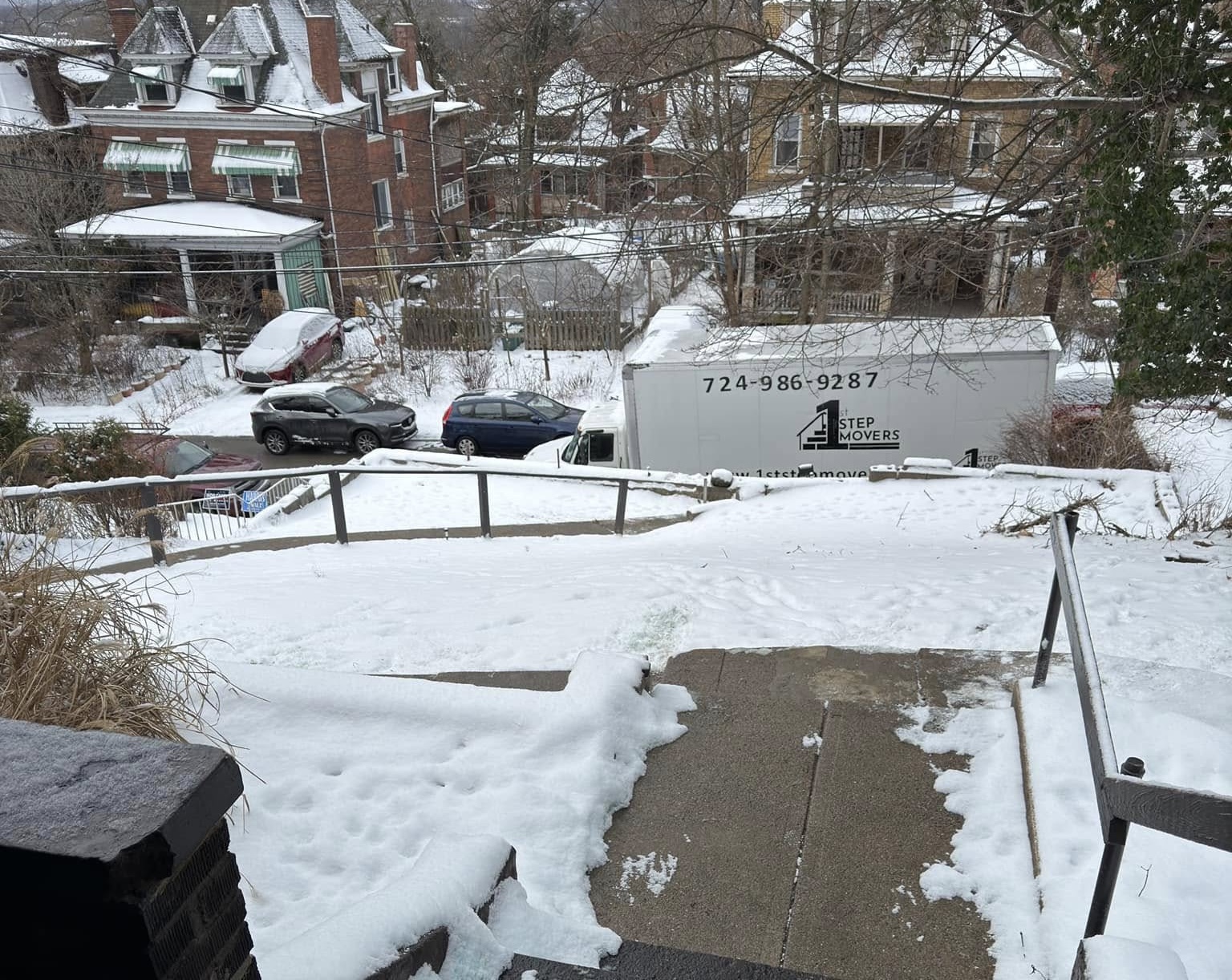
A 1st Step truck parked below snowy front steps on a hillside street.
For smaller loads, check your municipality’s curbside rules first. The City of Pittsburgh’s curbside refuse page lists what regular collection accepts, such as some furniture, and what it doesn’t, including tires, e-waste and Freon appliances.
For a basement full of furniture, a whole house cleanout or anything too heavy to drag to the curb, a junk removal crew is the faster option.
What Junk Removal Usually Does Take
The no list is short compared with the yes list. Most haulers take:
- Couches, recliners, tables, dressers and bed frames
- Mattresses and box springs
- Most appliances, with the refrigerant planning described above
- Exercise equipment, grills with the propane tank removed, and outdoor furniture
- Boxes, toys, clothing, books and general household clutter
- Small amounts of yard waste and renovation debris
If you’re also moving, see our post on household items movers won’t transport. The lists overlap, since the same hazardous items are off limits on a moving truck too.
What Does Junk Removal Cost?
Every job is different, so we quote each one rather than guess. The main things that drive cost are how much you’re getting rid of, how heavy the items are, how far the crew has to carry them, stairs and access, and whether any items need special handling. A clear description and a few photos help us give you an accurate free quote.
Frequently Asked Questions
What do junk removal companies not take?
The refused list comes down to one test: could it burn, explode, leak or make someone sick? If so, it belongs in a hazardous waste, medical or retailer take back channel instead of a truck. When you aren’t sure about an item, such as an unlabeled jug in the garage, keep it out of the pile and ask about it when you book rather than on pickup day.
What is the cheapest way to get rid of junk for free?
Start with your municipality’s curbside rules, since many towns take some furniture and bulk items with regular trash on set days. Donate usable items to local charities, sell them online or offer them free to neighbors. For large loads, heavy items, basements or items that need special handling, a junk removal crew saves time and back strain.
What is the best way to dispose of old appliances?
Sell or donate appliances that still work, after calling to confirm the charity accepts them. When you buy a replacement, ask whether the retailer takes the old unit at delivery. For broken appliances, especially ones stuck in a basement or upstairs, junk removal is easiest. Refrigerators, freezers and window air conditioners need refrigerant recovered, so avoid simply leaving them at the curb.
Will junk removal take a refrigerator?
Usually yes, but refrigerators, freezers and window air conditioners contain refrigerant that must be recovered before the unit is scrapped under federal rules. That’s why many curbside programs, including Pittsburgh’s, won’t take them. Empty and defrost the unit a day early, and tell the hauler about it when you book so it can be planned for properly.
Can junk removal take guns or ammunition?
Generally no. Junk haulers refuse firearms, ammunition, fireworks and explosives. Contact your local police department about safe disposal of ammunition or unwanted firearms. If you’re moving and need to transport legally owned firearms, our post on whether moving companies can transport firearms explains the rules and how to plan.
Have a basement, garage or whole house to clear out? Contact 1st Step Movers for a free quote and tell us what’s going.