
The easiest way to make moving into an apartment go well is to plan around the building, not just your boxes. Get the building rules in writing, reserve the elevator and a place for the truck, measure the stairs and doorways, and bring a smaller, edited load with the things you need first packed separately. If you want a crew that handles the stairs, hallways and hilly streets for you, our apartment movers in Pittsburgh can take that part off your hands.
Short answer: Call the property manager first, book the elevator and parking, measure every tight spot, downsize before you pack, and keep a first night box with you. Those five steps remove most of the stress from an apartment move.
This guide focuses on the physical side of the move: getting your things from the truck, through the building and into a smaller space. If you are still deciding what kind of moving help you need, our post on choosing the right moving service for an apartment or home covers that part.
Why moving into an apartment is different from a house move
A house move is mostly about the truck and the front door. An apartment move adds shared hallways, neighbors, a building manager, and often an elevator or several flights of stairs. Every one of those can slow the day down if nobody planned for it.
Around Pittsburgh, the building itself is often the hardest part. Many apartments sit in older homes that were split into units, with narrow staircases, tight turns at the landings and doorways that were never meant for a modern sectional. Newer mid rise and high rise buildings are easier to carry through, but they usually come with strict move in hours and a reserved freight elevator.
Then there is the street. Steep grades, one way blocks and limited curb space mean the truck may not fit right outside the door. A longer carry from the truck adds time, so it pays to solve parking before moving day.
Start with the building rules
Before you pack anything, contact the property manager or landlord and ask for the move in policy in writing. Rules vary a lot from building to building, and finding out on moving day is the expensive way to learn them.
Questions to ask your property manager
- Which days and hours are moves allowed, and are there quiet hours?
- Do I need to reserve the elevator, and for how long?
- Which entrance, loading area or dock should the movers use?
- Does the building need a certificate of insurance from the moving company, and what must it say?
- Are floor or wall protection rules in place for hallways and elevators?
- Where can a moving truck park, and do the movers need a fob or access code?
Send the answers to your moving company as soon as you have them. If a certificate of insurance is required, ask your mover for one early and confirm it can reach the building before your date. Some buildings reject a certificate that does not list the exact names they ask for, so share the requirement word for word.
Book the elevator, the date and the crew together
An elevator window, a parking spot and a moving crew all have to line up on the same morning. Lock in the elevator reservation first, then book movers for that window, then arrange parking. Changing one of the three usually means changing all of them.
Many leases turn over at the start and end of the month, so those days fill up fastest. If your lease allows it, a midweek or mid month date gives you more choice. Our guide on how far in advance you need movers covers booking timelines in more detail.
Stairs, elevators and tight spaces
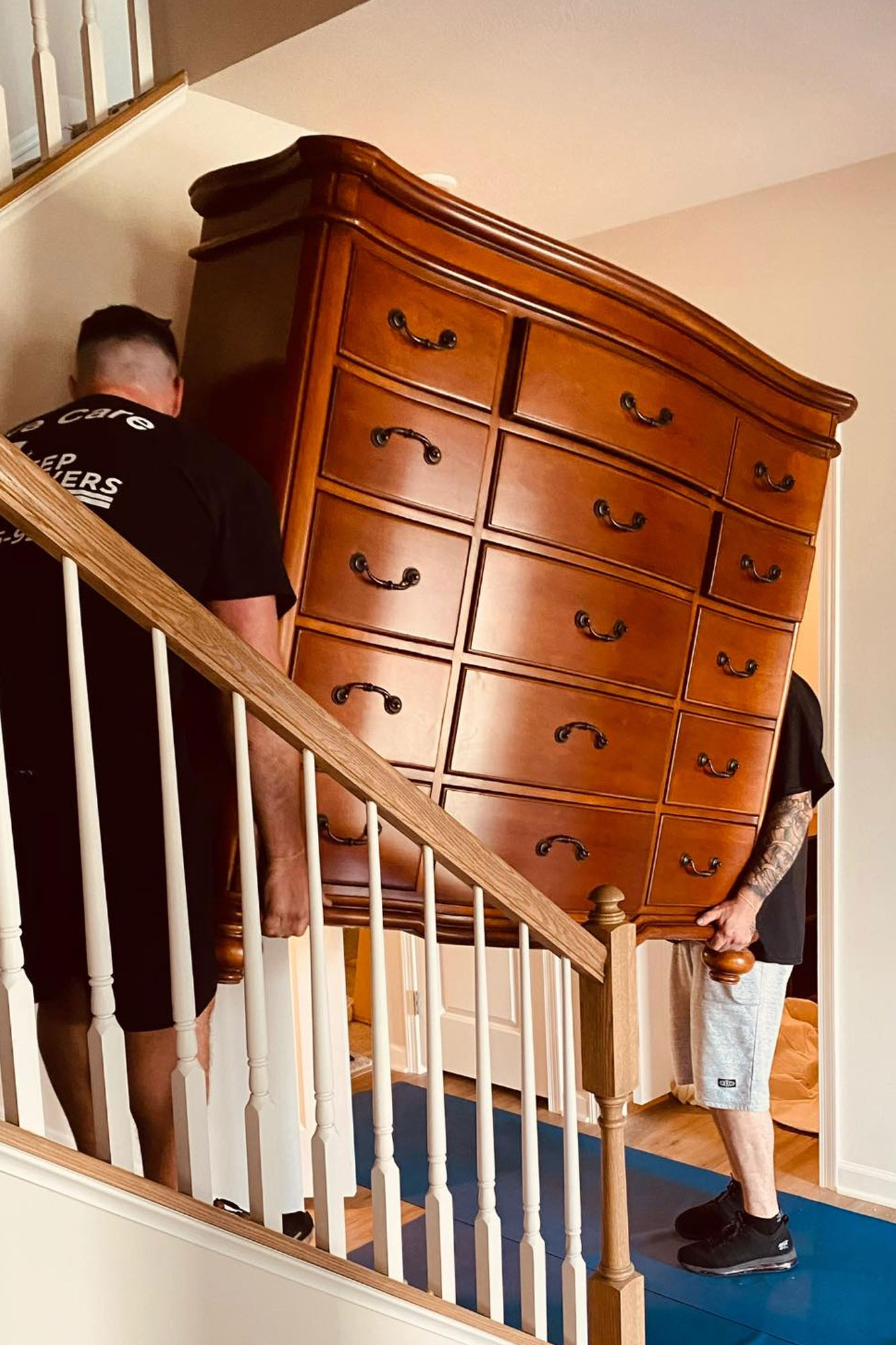
Stairs are where apartment moves gain or lose time. Count the flights at both buildings and look closely at each landing. A dresser or couch that clears a straight run of stairs can still get stuck on a tight turn.
Take the drawers out of dressers and carry them separately. Remove legs from couches and tables when they unscrew. Lighter, smaller pieces move faster and are far less likely to scrape a railing or a wall in a shared hallway.
If the building has an elevator, ask for its door width and interior depth. Long items like mattresses and tall bookcases sometimes only fit standing on end.
Two movers carrying a wooden dresser up a staircase.
Measure before you move anything
Measure the width and height of the front door, the apartment door, hallways, stair landings and the elevator. Then measure your largest pieces. If a piece will not fit, it is better to know now, while you can still sell it, give it away or plan to take it apart.
| Spot to measure | What to check |
|---|---|
| Building entrance | Door width, steps, any tight vestibule |
| Stairs and landings | Width, ceiling height, the turn at each landing |
| Elevator | Door width, interior depth and height |
| Apartment door and hallway | Width, and any sharp turn just inside |
| Bedrooms and closets | Room for the bed frame, dresser and mattress |
Plan parking, hills and the carry from the truck
A truck parked right at the entrance saves more time than almost anything else you can arrange. Ask the building where trucks are allowed to stop, and check the street the day before for signs, permit zones and construction.
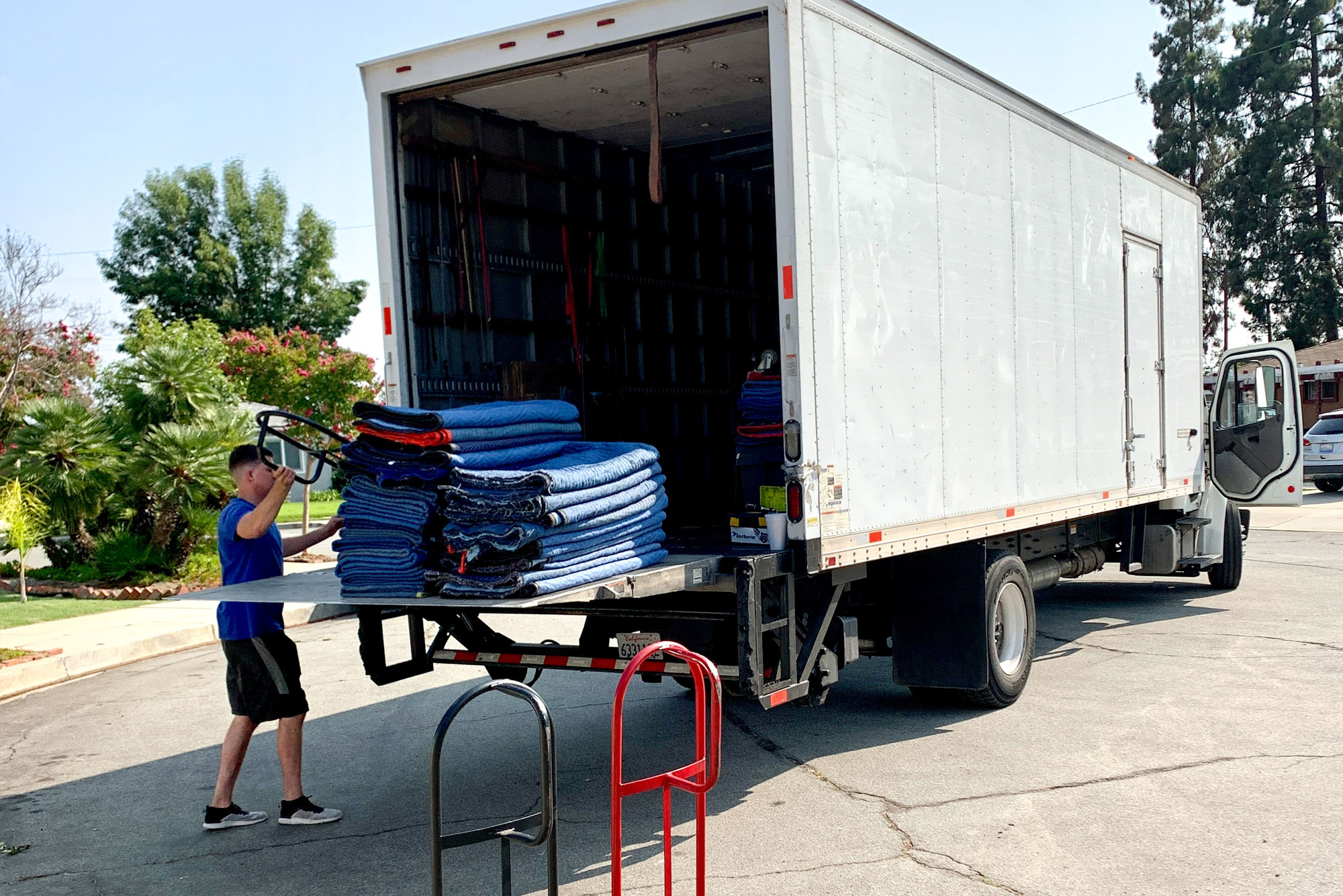
On a steep or narrow street, tell your movers ahead of time. They can bring the right equipment, plan which side of the street to use and keep the walk from the truck to the door as short and safe as possible.
In winter, have a plan for snow and ice on the sidewalk, the steps and the entrance. A cleared, salted path keeps everyone on their feet.
A mover unloading moving blankets from a box truck liftgate, with a hand truck nearby.
Pack for a smaller space
Most people moving into an apartment are giving up some square footage. Every box you do not bring is one less box carried up the stairs and one less box filling your new living room. Go room by room and decide what really comes with you. Our guide to decluttering before a move walks through it.
- Sketch your new floor plan and decide where the big pieces go before moving day.
- Use small and medium boxes. They stack better and are easier to carry up stairs.
- Label each box with the room it goes to, so the crew can put it in the right place the first time.
- Think about storage that fits the space: under the bed, inside closets and over the door.
If you would rather not pack at all, our packing services include the materials, and the crew packs with the stairs and the smaller space in mind.
What to bring first

Pack a first night box and keep it with you, not on the truck. When the last load comes off, you will want the basics without opening a dozen boxes.
- Toilet paper, soap, towels and a shower curtain
- Medications, phone chargers and important papers
- Sheets and a pillow for the first night
- A basic tool kit, scissors and a flashlight
- Paper plates, snacks and water
A man holding a labeled box in a new home (stock photo).
When you arrive, walk the empty apartment before anything comes in. Take photos or video of any existing scuffs, stains or broken fixtures and send them to the landlord. That record protects your security deposit later. It is also the easiest time to wipe out cabinets and closets.
Utilities, mail and the last details
About two weeks before the move, set up electricity, gas and internet in your name, and buy renters insurance if your lease requires it. Forward your mail with the USPS change of address service so nothing goes to the old place.
On moving day, keep the building contact’s phone number handy, have your elevator key or fob ready, and make sure someone is at each end to let the crew in. Small things like a propped door or a missing fob can cost real time.
How professional movers make an apartment move easier
Experienced movers know how to protect railings, door frames and elevator walls, how to turn a couch on a tight landing, and how to load the truck so the first things off are the pieces you need first. They also bring hand trucks, moving blankets and straps sized for the job.
Our minimum is 3 hours, travel time included, for moves Monday to Saturday. The time an apartment move takes depends on the stairs, the elevator, the carry from the truck and how much you bring, which is why we give every customer a free quote based on their actual move. We are fully licensed and insured, and we hold household goods authority from the PA PUC for household goods moves.
Frequently Asked Questions
What are some important things to consider before moving into your first apartment?
Read the lease and the building move in rules, set up utilities and renters insurance, and measure the space so your furniture fits. Plan how your things will get in: stairs, elevator, parking and doorways. Bring only what fits the new space, and pack a first night box with toiletries, chargers, medications and bedding so you can settle in before everything is unpacked.
Can I move into an apartment in one day?
Yes, most apartment moves are done in a single day, especially local ones. The keys are an elevator reservation that matches your moving time, a truck parked close to the entrance and boxes packed and labeled before the crew arrives. Unpacking usually takes longer than the move itself, so focus on the bed, the kitchen and the bathroom first.
Should I get renters insurance before moving into an apartment?
Often the lease requires it, and even when it does not, it is worth pricing out. Renters insurance usually covers your belongings in the apartment and some liability, while the landlord’s policy covers the building, not your things. Start the policy on your move in date, keep a copy for the property manager, and read what it says about items while they are in transit.
How do movers handle stairs in an apartment building?
Movers take apart what they safely can, remove drawers and legs, wrap furniture in blankets and pad railings and door frames. They plan each turn on a landing before lifting and use hand trucks where the stairs allow. Telling your mover how many flights there are at both addresses helps them bring the right crew size and equipment.
What should I unpack first in a new apartment?
Start with your first night box, then make the bed, set up the bathroom and unpack basic kitchen items. After that, work room by room using the labels on each box. Breaking down empty boxes as you go keeps a small apartment from feeling crowded while you settle in.
Moving into an apartment soon? Request a free quote and tell us about the stairs, elevator and parking at both addresses.