
The moving mistakes to avoid most are the ones made in the last week and on moving day itself: boxes packed at the last minute, furniture that was never measured, no plan for parking or stairs, and a mover hired without checking its license. Almost all of them come from leaving decisions for the final few days. If you are planning local moving in Pittsburgh or anywhere in Washington County, this guide walks through the mistakes that cause the most trouble once the truck arrives, and what to do instead.
Short answer: Measure big furniture and doorways, plan parking and the path from door to truck, pack and label early, keep essentials with you, and hire a mover licensed by the PA PUC. Those steps prevent most moving day problems.
Other guides on our blog cover the planning side, like how long before moving you should start packing and the things people forget when moving in Pittsburgh. This one focuses on the mistakes that show up when the crew is standing in your driveway.
Moving Mistakes to Avoid in the Final Week
The week before a move is when small shortcuts turn into long days. Here are the habits that cause the most trouble.
Leaving the packing for the last two days
Packing always takes longer than people expect. When boxes are still being filled as the crew arrives, the move slows down, loose items end up in trash bags, and fragile things get wrapped in a hurry. Aim to have everything except daily essentials packed and sealed the night before.
Overfilling big boxes
A large box full of books is hard to lift and more likely to split. Put heavy things like books, tools and canned goods in small boxes, and save large boxes for light items like linens, pillows and lampshades. Tape the bottom seams twice.
Labeling only the top of the box
Once boxes are stacked, nobody can see the top. Write the room and a short list of contents on two sides as well as the top, and mark anything fragile clearly. That way every box goes straight to the right room at the new place.
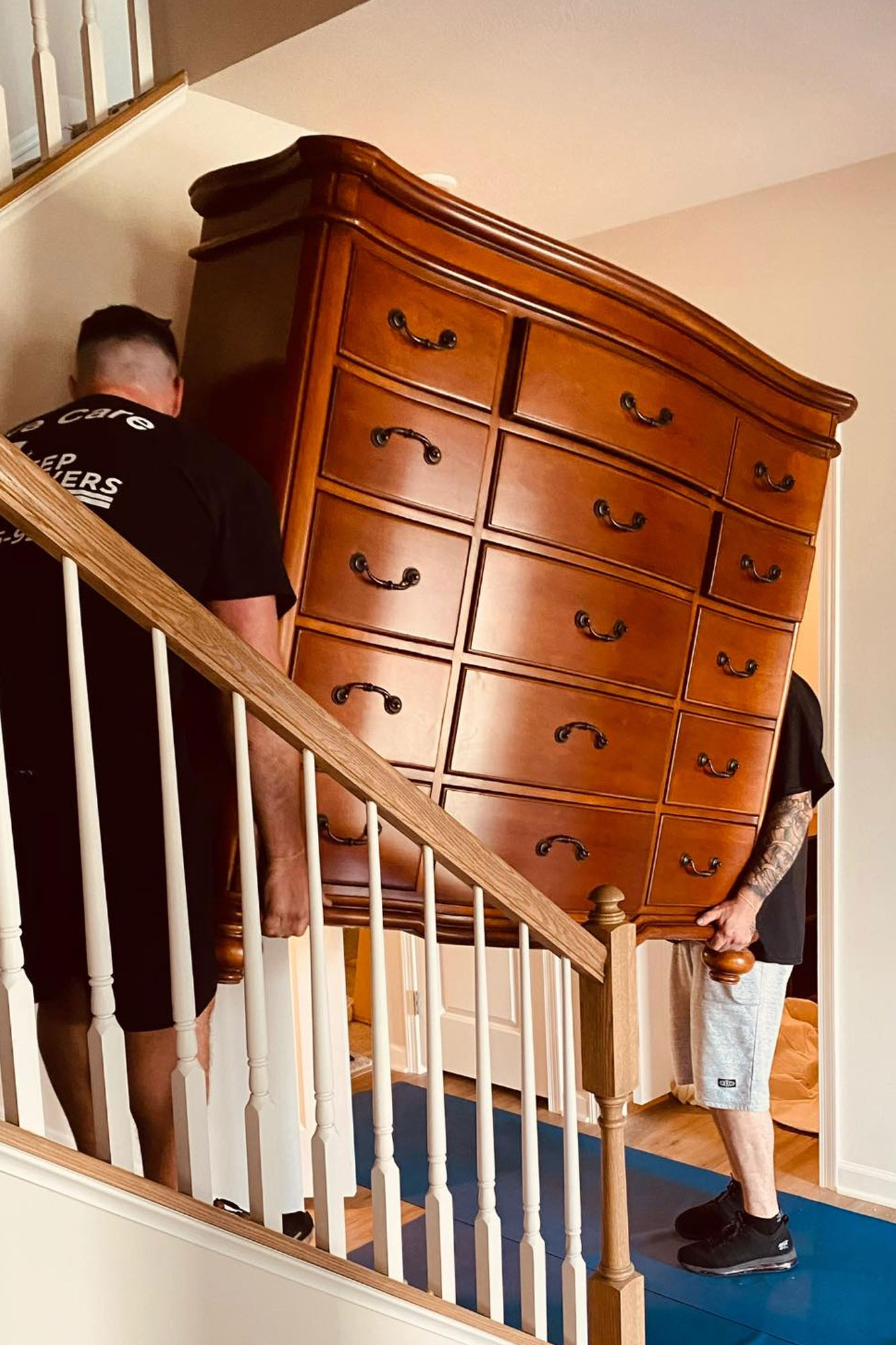
Stairs are where unmeasured furniture gets stuck. Many homes around Pittsburgh have narrow, turning staircases, low ceilings over basement steps and doorways that were sized long before modern sofas and dressers.
Before moving day, measure your largest pieces and the tightest doorway, stair turn and hallway at both homes. If something will not fit, you can plan to remove legs or doors, or decide not to move it at all, instead of finding out halfway up the steps.
Two movers carrying a wooden dresser up a staircase.
Not Measuring Furniture, Doors and Stairs
Skipping the tape measure is a common mistake, and it matters even more in older homes. Row houses in the city, split levels in the South Hills and farmhouses in Washington County each have their own tight spots.
- Measure height, width and depth of sofas, sectionals, dressers, beds and appliances.
- Measure door openings, the narrowest point of each staircase and any turns or landings.
- Check basement and attic access if anything is stored there.
- Tell your mover about items that may need to be taken apart, such as bed frames or tables with removable legs.
Sharing these details when you ask for a quote helps the crew bring the right tools and plan the order of the load.
Ignoring Parking and the Path to the Truck
A moving truck needs room. On narrow city streets, steep driveways and blocks with tight parking, the distance between your door and the truck can add a lot of carrying time.
Think about where the truck can safely park at both homes. Move your own cars out of the driveway, ask neighbors for space if the street is tight, and check whether your building or street has rules about loading.
If you are unsure whether you need permission to block part of a city street, check with the City of Pittsburgh or your local borough before moving day. A short, clear path means a faster, safer load.
Mover using a hand truck on a truck lift gate.

Clear the route inside, too
Pick up rugs that slide, move small tables out of hallways, and keep pets and kids away from the doors. A clear path protects your floors and keeps everyone safe while heavy items are carried out.
Forgetting About Pittsburgh Weather
Western Pennsylvania weather changes fast. Rain makes steps slick, and winter brings snow and ice to the hills. A move can still go well in bad weather if you plan for it.

In winter, shovel and salt walkways, porch steps and the driveway before the crew arrives, at both homes if you can. Lay down cardboard or old towels inside entryways to catch wet boots.
In spring and summer, keep an eye on the forecast and have plastic bags or bins ready for electronics and anything that should stay dry. If you want to compare seasons, our guide on the best seasons and days to move in Pittsburgh covers the tradeoffs.
Mover walking a cleared path through snow toward a house.
Packing the Things You Need on Day One
Another mistake is sealing up everything you will need the first night. Pack an essentials bag or box that rides with you, not on the truck:
- Medications, phone chargers, wallets and keys
- Important papers, like your lease, closing documents and IDs
- A change of clothes, toiletries and towels
- Toilet paper, paper towels, a few cleaning supplies and trash bags
- Basic tools, like a screwdriver, box cutter and tape
- Bedding for the first night and snacks and water
Keep jewelry, cash and irreplaceable keepsakes with you as well.
Hiring Without Checking the License
Choosing a mover only because it was the first to answer is a costly mistake. In Pennsylvania, a company that moves household goods between points in the state should hold a certificate from the Pennsylvania Public Utility Commission. For moves to another state, the mover should be registered with FMCSA, and the federal Protect Your Move site explains your rights.
1st Step Movers holds a PA PUC certificate for household goods moves and is registered with FMCSA for interstate household goods moves. Our local moves follow our PUC tariff, with a minimum of 3 hours, travel time included, for moves Monday to Saturday. For more warning signs, read our guide to red flags with movers.
Giving the mover an incomplete picture
When you request a quote, mention everything: the garage, the shed, the basement, the attic and any heavy pieces like a piano or gun safe. Also mention long driveways, steep walks and flights of stairs.
Leaving things out does not make a move shorter. It just means the crew finds the extra work on moving day. An honest, complete description is what lets us plan the right crew and truck.
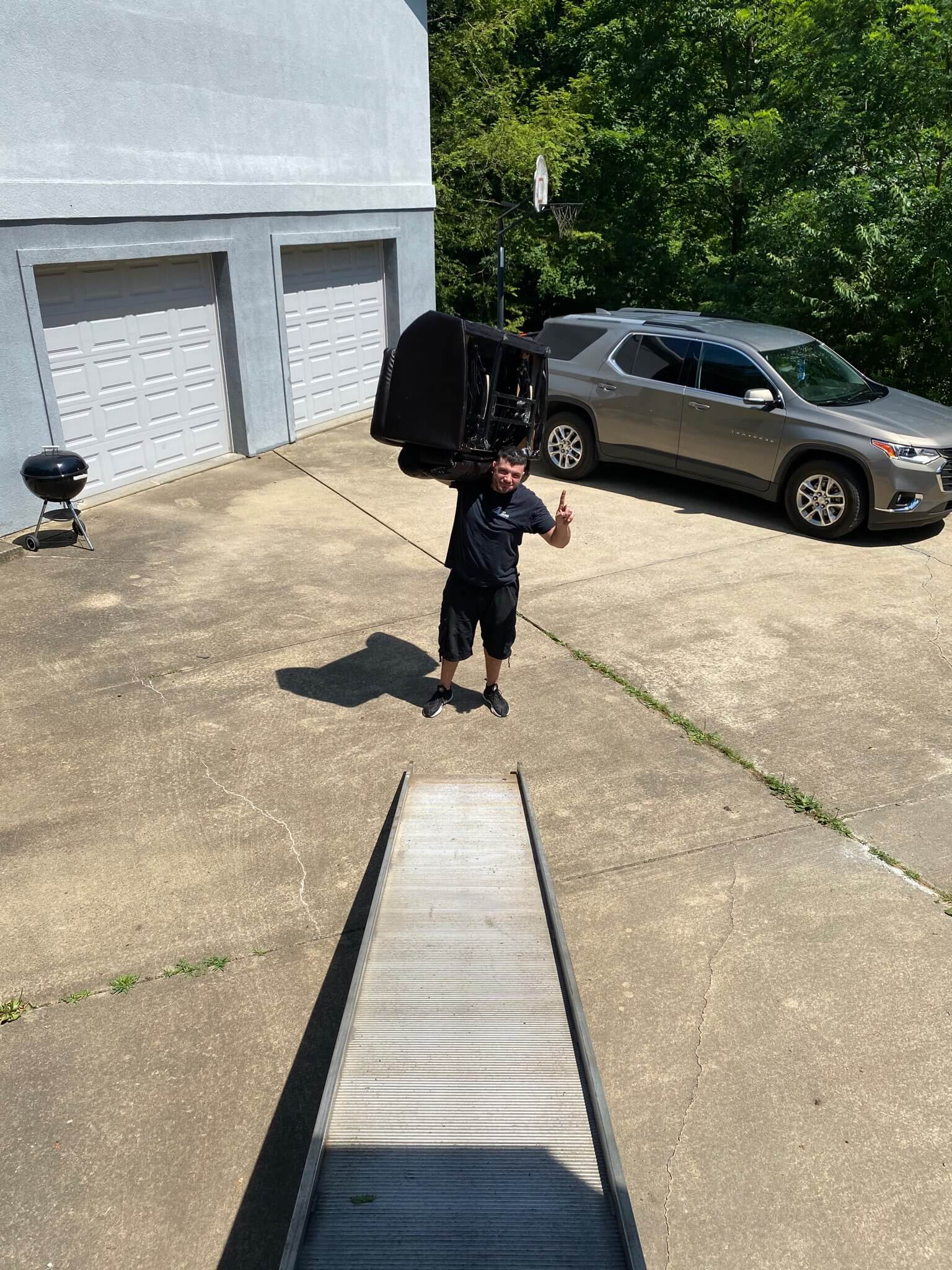
Mover carrying a large item on his shoulder across a driveway toward a truck ramp.
Forgetting the Paperwork Side
Moving is not only boxes. A few tasks are easy to miss when you are busy packing:
| Task | When to handle it |
|---|---|
| Change your address with USPS | At least two weeks before the move |
| Schedule utility shutoff and start dates | Two to three weeks before |
| Update your bank, employer and insurance | The week of the move |
| Confirm the date and arrival window with your mover | A few days before |
| Take photos of valuable furniture | Before packing starts |
Setting utilities to overlap by a day keeps lights and water on at the new place when you arrive.
Trying to Do Every Part Yourself
Some people take on the heaviest, riskiest parts of a move to save time or effort, then end up exhausted or hurt. You do not have to choose between doing everything and doing nothing. Professional packing, help with just the heavy lifting, or junk removal before the move can each take a hard job off your list. Decide early which parts you want help with so they can be scheduled together.
Frequently Asked Questions
What is the biggest mistake people make when moving?
Waiting too long to book the mover is a big one that people underestimate. Popular dates, like the end of the month and summer weekends, fill up first. Once you know your move date, request quotes and pick a licensed mover, then work backward from that date to plan packing, utilities and the address change.
How do I avoid furniture getting stuck on stairs?
Measure the item and the tightest point on the route, including doorways, stair turns and landings, at both homes. Share those measurements with your mover when you request a quote. Items like bed frames and tables can often be taken apart, which makes tight staircases in older homes much easier to manage.
Should I pack the night before moving day?
Use the night before for final jobs rather than packing whole rooms. Strip the beds and bag the bedding, empty and defrost the freezer if it is moving, take apart anything you plan to disassemble yourself, and set aside the essentials bag so it does not get loaded. Get some sleep, because moving day is long.
How do I check if a mover is licensed in Pennsylvania?
Ask the mover for its PA PUC certificate number and, for a move to another state, its USDOT number. Look the company up on the PUC website, and use the FMCSA site to check interstate registration. Make sure the company name on the record matches the name on your estimate and paperwork, not a different business.
What should I keep with me instead of on the truck?
Beyond the essentials bag, keep anything you could not replace in your own car: family photos, hard drives, laptops, jewelry and important documents. Do not pack these in boxes labeled with their contents. Before the truck leaves, walk through every room, closet and cabinet so nothing you meant to keep is left behind.
Planning a move around Pittsburgh or Washington County? Request a free quote and tell us about your stairs, parking and big items so we can plan the day with you.