How do you protect your belongings during a rainy moving day? Pack everything in plastic bins or double-wrapped boxes, cover furniture with moving pads and plastic stretch wrap, and lay down floor runners. Then set up a covered path between the door and the truck. Most rain damage happens in the short walk outside, so that’s where your protection matters most.
Rain doesn’t have to ruin your move. It just changes the plan a little. After years of loading trucks in western Pennsylvania, I can tell you the wet days aren’t the ones that go wrong. The unprepared days are.
Why Rain Is a Real Concern for Pittsburgh Moves
Pittsburgh is not a dry city. NOAA’s 1991–2020 climate normals put the city’s average yearly precipitation at about 38 inches. Some years are far wetter than that. In 2018, Pittsburgh set its all-time record with 57.83 inches, and 2019 brought 160 days with measurable precipitation.
That means moving in the rain is less of a “what if” here and more of a “when.” I tell every customer the same thing. Don’t hope for sunshine. Plan for rain and be pleasantly surprised if it holds off.
| Pittsburgh Weather Fact | What It Means for Your Move |
|---|---|
| About 38 inches of precipitation per year | Rain is likely at some point in any season |
| June is typically among the wettest months | Summer moves need a rain plan too |
| Record 178 wet days in 2003 | Even “good” years bring plenty of wet days |
| Summer storms can pop up fast | Check the radar the morning of your move |
If you’re still choosing a date, our guide on Why Timing Matters: Best Seasons and Days to Move in Pittsburgh breaks down the pros and cons of each season. You can also check the latest local forecast through the National Weather Service Pittsburgh office.
How Long Should You Start Packing Before You Move?
Start packing three to four weeks before moving day. For larger homes, give yourself six weeks. Rain makes this even more important, because rushed packing leads to open box flaps, loose tape, and items tossed into bags at the last minute.
I once helped a family who packed their entire kitchen the night before. It poured the next morning. Half their boxes had one strip of tape across the top, and water got in everywhere.
Pack one room at a time. Start with the things you use least, like holiday decorations and guest room items. Save daily essentials for the final few days.
Choose Water-Resistant Packing Materials
Plastic bins with snap lids are your best friend on a wet day. They stack well and keep water out completely. If you’re using cardboard, pick thick, double-walled boxes and tape every seam, both top and bottom.
For extra protection, line boxes with a trash bag before filling them. It’s cheap and it works. Put electronics, documents, and photos in sealed plastic bags inside the box.
What Do Movers Do if It’s Raining?
Professional movers don’t cancel for ordinary rain. We adjust. A good crew arrives with extra moving pads, plastic stretch wrap, floor runners, and tarps.
Here’s what a typical rainy-day setup looks like on our jobs. First, we protect the floors inside your home with runners or cardboard. Next, we park the truck as close to the door as possible to shorten the walk. Then we wrap every piece before it goes outside.
We also slow down a little. Wet ramps and sidewalks get slippery, and a dropped dresser costs far more than an extra 20 minutes. Working with an experienced Pittsburgh moving company means your crew already knows these steps by heart.
Severe weather is different. Lightning, flash flooding, or icy roads can make loading unsafe. In those cases, a reputable mover will talk with you about pausing or rescheduling.
What Should I Do When Moving in Rainy Weather?
Your job on moving day is to make the path from the house to the truck as short and dry as possible. Small steps make a big difference. These rainy day moving tips come straight from what I’ve seen work on real jobs.
- Set up a pop-up canopy or large tarp over the entryway if you can.
- Put old towels and a large mat just inside the door.
- Clear the walkway of anything people could trip over.
- Keep a box of dry towels and paper towels handy for wiping items down.
- Turn off the air conditioning to reduce condensation near open doors.
Protect Your Floors
Muddy boots can do real damage to hardwood and carpet. Lay down plastic floor protector film or flattened cardboard along every walking path. Tape the edges so nothing slides.
At the new home, do the same before the first box comes through the door. It’s much easier than cleaning up after.
Keep Your Essentials With You
Pack a small bag with medications, chargers, important documents, and a change of clothes. Keep it in your car, not on the truck. If you get soaked, you’ll be glad you did.
How to Protect Furniture From Rain When Moving
Wood, upholstery, and mattresses are the items most at risk. Water can warp wood, stain fabric, and lead to mold in a mattress within days. The fix is layering.
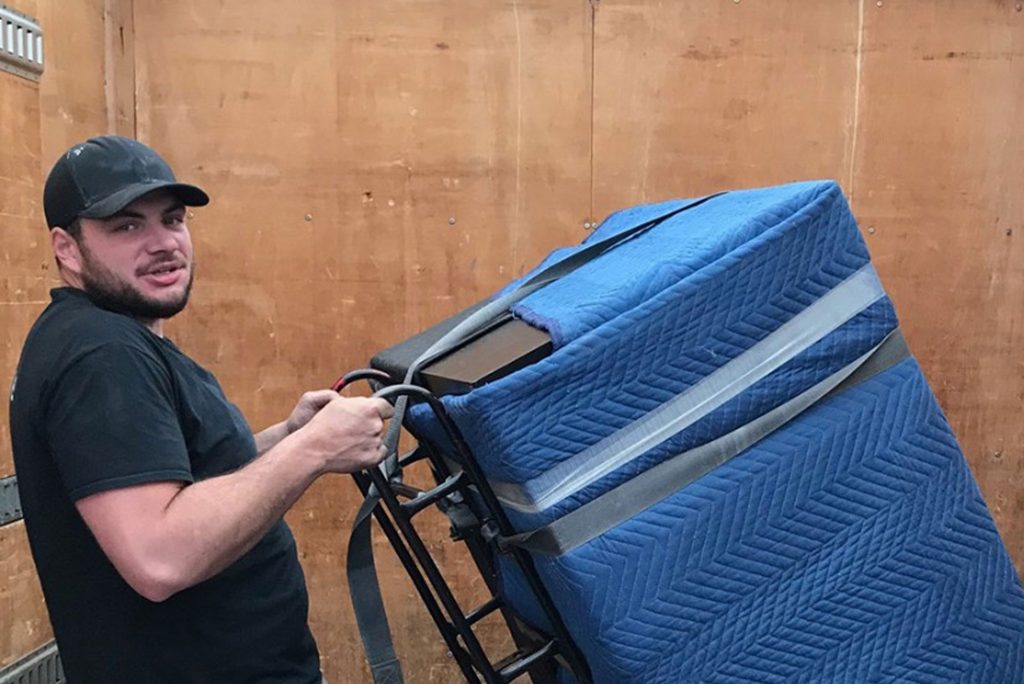
Start by removing drawers or taping them shut. Wrap the piece in a moving pad, then cover the pad with plastic stretch wrap. The pad protects against dings and the plastic keeps water out.
Mattresses should go into sealed mattress bags. They cost only a few dollars. I’ve watched a queen mattress get ruined in the 30 seconds it took to cross a driveway, and it’s not a mistake anyone wants to repeat.
For electronics, use their original boxes if you still have them. If not, wrap them in blankets and then plastic. Never let TVs or computers sit on a wet truck floor.
Do Furniture Moving Pads Work?
Yes, moving pads work very well, but not on their own in the rain. Pads are thick quilted blankets designed to absorb impact and prevent scratches. They are not waterproof.
In fact, a wet pad can hold moisture against your furniture. That’s why we always add plastic wrap over the top on rainy days. Think of the pad as armor and the plastic as a raincoat.
Once furniture is inside and dry, remove the plastic promptly. Trapped moisture can cause problems if wrapped pieces sit for days.
What to Wrap a Sofa in When Moving
Wrap a sofa in moving pads first, then cover it completely with plastic stretch wrap or a fitted sofa cover bag. Remove the cushions and wrap them separately in plastic bags. Take off the legs if they unscrew, and tape them to the frame in a small bag.
Leather and microfiber sofas need extra care. Don’t wrap plastic directly against leather for long periods, because it can trap heat and moisture. The pad layer in between solves this.
I remember a velvet sectional we moved during a September downpour. We wrapped each section twice and carried them one at a time under a tarp. It arrived bone dry, and the customer couldn’t believe it.
Loading and Unloading the Truck Safely
Loading order matters more when it’s wet. Put heavy, water-resistant items like plastic bins and appliances near the truck door. Keep fabric items and boxes deeper inside where they’re shielded.
Lay a tarp on the truck floor before loading anything. Wipe down wet items before stacking them so moisture doesn’t spread. Keep the truck door closed between trips if the rain gets heavy.
At the new home, unload the most fragile and absorbent items first. Get them inside and uncovered quickly.
After the Move: Check for Water Damage
Once the last box is inside, take a few minutes to inspect. Open damp boxes right away and let items air out. Use fans or a dehumidifier in rooms where wet items are drying.
Look closely at wood furniture for water spots. Wipe them gently with a dry cloth. If you notice damage, take photos and contact your mover the same day.
Before any move, it’s smart to understand your protection options. The Federal Motor Carrier Safety Administration’s Protect Your Move page explains your rights and the difference between valuation coverage levels.
Final Thoughts
Learning how to protect your belongings during a rainy moving day comes down to preparation. Pack early, wrap in layers, and keep the path to the truck short. Rain is part of life in Pittsburgh, but damaged furniture doesn’t have to be.
If you’d rather leave the wrapping, lifting, and weather-watching to a team that does it every week, we’re here to help. Moving in the rain is just another day on the job for us.