The best way to pack clothes for moving is to use both bags and boxes: wardrobe boxes or the garbage bag method for anything on hangers, and small or medium boxes, suitcases or bins for folded clothes. Sort and declutter first, roll casual items, compress bulky ones, and keep a separate bag of essentials with you.
This guide walks through how to pack clothes for moving step by step, when bags beat boxes and when they don’t, and what changes when you’re moving in the Pittsburgh area, where stairs, hills and winter weather all play a part. If you’d rather hand the whole closet to a crew, our packing services cover clothes along with the rest of the house.
Start by Sorting and Decluttering Your Closet
Clothes are soft and hard to break, so they often get tossed into whatever is nearby at the last minute. That’s how you end up with wrinkled suits, tangled hangers and boxes that smell like a damp basement when you open them.
Before you buy a single box, pull everything out and sort it into four piles:
- Hanging clothes: suits, dresses, dress shirts, blazers and coats.
- Folded everyday wear: t-shirts, jeans, sweaters, pajamas and workout clothes.
- Delicates and valuables: silk, wool, beaded pieces, formal wear and anything sentimental.
- Donate or toss: things that don’t fit or that you haven’t worn in a year.
Every item you let go of is one less thing to pack, carry and unpack. Our guide on what to throw out before a move has more help deciding what stays.
Wash before you pack
Pack only clean, fully dry clothes. Damp or dirty fabric sealed in a box or bag can pick up odors and mildew, and the problem gets worse the longer the clothes sit. The EPA’s mold guidance explains why moisture is the thing to control.
How to Pack Clothes for Moving: Bags vs Boxes
Bags and boxes each have a job. Most households end up using both, matched to the type of clothing.
| Factor | Bags | Boxes |
|---|---|---|
| Best for | Hanging clothes, bulky soft items, casual wear | Folded clothes, shoes, formal wear in wardrobe boxes |
| Space | Very efficient, especially vacuum bags | Structured, less compressible |
| Protection | Keeps out dust and light moisture | Protects against crushing and keeps things organized |
| Stacking in the truck | Hard to stack, best placed on top | Stacks cleanly and safely |
| Labeling | Harder, use tape or tags | Easy to mark on several sides |
The simple rule: bags for things that bend, boxes for things that stack. Boxes win any time a load needs to be stacked tight, and bags win when you want to keep clothes on hangers or squeeze bulky items down.
Packing Hanging Clothes
Hanging clothes wrinkle the fastest, so the goal is to never take them off the hanger.
Wardrobe boxes are tall boxes with a metal bar across the top. You lift a group of hangers straight from the closet rod onto the bar, close the box and you’re done. They’re the best choice for suits, dresses and anything you want to arrive ready to wear.
The garbage bag method is the budget option. Gather 10 to 15 hangers, pull a large heavy duty trash bag up from the bottom, poke the hooks through a small hole at the top and tie the bag off around the hooks. Clothes stay together and dust stays out.
Use clear or light colored bags for clothes so nobody confuses them with real trash on moving day. Twist tie or rubber band the hanger hooks together before bagging so the bundle hangs straight.
Garment bags for formal wear
For wedding dresses, suits and other special pieces, a zippered garment bag inside a wardrobe box gives two layers of protection. Lay delicate fabrics flat with acid free tissue between folds if they must come off the hanger.
Packing Folded Clothes
For everything in your dresser drawers, the question is roll or fold.
Is it better to roll or fold clothes?
Roll soft, casual items like t-shirts, leggings, pajamas and gym clothes. Rolling packs them tightly and helps prevent sharp creases. Fold stiffer or heavier pieces like jeans, sweaters, hoodies and button down shirts, and stack them flat.
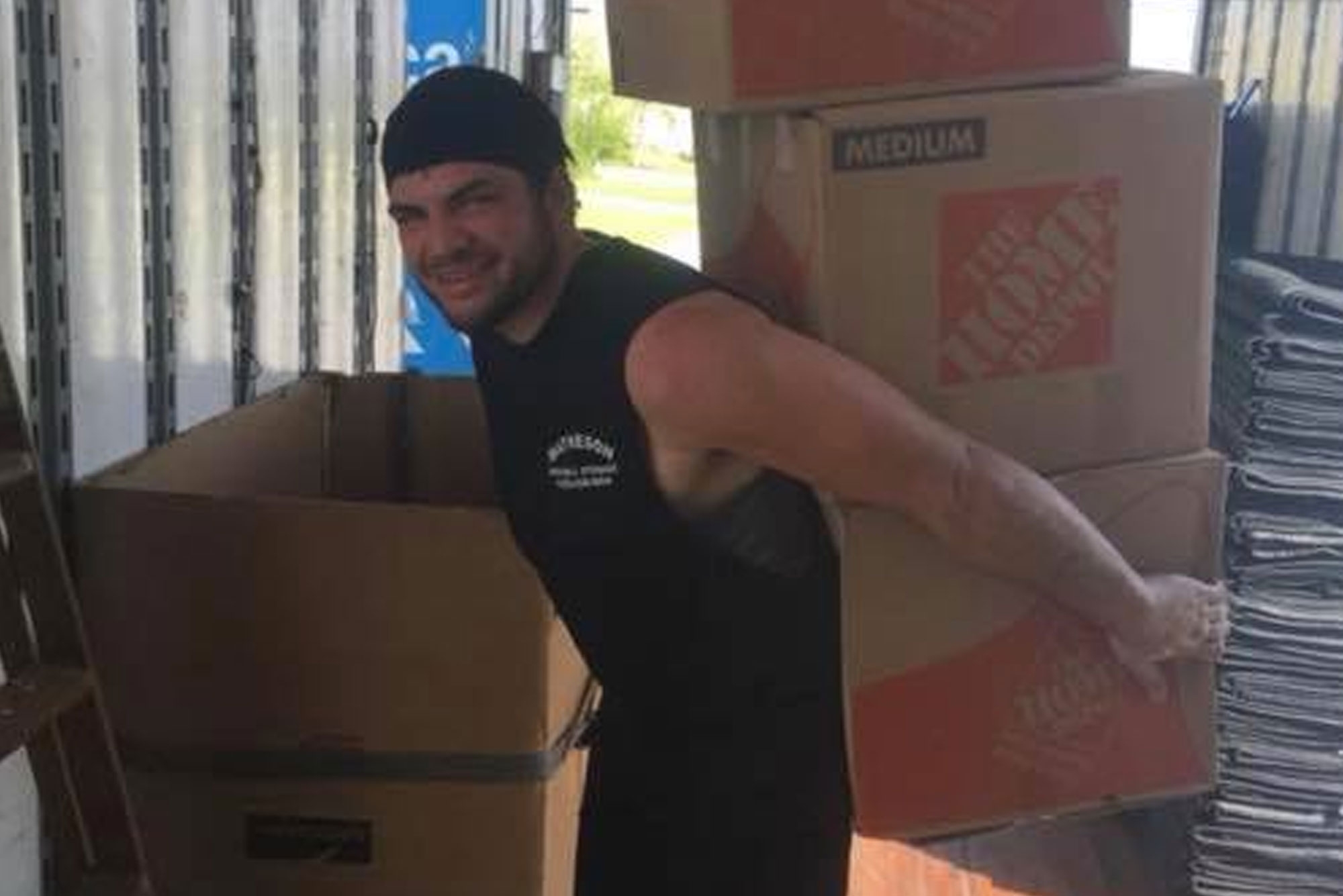
Pack folded clothes in small or medium boxes. A large box full of jeans and sweaters gets heavy fast and is more likely to split, especially on a long staircase.
- Fill boxes all the way so they don’t crush when stacked.
- Put heavier items on the bottom and lighter ones on top.
- Line boxes with a clean plastic bag or packing paper for extra moisture protection.
- Tape the bottom seams twice.
A mover carrying stacked boxes.
Use what you already own
Suitcases, duffel bags, laundry baskets and plastic bins are all containers you have to move anyway. Fill them with clothes instead of moving them empty. Rolling suitcases are perfect for heavier folded items because they’re easy to pull through a house.
Vacuum bags for bulky items
Winter coats, puffy jackets, comforters and thick sweaters take up a lot of space. Vacuum storage bags squeeze the air out and shrink them down, and the sealed plastic adds a layer against rain. Don’t use them for wool, leather, down you care about or anything delicate that shouldn’t be crushed for long.
What About Leaving Clothes in the Dresser?
It’s tempting to leave clothes in the drawers and move the dresser as is. Whether that works depends on the piece and the path out of the house.
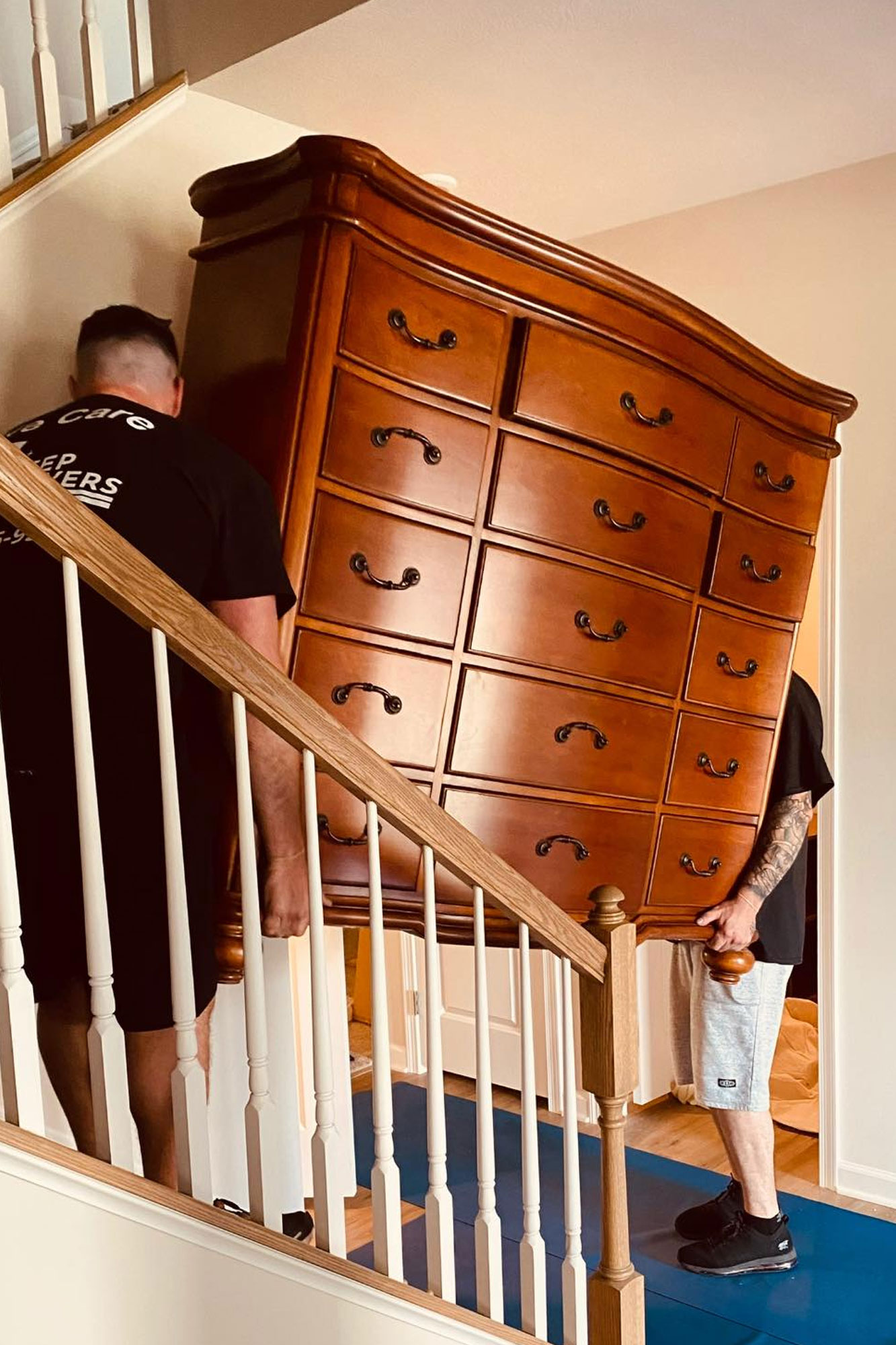
Full drawers add a lot of weight and can slide open or put stress on older joints, which matters on the narrow, steep staircases common in older Pittsburgh homes and row houses. Many people empty the drawers into bags or boxes first so the dresser is lighter and safer to carry.
If you’d like to leave light clothes in place, ask your movers before moving day so they can plan how to wrap and carry the dresser.
Two movers carrying a wooden dresser up a staircase.
Shoes, Accessories and Valuables
- Shoes: stuff them with socks or paper so they hold their shape, wrap each pair, and pack them in their own box with the heaviest pairs on the bottom. Keep them away from clean clothes.
- Belts, ties and scarves: roll them and tuck them into shoes, or pack them in small bags inside a box.
- Jewelry and watches: use a small organizer or pill box and keep it with you, not on the truck.
- Sentimental or expensive pieces: carry these in your own car whenever you can.
Moving Clothes in Pittsburgh and Washington County
Local conditions change how you should pack. Western Pennsylvania moves come with a few things to plan for.
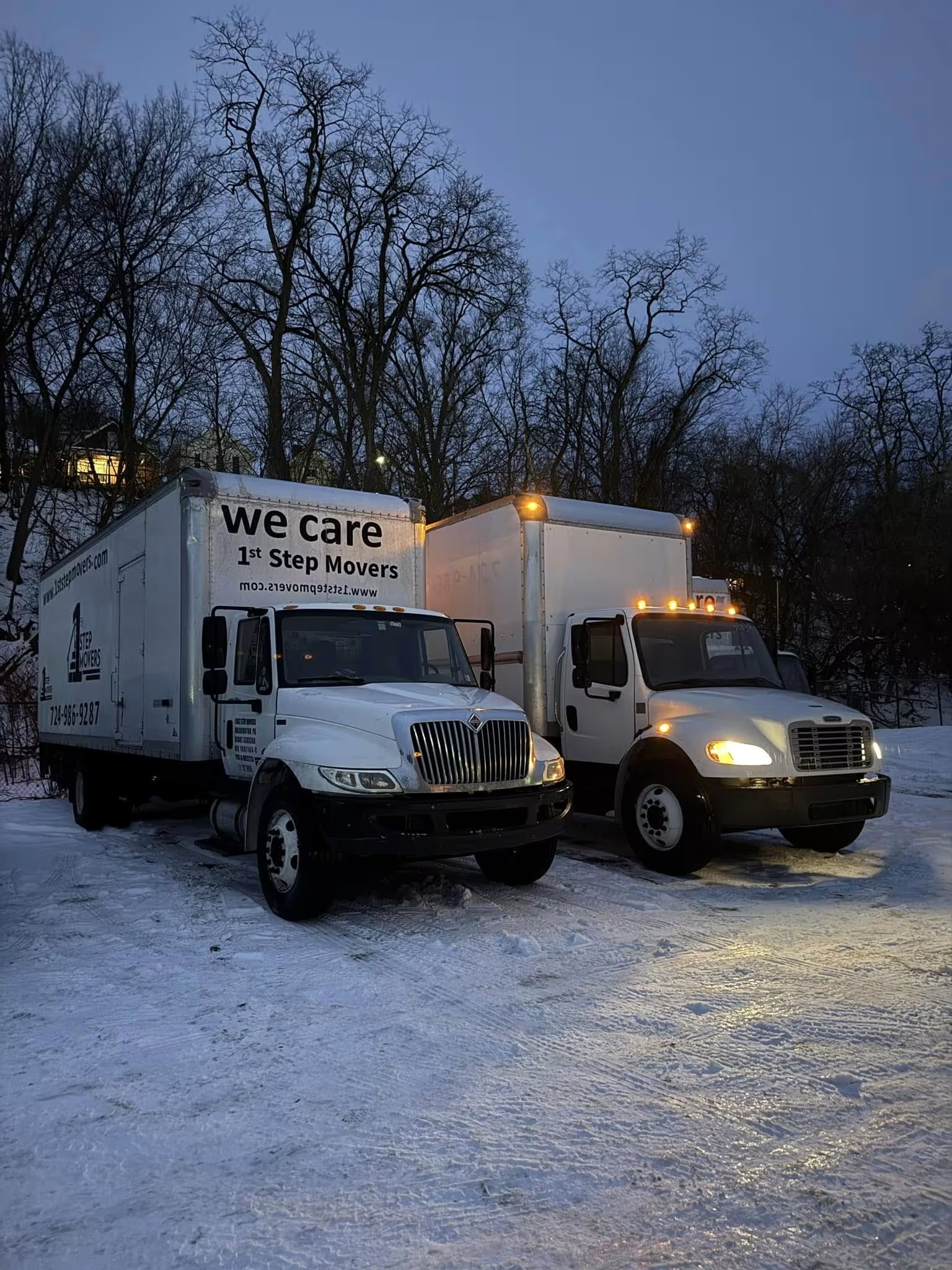
Wet weather and winter: rain, snow and slush are common here from late fall into spring. Seal boxes completely, use plastic bags or bins for anything you can’t risk getting wet, and keep cardboard off wet porches and sidewalks.
Stairs and hills: many homes have long outdoor steps, steep driveways or narrow interior stairs. Lighter boxes and rolling suitcases make every trip easier and safer.
Tight streets and parking: on narrow city streets the truck may park farther from your door, so well packed, clearly labeled containers save time on every trip.
Two 1st Step box trucks with headlights on, parked on snow.
Plan your seasonal clothes
Pack out of season clothes first. If you’re moving in summer, the winter coats, boots and heavy sweaters can go into vacuum bags weeks ahead. Moving in winter? Keep coats, gloves and boots out until the last day. Our guide on how long before moving you should start packing helps you set a timeline for the rest of the house.
Label Everything and Pack an Essentials Bag
Label each box or bag with the person’s name, the room and a short note on what’s inside, like “Kids room, winter clothes.” Mark boxes on the top and at least two sides so you can read them when they’re stacked. For bags, use a strip of tape with marker or a tag on the knot.
What is the 3 3 3 rule for packing clothes?
The 3 3 3 rule is usually described as a travel packing guide: three tops, three bottoms and three pairs of shoes that all mix and match. It works well for your moving week essentials bag. Pack it with a few days of outfits, sleepwear, toiletries, medications, chargers and important papers, and keep it in your car so you aren’t digging through boxes the first night.
When to Let a Crew Pack Your Clothes
A full closet, a busy work schedule or a move on short notice can turn clothes into a weekend project. Our packing service includes the packing materials, so the crew brings the boxes and paper, works room by room and labels as it goes, so your closet and dressers are ready when the truck is.
You can also split the work: pack your own everyday clothes and leave the formal wear, the rest of the bedroom and the kitchen to the crew. If you’re weighing the choice, read whether a full packing service is worth it.
Two 1st Step movers smiling in a bedroom during a move.

For a local move, your quote depends mostly on how much you’re moving, the stairs and distance involved, and how much packing you want done. Under our PA PUC tariff, our minimum is 3 hours, travel time included. Learn more about our local moving service.
Frequently Asked Questions
What is the 3 3 3 rule for packing clothes?
It means three tops, three bottoms and three pairs of shoes that all mix and match, so a few pieces make several outfits. For a move, it sets a limit on the bag you keep with you. If your move runs over several days or unpacking will take a while, add one set of work clothes and one outfit suited to the weather forecast.
Is it better to roll or fold clothes when packing?
Match the method to the container. Rolling saves the most room in suitcases and duffel bags, where soft items can shift without being crushed. Folding works better in boxes that will be stacked, because flat piles hold their shape. Either way, fill the container so clothes can’t slide around, and put wrinkle prone pieces in last, on top.
What are the biggest mistakes when packing clothes for a move?
The common ones are packing dirty or damp clothes, overfilling large boxes until they’re too heavy, skipping labels, using dark trash bags that get mistaken for garbage, and packing everything so nothing is left to wear the first few days. Sorting and decluttering first, then packing by type, avoids most of them.
Are bags or boxes better for moving clothes?
Think about where each container rides in the truck. Boxes form the base of a load because they stack, so they suit folded clothes and shoes. Bags fill the gaps on top and let hanging clothes stay on hangers. If clothes will sit packed for weeks after the move, sturdy boxes or plastic bins hold up better than thin plastic bags.
Can I leave clothes in my dresser when I move?
Check the dresser first. Solid wood pieces with sturdy drawers handle a few light clothes better than particleboard furniture, whose drawer bottoms can sag or pop loose under weight. Never leave anything breakable, heavy or valuable inside. If you do leave soft clothes in place, tell the crew before moving day so they can wrap the dresser and secure the drawers.
Want help with the closet, or the whole house? Request a free quote from 1st Step Movers and tell us what you’d like packed.