
Kitchen appliance movers handle the heavy, awkward part of a move: getting a refrigerator, stove, washer, dryer and dishwasher out of one home and into the next without damage to the machines, the floors or the people carrying them. The work goes smoothly when each appliance is prepared ahead of time and its gas, water and electrical connections are already handled by you or a licensed tradesperson.
This guide covers how to prepare each appliance, what to measure before moving day, and how a crew gets heavy machines through the steep stairs, tight doorways and hillside driveways common around Pittsburgh and Washington County. Appliances are part of our furniture moving service, so they ride in the same padded, strapped load as the rest of your home.
Short answer: Defrost and dry the fridge, clean the stove, drain the washer and dishwasher, and secure every door. Have a licensed plumber, electrician or gas technician disconnect and reconnect utilities, then let the movers handle the lifting, stairs and truck.
What Kitchen Appliance Movers Do and Do Not Do
A moving crew moves the appliance. That means protecting it with pads and shrink wrap, strapping it to an appliance hand truck, guiding it down stairs and through doorways, loading it upright and tied off in the truck, and setting it in place at the new home.
What movers do not do is work on your utilities. Our crew never disconnects or hooks up gas lines, water lines or electrical. Those connections belong to you or to a licensed plumber, electrician or gas technician, and they need to be finished before the crew arrives and redone after the appliance is set in place.
- Movers handle: padding, wrapping, carrying, stairs, loading, transport and placement.
- You or a licensed pro handle: shutting off and capping gas, unhooking water supply and drain lines, electrical work, and reconnecting everything at the new home.
Planning those two jobs separately keeps moving day on schedule and keeps everyone safe.
How to Prepare a Refrigerator for Moving
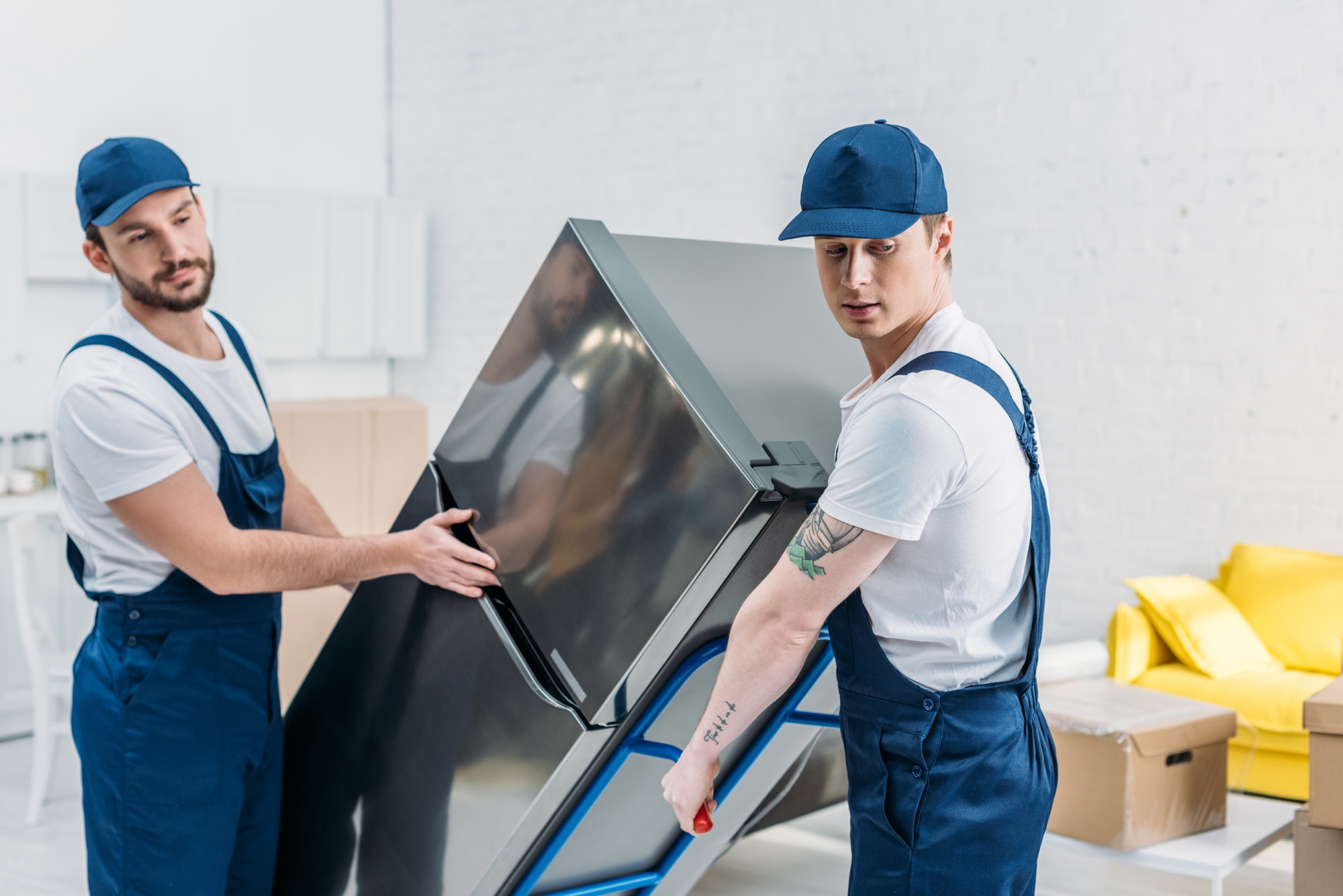
The refrigerator is usually the heaviest and tallest appliance in the kitchen, and it needs the most lead time.
- Empty it a day or two early. Eat down perishables and plan a cooler for the trip.
- Defrost and dry it. Unplug it the night before so the freezer can defrost, and soak up water with towels.
- Remove loose parts. Take out shelves, drawers and bins, wrap them, and pack them separately.
- Secure the doors. Tape or strap them closed with painter’s tape so no residue is left behind.
Two movers in uniform moving a refrigerator on a hand truck (stock photo).
Ice makers and water dispensers
If your refrigerator has an ice maker or water dispenser, it connects to a water line. Have that line shut off and disconnected by you or a plumber before moving day, and empty the ice bin. Otherwise a leftover drip can end up on a hardwood floor or carpet.
Upright or on its side?
Keep a refrigerator upright whenever possible. Many manufacturers advise letting a fridge stand upright for a while after the move before plugging it back in, so the oil in the compressor can settle. Check your owner’s manual for the exact wait time for your model.
How to Prepare a Stove or Range
Ranges are heavy at the bottom and can tip forward when the oven door is opened. Most ranges ship with an anti tip bracket that anchors the back foot to the floor or wall. Have it reinstalled at the new home so the range cannot tip when someone leans on an open door.
- Clean it. Wipe out grease and crumbs so nothing spills in the truck.
- Remove loose parts. Take out racks, grates, burner caps and knobs, then wrap and label them.
- Tape the oven door shut so it cannot swing open on the stairs.
Gas ranges need a licensed technician
Natural gas is not a do it yourself job. A licensed gas technician or plumber should shut off the supply, disconnect the range and cap the line before the move, and test for leaks after reconnecting at the new home. The Pennsylvania Public Utility Commission has gas safety information, including what to do if you smell gas. Our crew will not touch the gas connection, so book the technician early.
Electric ranges plug into a heavy duty outlet. Have an electrician handle any hard wired connection.
How to Prepare a Washer and Dryer
Once prepped, a washer or dryer rolls out on a strapped hand truck and rides the lift gate up into the truck, the same way the mover here loads a crate. Washers hold water long after the last load, and a front loading drum can swing hard enough to damage itself in transit.
- Drain the washer. Run a spin cycle a day ahead, then have the hoses disconnected and drained by you or a plumber.
- Install shipping bolts. Many front loaders came with transit bolts that lock the drum. Your manual shows where they go.
- Clean the dryer lint trap and have the vent duct removed.
- Gas dryers need a licensed gas technician to disconnect and cap the line.
A mover with a loaded hand truck on a truck lift gate.

Bag hoses, power cords and small parts and tape the bag to the machine so nothing gets lost.
How to Prepare a Dishwasher
Built in dishwashers are tied into plumbing and electrical, often under the counter. Have a plumber or electrician disconnect the water supply, drain line and power, and pull the unit free of the cabinet. Run one last empty cycle a few days before, dry the inside, and tape the door and racks in place. Portable dishwashers just need to be drained, dried and taped.
| Appliance | Prep you do | Licensed pro needed for |
|---|---|---|
| Refrigerator | Empty, defrost, dry, remove shelves, tape doors | Ice maker or water line |
| Gas range | Clean, remove racks and grates, tape oven door | Gas shutoff, disconnect, cap and leak test |
| Electric range | Clean, remove racks and knobs, tape door | Any hard wired connection |
| Washer | Spin cycle, install transit bolts, bag parts | Water supply and drain hoses |
| Dryer | Clean lint trap, bag parts | Gas line on gas dryers, vent and wiring |
| Dishwasher | Dry inside, tape door and racks | Water, drain and electrical |
Moving Appliances Through Pittsburgh Stairs and Doorways
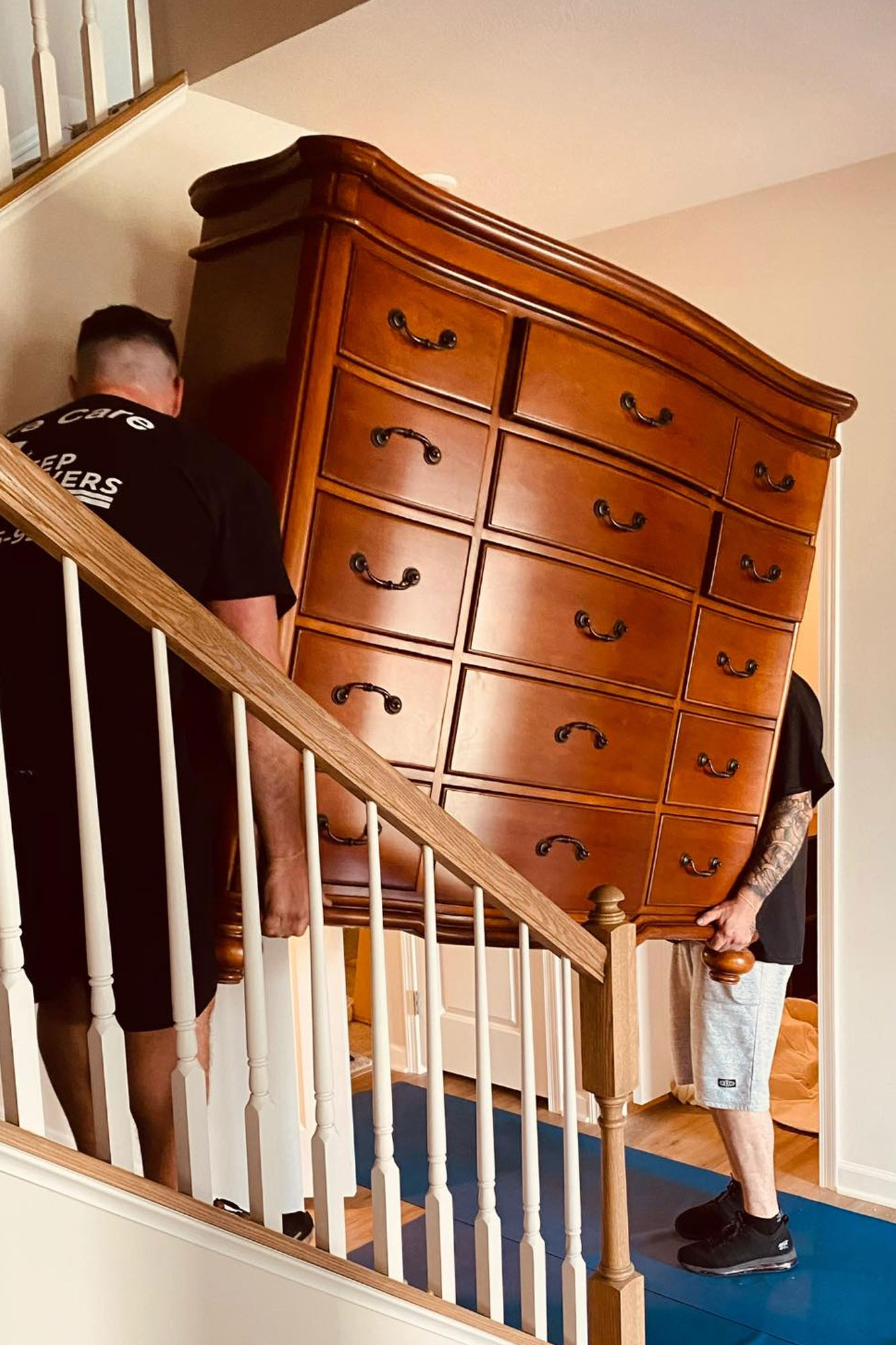
Many homes around Pittsburgh were built long before side by side refrigerators existed. Narrow front doors, tight landings, steep basement stairs and row house staircases make heavy items a planning job.
Measure the appliance and every point on the path: doorways, hallways, stair width, turns at landings and ceiling height above the stairs. If the fridge is close to the door width, removing its doors or the home’s door from its hinges often creates the space needed.
Two movers carrying a wooden dresser up a staircase.
Basement laundry rooms
Older homes often put the washer and dryer in the basement. Basement stairs tend to be steep and narrow, sometimes with a low ceiling and a turn at the bottom. The crew uses a hand truck with straps so the machine is controlled on every step and never carried loose, with one mover above and one below, much like the two movers carrying the dresser up the stairs in this photo.
Hills, driveways and parking
Steep driveways and hillside streets add work, and winter adds ice. Clear and salt the walkway before the crew arrives. On narrow city streets, save a spot close to the door for the truck. Check with your municipality about permits if parking is tight.
How the Crew Loads and Protects Appliances
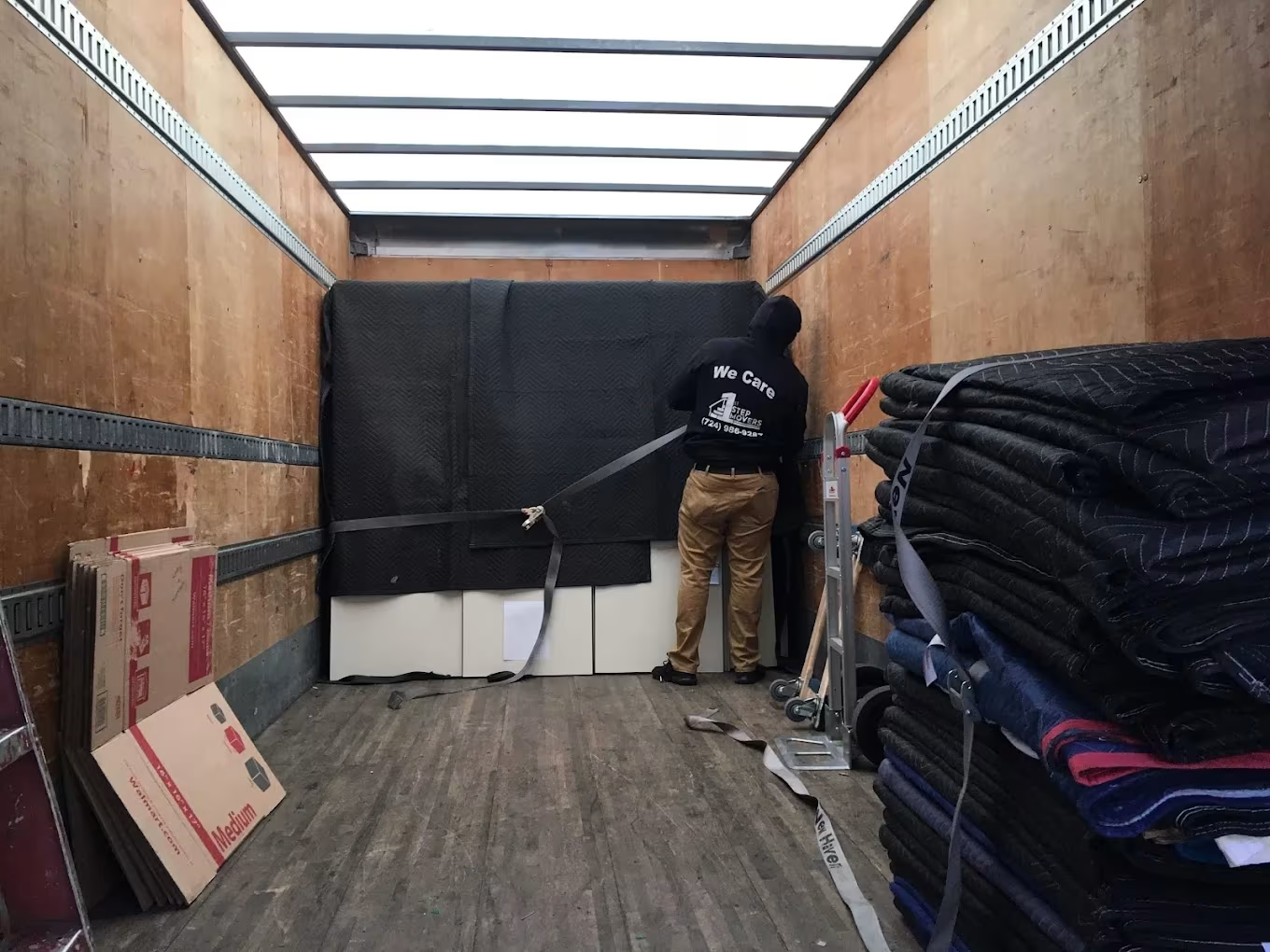
Inside the truck, appliances are padded with moving blankets, shrink wrapped where it helps, set upright and strapped to the wall so they cannot shift on a hilly route. Heavy items load first and low, with lighter items around them.
At the new home, the crew places each appliance where you want it, leaving room for your plumber, electrician or gas technician to reconnect it.
A mover strapping furniture wrapped in moving blankets inside a 1st Step truck.
What Affects the Cost of Moving Appliances
We do not publish prices, because every move is different. What drives the time is the number and size of appliances, stairs and basements, how far the truck can park, and whether doors need to come off. Our minimum is 3 hours, travel time included, for Monday to Saturday moves under our PA PUC tariff. The fastest way to know your cost is a free quote.
If you are also deciding what to keep, our guide on what to throw out before a move helps. For other heavy pieces, see how to move a gun safe safely.
Should You Take Your Appliances With You?
Whether appliances stay or go is often set in the home sale agreement, so check your contract before moving day. Older machines may not be worth the trouble, and new homes may already have appliances that fit their spaces. If an appliance is not coming, our junk removal team can quote hauling it away.
Frequently Asked Questions
Do people take appliances when they move?
Sometimes. In a home sale, the purchase agreement usually says which appliances stay with the house, so read it first. Renters and owners who bought their own refrigerator, washer or dryer often take them. Measure the new space before you decide, because a machine that fits your old kitchen may not fit the new one.
Can two people carry a washing machine?
Two strong people can move a washer on flat ground with an appliance hand truck, but stairs are where injuries happen. Drain it, lock the drum with transit bolts if it is a front loader, strap it to the hand truck, and never carry it loose down basement stairs. A moving crew brings the hand truck, straps and extra hands.
Do movers disconnect appliances?
Our crew does not disconnect or reconnect gas, water or electrical connections. You or a licensed plumber, electrician or gas technician should handle that before the movers arrive and after the appliance is placed. The crew handles everything else: padding, carrying, stairs, loading and placement.
How long should a refrigerator stand before plugging it in?
Many manufacturers recommend letting a refrigerator stand upright for a period after moving so the compressor oil can settle, and longer if it was laid on its side. The exact time varies by model, so check your owner’s manual or the manufacturer’s website before plugging it back in.
What items will movers not move?
Movers generally do not transport hazardous materials like propane tanks, gasoline or open chemicals. Appliances are fine once they are emptied, drained and disconnected. Read our guide to household items movers won’t transport for the full list.
Moving a refrigerator, washer or a whole kitchen? Request a free quote and we’ll plan the stairs, doorways and truck for you.