
To pack furniture for moving long distance, empty and clean each piece, take apart anything that comes apart, wrap wood in moving pads before any plastic, and protect glass and corners with extra layers. Then load heavy pieces first and strap everything so nothing shifts on the highway.
A long haul is harder on furniture than a trip across town. Pieces ride for hours, sometimes days, and every bump and turn tests the wrapping. This guide walks through how to pack furniture for moving step by step, with a few notes for older Pittsburgh and Washington County homes where tight stairs and steep front steps make getting furniture out half the job. If you’d rather hand off the heavy part, our furniture moving crews pad, wrap and load it for you.
Short answer: empty, clean, disassemble, pad, then wrap. Moving pads go on wood first, plastic wrap goes over the pads, and glass rides on its edge, never flat.
Gather Supplies Before You Start
Having everything on hand keeps you from improvising with bath towels and duct tape, which is how finishes get ruined. For most homes you’ll want:
- Moving pads or blankets: thick quilted pads that cushion wood and stop scratches.
- Plastic stretch wrap: holds pads in place and keeps dust and moisture off fabric.
- Packing paper and bubble wrap: for glass tops, mirrors, legs and carved trim.
- Cardboard sheets and corner protectors: for tabletops, edges and picture frames.
- Zip top bags and a marker: for screws, bolts, shelf pins and knobs.
- Mattress bags: to keep mattresses and box springs clean.
- Basic tools: screwdrivers, an Allen key set and a small socket set.
Step 1: Decide What Is Worth Moving
A long distance move is a good time to be honest about each piece. A worn recliner or a wobbly particleboard bookcase takes up truck space and labor time, and it may not survive the trip anyway. Think about condition, how much the piece means to you, and whether it fits the rooms at the new place.
Anything you decide to leave can be sold, donated or hauled away. Our guide on what to throw out before a move helps you sort the keepers from the rest, and our junk removal crew can take what’s left.
For everything that stays, write a simple inventory and take photos from a few angles. Note scratches, dents and loose joints now, so you have a clear record on delivery day.
Step 2: Measure Furniture, Doors and Stairs
Measure the height, width and depth of every large piece: sofas, dressers, armoires, headboards and china cabinets. Then measure the path out, including doorways, hallways, stair width, the ceiling over the stairs and any tight turn at a landing.
This matters around here. Many older Pittsburgh homes and row houses have narrow, winding stairs, low clearance over the stairwell and front doors at the top of steep outside steps. If you can, get the same numbers for the new home. Finding out a sectional won’t fit before it travels is far better than finding out after.
Step 3: Empty and Clean Every Piece
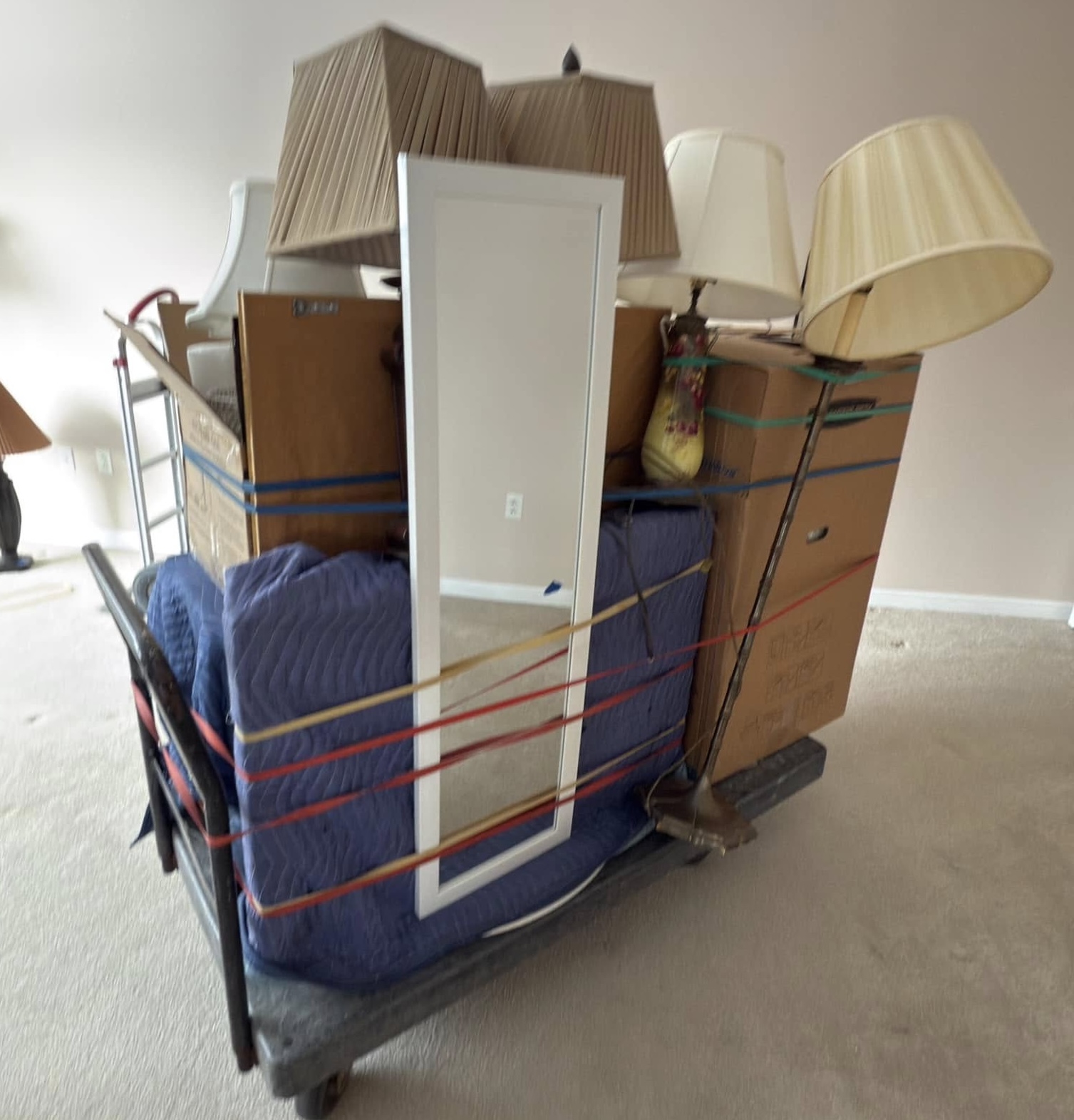
Empty every drawer, cabinet and shelf. Loose items shift on the road and can crack panels or split joints, and a full dresser is much heavier on the stairs.
Next, wipe wood with a soft dry cloth, vacuum upholstery and the gaps between cushions, and clean glass. Grit trapped under a pad acts like sandpaper over a long drive.
Let everything dry completely before you wrap it. Moisture sealed under plastic can lead to mildew, warped wood or a cloudy finish. Once a piece is empty, clean and dry, it is ready to be padded and strapped down, like the dresser and mirror on this cart.
Furniture, lamps and a mirror loaded on a moving cart and strapped for transport.
Step 4: Take Apart What Comes Apart
Disassembly makes pieces lighter, smaller and much less likely to break. A table leg that sticks out is the first thing to snap when the truck hits a pothole.
What to take apart
- Bed frames, headboards and footboards
- Table legs and leaves
- Glass shelves and glass tops
- Mirrors attached to dressers
- Desk hutches and bookcase shelves
- Sectional sofas, separated into pieces
Keep the hardware together
Photograph each step before you start so reassembly is easy. Put screws and bolts in a zip top bag, label it with the piece name, and tape the bag to the largest part of that piece or keep every bag in one box. Some pieces, like antiques with glued joints, should not be forced apart. When in doubt, leave it whole and pad it well. If you would rather not take pieces apart yourself, ask about it when you request your quote.
How to Pack Furniture for Moving by Material
Different materials need different protection. Here is a quick guide.
| Material | How to wrap it | Avoid |
|---|---|---|
| Wood | Moving pads first, then plastic wrap over the pads to hold them | Plastic or tape straight on bare wood |
| Upholstery | Remove cushions, wrap them separately, then cover the frame in plastic wrap | Wrapping damp fabric |
| Leather | Pads or a breathable cover, plastic only over the pads | Plastic tight on the leather |
| Glass and mirrors | Paper, bubble wrap, then cardboard on both sides, carried on edge | Laying glass flat |
| Metal and wrought iron | Pads on any finished surface, bubble wrap on thin parts | Stacking heavy items on top |
Mirrors and framed glass deserve extra care. Mark an X with painter’s tape across the glass, cover it with packing paper, add bubble wrap, then sandwich it between two pieces of cardboard. Corner protectors keep the frame from chipping.
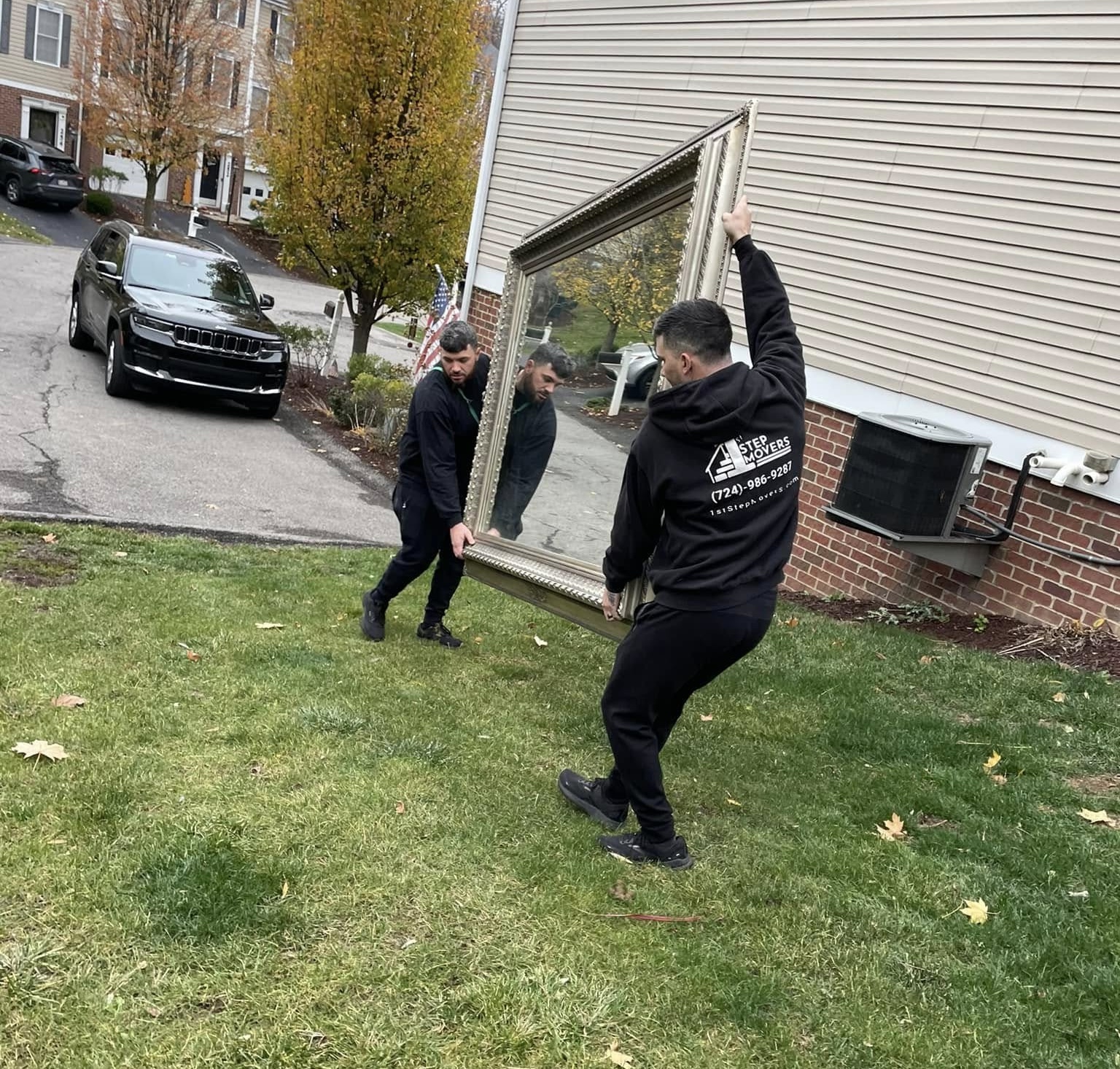
Always carry and load glass standing on its edge, the way the mirror is carried here. Laid flat, a mirror can crack from the weight of something next to it or from a hard bump.
Two 1st Step movers carrying a large framed mirror upright across a yard.
Wood furniture
Wood is where most damage happens. Cover the whole piece in moving pads, then use stretch wrap or rubber bands over the pads to hold them tight. Plastic directly on wood can trap moisture, and tape pulls finish off. Wrap legs and carved trim with an extra layer of bubble wrap.
Sofas, chairs and mattresses
Take off cushions and wrap them on their own. Cover the frame with plastic wrap to keep out dust and stains, and add pads over wooden feet and arms. Mattresses and box springs go into mattress bags.
Step 5: Plan for Weather on a Long Trip
Western Pennsylvania weather swings a lot, and a long trip can cross several weather patterns. Humid summer air and cold winter loads are both hard on wood and leather.
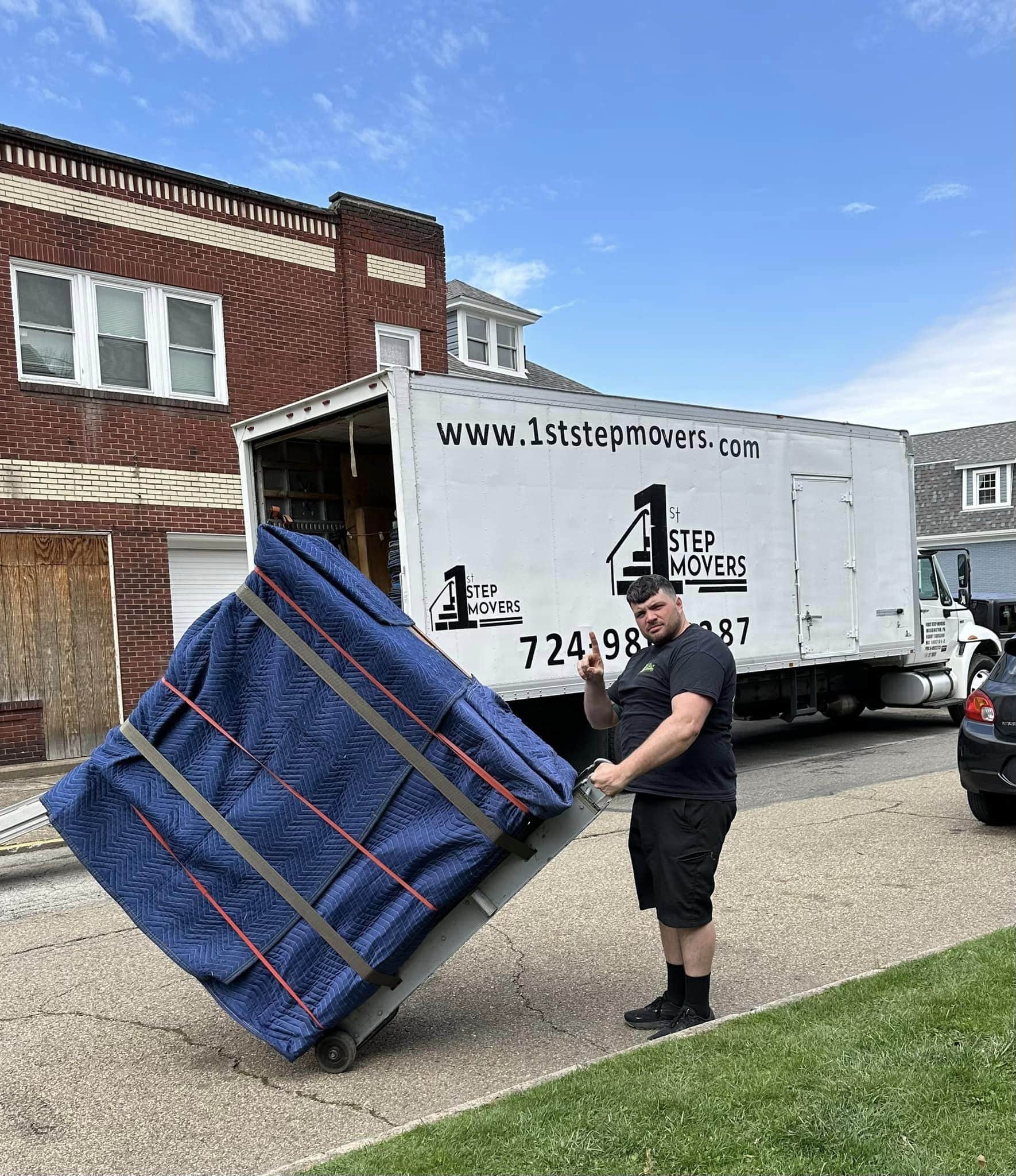
Wrap only dry furniture, pad first as on the piece in this photo, and keep plastic as the outer layer so the pads stay dry if it rains during loading. In winter, give wood pieces time to warm up at the new home before you unwrap them, so condensation doesn’t form on the finish.
Clear snow and ice from steps and walkways before the crew arrives. A safe path matters as much as good wrapping.
A 1st Step mover with a blanket wrapped item on a dolly beside the truck.
Step 6: Load and Secure the Truck
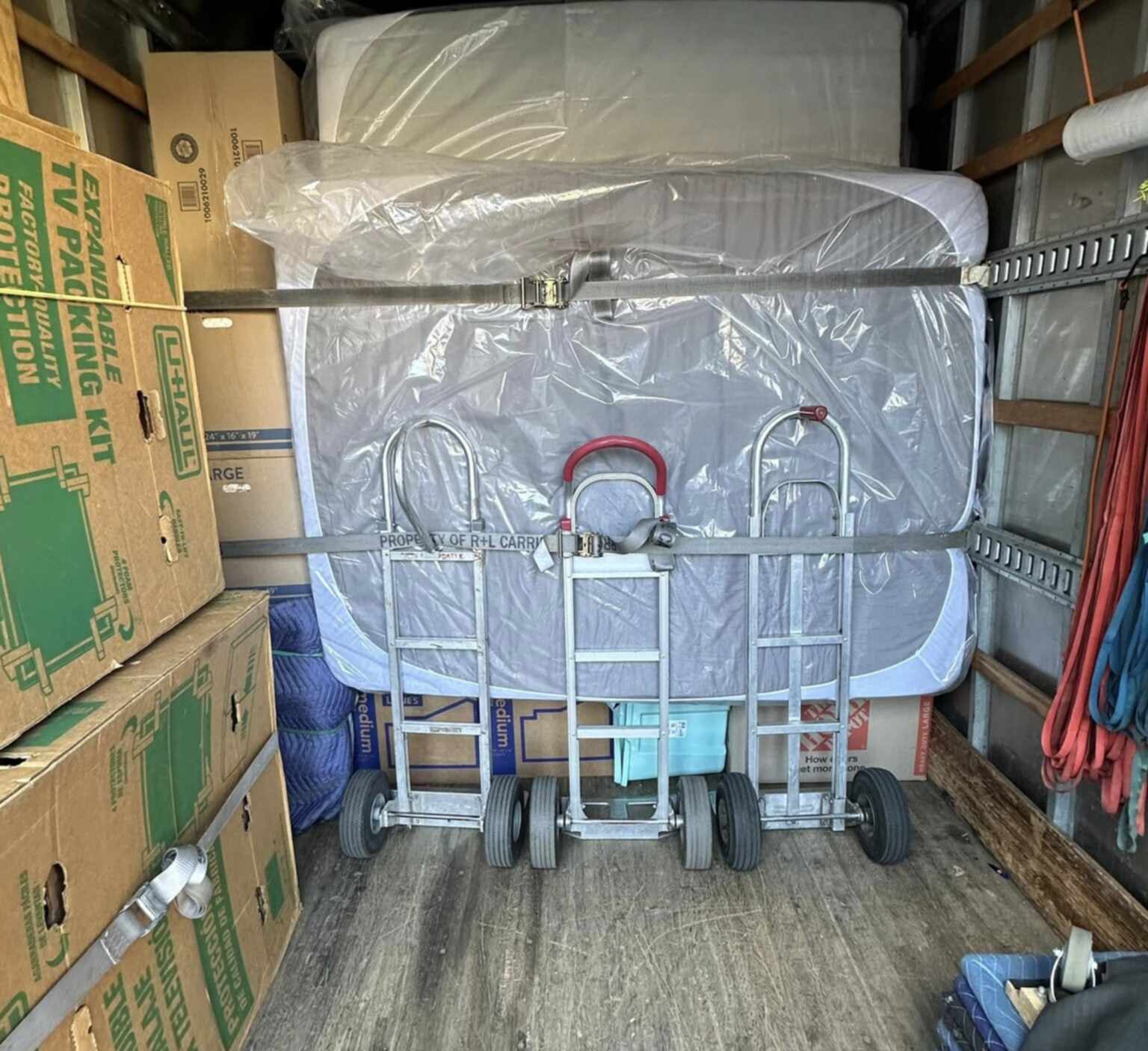
How furniture is loaded matters as much as how it is wrapped. Heavy pieces like dressers and solid wood tables go in first, against the front wall. Tall pieces stand upright along the sides. Mattresses and tabletops stand on edge. Boxes fill the gaps so nothing has room to slide.
Then every tier gets strapped. Straps keep pieces from rubbing or tipping during sudden stops and turns, which is exactly where unstrapped loads get damaged on a long drive.
When our crew loads your furniture, the goal is the same as the steps above: pad and wrap each piece, stack it tight, and strap the load so it can’t shift on the road.
If you are packing boxes yourself, label them by room and keep heavy boxes small. Our post on when to start packing before a move lays out a timeline so furniture prep doesn’t land on the last night.
A packed 1st Step truck with a wrapped mattress and hand trucks strapped in place.
When to Leave It to Professional Movers
Some pieces are worth handing off: heavy armoires, sleeper sofas, glass front cabinets, antiques, and anything that has to come down narrow stairs. Very heavy items such as pianos and gun safes need special equipment. Our guide to safely moving heavy items covers those.
For a move across Pennsylvania or to another state, our long distance moving service can take the wrapping and loading off your hands. 1st Step Movers is registered with FMCSA for interstate household goods moves, and you can check any interstate mover’s registration and your rights at FMCSA’s Protect Your Move site. If you’d like help with boxes too, our packing services include the materials.
Frequently Asked Questions
How do you wrap furniture in moving blankets?
Drape a moving blanket over the piece so it covers the top and sides, then add more blankets until no wood shows. Fold the edges under like wrapping a gift. Hold the blankets in place with stretch wrap or large rubber bands over the blanket, never tape on the wood itself. Add extra padding on corners, legs and any carved trim.
Should you shrink wrap furniture for a move?
Yes, but in the right order. Shrink wrap works well directly on upholstered pieces and mattresses to keep out dust and stains. On wood and leather, put moving pads on first and wrap the plastic over the pads, because plastic directly on those surfaces can trap moisture and damage the finish over a long trip.
Do I need to empty dresser drawers before moving?
Yes, empty them. Full drawers make a dresser far heavier to carry down stairs and put strain on the frame and runners. Contents can also shift and crack panels on a long drive. Pack the items in boxes, then either remove the drawers and wrap them separately or wrap the dresser so the drawers cannot slide open.
What furniture should be taken apart for a move?
Anything held together with screws or bolts that sticks out or is too big for a tight doorway is a good candidate, such as beds, table legs and desk hutches. Before you start, check for a manual or look up the model online, since many flat pack pieces are not meant to be taken apart more than once or twice. Leave glued antiques whole and pad them well instead.
How should mirrors and glass tabletops be packed?
Remove glass tops and loose shelves from the furniture so each part can be protected on its own. A mirror box or a cardboard sandwich with corner protectors is the safest outer layer. Inside the truck, glass should stand on edge between soft items like mattresses, never under or against heavy pieces. Very large mirrors and glass tops are worth letting a moving crew handle.
Want your furniture padded, wrapped and loaded for you? Request a free quote from 1st Step Movers.