Yes, you can hire movers to load a truck, unload it, or both, while you rent the truck and do the driving yourself. This is called labor only moving, and it’s one of the most practical ways to get professional help without booking a full service move.
Plenty of people in Pittsburgh and Washington County rent their own truck or portable container and bring in labor only movers for the heavy part. This guide explains how it works, what drives the cost, the real minimum time at 1st Step Movers, and how to get your home ready so the crew can work fast.
Short answer: Yes. You supply the truck or container and we supply the crew to load it, unload it, or both. Our minimum is 3 hours, travel time included.
How Labor Only Moving Works
The setup is simple. You handle the vehicle, the route and the schedule. The crew handles the lifting, carrying and packing of the truck.
- You provide: the rental truck, trailer or portable storage container, plus the driving between addresses.
- The crew provides: strong, careful hands to carry furniture and boxes, protect your items and load the space so nothing shifts.
- Nobody from the crew drives your belongings. That’s the main difference from a full service move.
Because the moving company isn’t supplying a truck or transporting anything, labor only help is booked by the hour. You pay for the time the crew spends working, not for a truck sitting in your driveway.
The same crew can work at one address or both. Some people book help only at the pickup because family is waiting at the new place. Others drive the truck themselves and book a crew just for the unload.
You can also split the job by item. Maybe you’ll carry the boxes and want professionals only for the sofa, the dresser and the washer and dryer. That works too, as long as you tell us what’s on the list when you book.
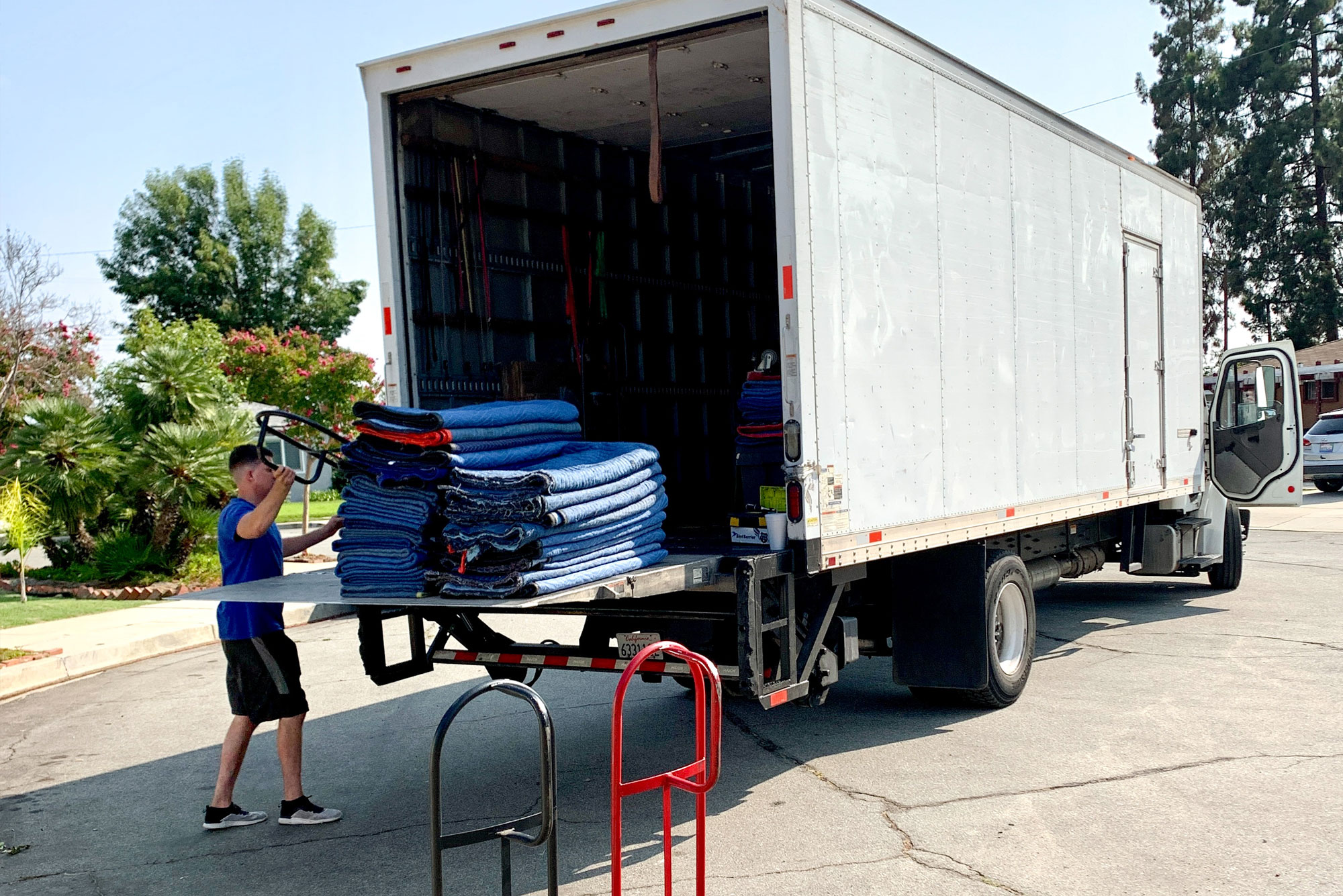
A mover unloading blanket wrapped items from the lift gate of a box truck, with a hand truck beside it.
When It Makes Sense to Hire Movers to Load a Truck
Labor only help fits a lot of situations. Here are some of the usual ones:
- You already rented a truck. You’ve reserved the vehicle and want to drive it yourself, but you don’t want to carry a dresser down three flights of stairs.
- You’re using a portable container. Container companies deliver the box but usually don’t load it. A crew can pack it tight and balanced.
- You’re unloading after a long drive. After hours behind the wheel, the last thing you want is to empty a full truck.
- You’re moving a storage unit. Loading out of a rented storage unit and into a truck, or the other way around.
- You need furniture moved inside the house. Swapping bedrooms, clearing a basement before a renovation, or staging a home to sell.
- You have a few heavy pieces. A sleeper sofa, a solid wood armoire or an appliance that needs to come up from the basement. Our furniture moving team can wrap and carry pieces like these.
If you’re still deciding between doing it all yourself, booking labor only help or booking a full move, our breakdown of whether it’s cheaper to DIY or hire movers walks through the tradeoffs.
Why Loading a Truck Well Takes Skill
Anyone can put a box in a truck. Loading a whole house so it arrives undamaged is different. A good load protects furniture, uses the space efficiently and keeps the truck stable on the road.
Experienced crews follow a few basic rules:
- Heavy, large pieces go in first, against the front wall, to build a stable base.
- Weight is spread evenly side to side so the truck handles well.
- Furniture is wrapped in moving blankets so surfaces don’t rub.
- Boxes are stacked heavy on the bottom, light on top, in tight tiers.
- Each section is strapped so the load can’t slide when you brake.
A truck load tightly packed with blanket wrapped furniture.
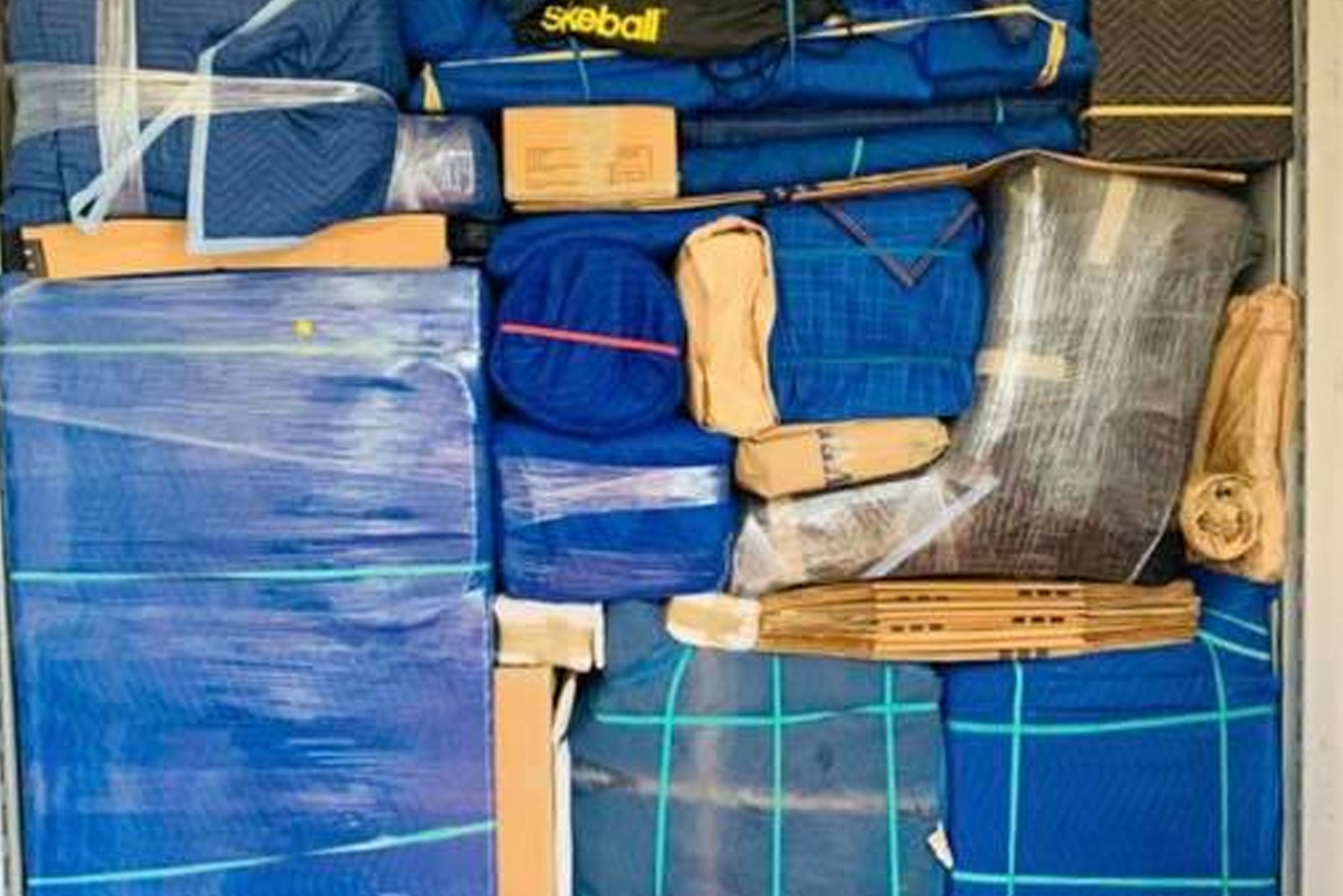
A tight load also means you may fit everything in one trip, which saves you time and rental mileage. Loose loads waste space and are how mirrors crack and table legs snap on the drive.
Can You Hire Movers for Just 1 Hour?
It’s a common question, and the honest answer is that many moving companies set a minimum. A minimum covers the cost of getting a trained crew to your door and back, whether the job takes 45 minutes or all afternoon.
At 1st Step Movers, the minimum is set in our tariff with the Pennsylvania Public Utility Commission:
| Item | Under our tariff |
|---|---|
| Minimum charge | 3 hours |
| Travel time | Included in the minimum |
| Days we work | Monday to Saturday, 7:00 AM to 7:00 PM |
After the minimum, local hourly time is billed in half hour increments. The Pennsylvania PUC regulates household goods movers that operate within the state, and a licensed mover has to follow its filed tariff.
How to make a short job worth it
If your job is small, use the full minimum. Line up every heavy or awkward task you’ve been putting off: the treadmill in the basement, the bookcase that needs to go upstairs, the boxes in the attic. A crew that’s already on the clock can knock out a lot of small jobs in a few hours.
What Affects the Cost of Loading and Unloading Help
We don’t publish prices because every job is different, but these are the things that change how long a labor only job takes:
- How much you’re moving. A studio apartment and a four bedroom house are very different jobs.
- Stairs and distance to the truck. Walk up apartments, steep front steps and long driveways add carrying time.
- Heavy specialty items. Pianos and gun safes take extra people and equipment, and our tariff sets separate per item charges for them. Learn more about piano moving.
- How ready you are. Packed, taped and labeled boxes load fast. Half packed rooms slow everything down.
- One address or two. Loading only, unloading only, or both.
- Date and season. Summer weekends and month end dates book up first, so a flexible date gives you more choice of start times.
Call or send a request for a free quote and we’ll give you a clear picture based on your actual home and truck.
Pittsburgh Area Challenges a Local Crew Plans For
Loading a truck in Western Pennsylvania comes with its own obstacles. A local crew plans for them before arriving.
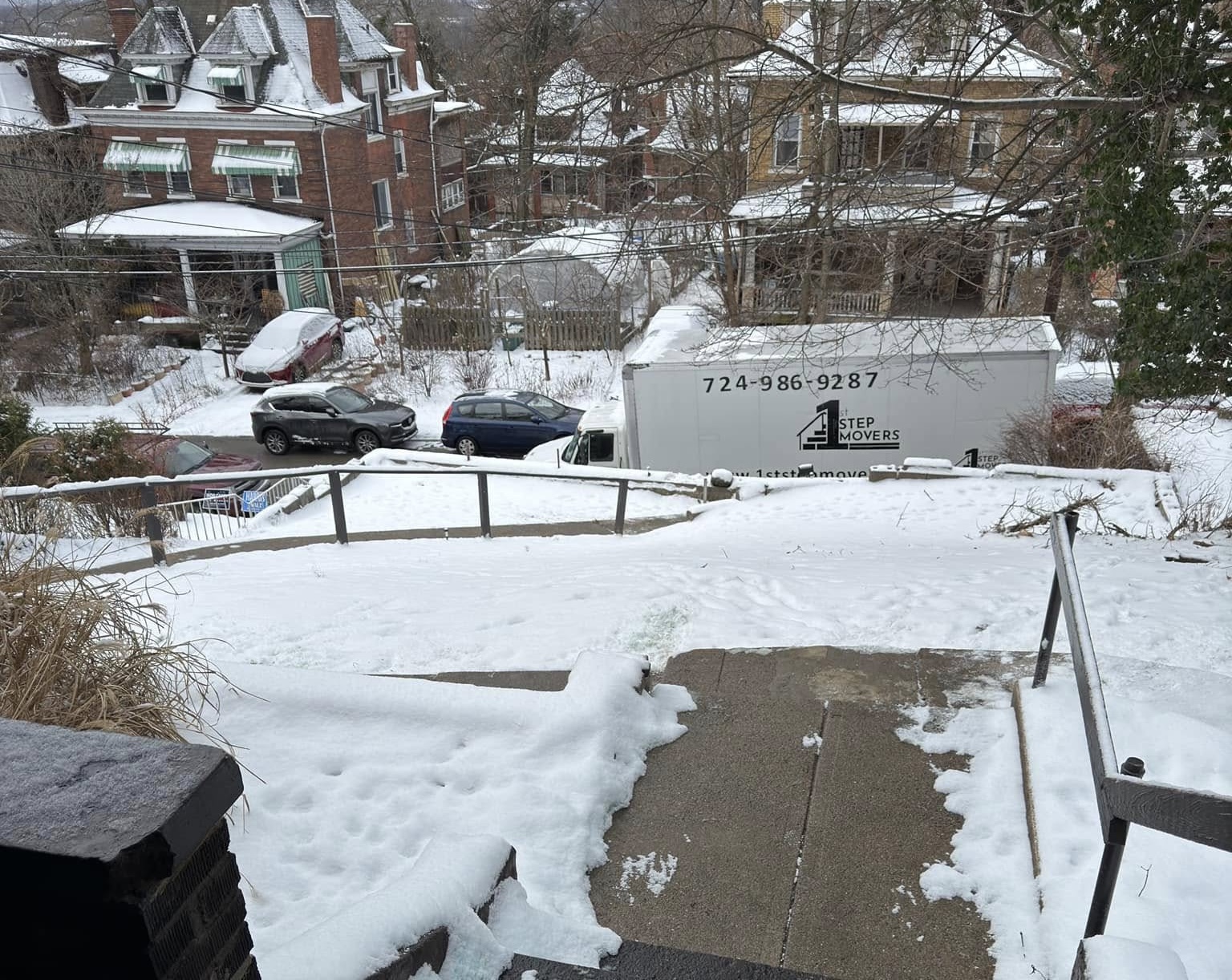
Hills and steps. Many homes sit above the street with long runs of concrete steps. That means more carrying time per item.
Narrow streets and parking. In older neighborhoods and row house blocks, a rental truck may not fit close to the door. Think about where it will park before moving day.
Winter weather. Snow and ice make steps and ramps slippery. Salt and shovel the path the night before.
A 1st Step truck parked on a snowy street in a hillside neighborhood.
Older homes. Tight stairwells, narrow doorways and low basement ceilings are common in houses built a century ago. Measure your largest furniture against the tightest turn so there are no surprises. Our guide to safely moving heavy items covers how crews handle the hardest pieces.
How to Prepare for Your Loading Crew
A little preparation keeps the crew working instead of waiting, which keeps your bill down.
- Pack, tape and label every box before the crew arrives.
- Empty dressers and desks, or ask ahead whether drawers can stay full.
- Take apart bed frames and table legs and bag the hardware.
- Have the truck or container parked, unlocked and empty.
- Clear a path from each room to the door and the truck.
- Set aside anything you plan to carry yourself, like medications, documents and jewelry.
Two movers carrying a wooden dresser on a staircase.
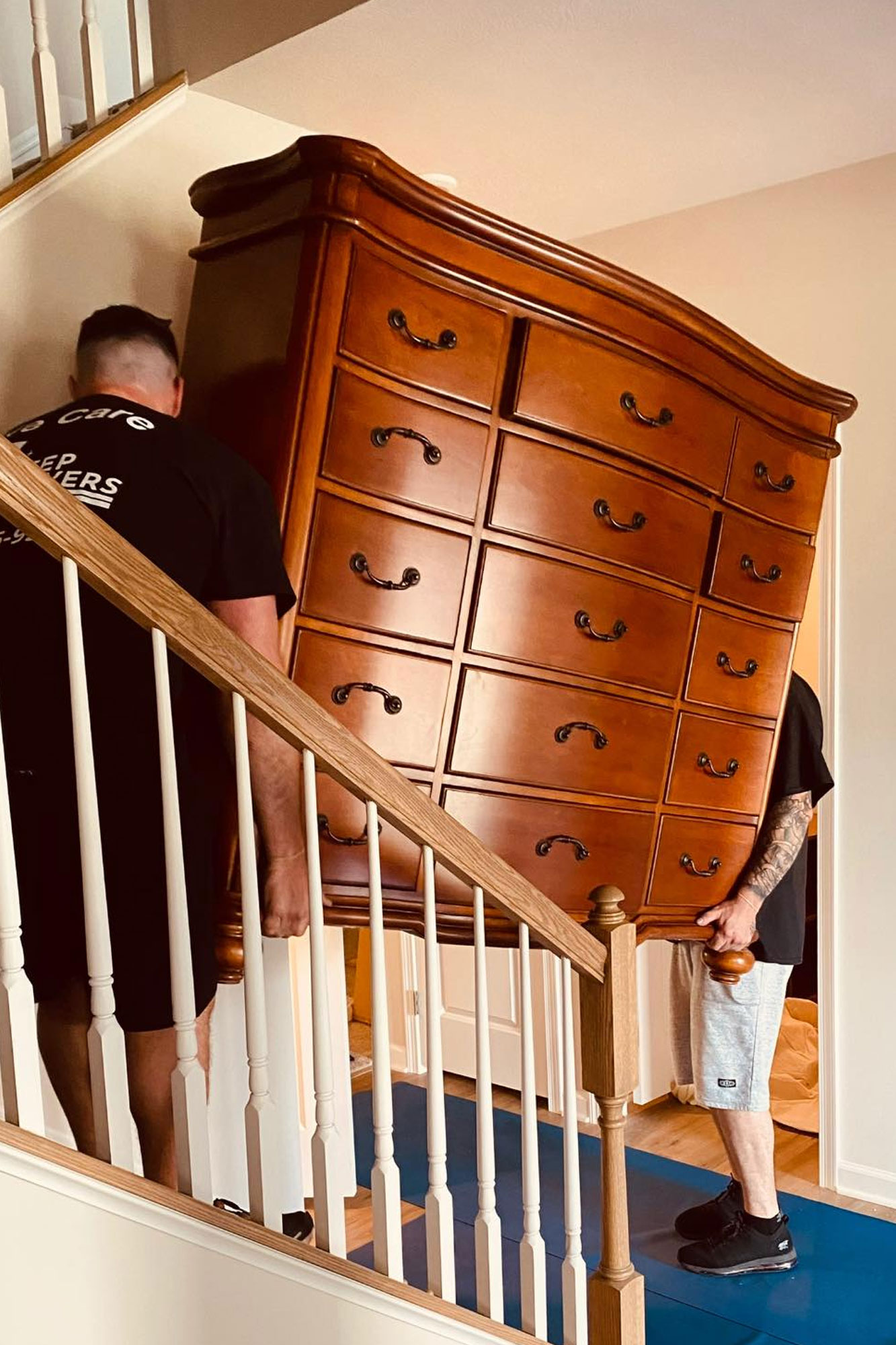
When you call, have the truck size, the number of floors and stairs at each address, and a list of any unusually heavy items ready. That lets us send the right number of people.
Items to keep off the truck
Even on a labor only job, flammable, pressurized and corrosive items are a poor fit for a closed truck: propane tanks, gasoline, paint thinner, aerosols, pool chemicals and fertilizer among them. Perishable food and plants also don’t travel well. If you’re unsure about an item, ask when you book. See our full list of household items movers won’t transport.
How to Choose a Labor Only Crew
Online marketplaces make it easy to book hourly help, but you may not know who shows up. Before you hire anyone to handle your things, check a few basics:
- A real company name, phone number and address.
- Written confirmation of the time, crew size and minimum.
- If the company also hauls household goods within Pennsylvania, a PA PUC certificate.
- If it hauls across state lines, registration with FMCSA. The FMCSA Protect Your Move site lets you look up a mover.
- Recent, real reviews.
Be wary of anyone who demands a large cash deposit or won’t put anything in writing. Our article on red flags with movers goes deeper.
1st Step Movers is a locally owned company based in Washington, PA, licensed by the PA PUC for household goods moves and registered with FMCSA for interstate household goods moves. If your plans change and you’d rather have us bring the truck too, we also handle full local moving.
Frequently Asked Questions
Can you hire movers just to load and unload a truck?
Yes. You can book a crew for the pickup, the drop off, or both. When you request a quote, share the truck or container size, the stairs at each address and any heavy pieces so the right number of people show up and the load is planned before they arrive.
How much do movers charge to just load a truck?
Labor only help is billed by the hour, so cost depends on how much you have, stairs, distance from the door to the truck, heavy items and how ready you are. Many moving companies also set a minimum charge. The fastest way to get a real number is a free quote based on your home and truck.
Can I hire movers for just one hour?
Many movers have a minimum. At 1st Step Movers it’s 3 hours, travel time included, under our PA PUC tariff. If your job is small, line up other heavy tasks so you get full value from the time you book.
Do labor only movers drive the truck?
No. With labor only service you rent and drive the truck or arrange container pickup yourself. The crew only loads and unloads. If you want the mover to supply the truck and drive, that’s a full service local or long distance move, which you can book instead.
What are red flags when hiring movers?
Warning signs include a large cash deposit up front, no written estimate or confirmation, no real company name or address, and no license. Movers within Pennsylvania should hold PA PUC authority, and interstate movers should be registered with FMCSA. Pressure to decide on the spot is another red flag.
Have a truck or container and need strong, careful hands? Request a free quote and tell us what you’re moving.